Who knew that the humble grain that anchors countless dinner tables was hiding a secret? Scientists recently discovered that rice, when packed tightly, acts like a moody teenager: it gets weaker under sudden pressure but stays surprisingly strong when you approach it slowly.
This isn't just a quirky culinary fact. An international team, spearheaded by the University of Birmingham, took this bizarre behavior and ran with it. The result? A brand-new material that can change its stiffness all on its own. No wires, no batteries, just pure, unadulterated physics.
The Grainy Truth About Pressure
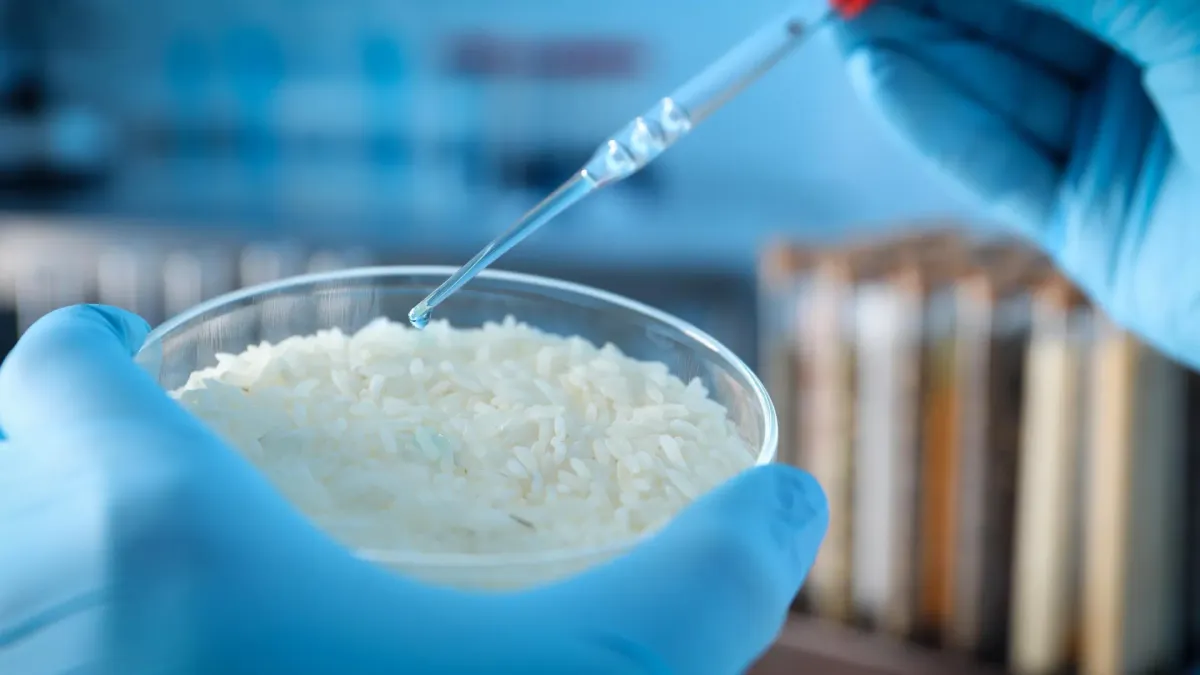
Turns out, if you squeeze a bunch of rice grains quickly, the friction between them drops dramatically. This is called "rate softening," and it's pretty unusual for most materials. Think of it like a crowd suddenly losing its collective grip when pushed too fast. The internal support networks that usually hold everything together just… give up.
We're a new kind of news feed.
Regular news is designed to drain you. We're a non-profit built to restore you. Every story we publish is scored for impact, progress, and hope.
Start Your News DetoxInstead of shrugging and saying, "Well, that's rice for you," the researchers saw an opportunity. They decided to engineer a "metamaterial" — a structure designed to have properties that nature typically forgets to include. Because apparently that's where we are now: designing materials with personality traits.
Building a Brainy Batch
To craft this self-adapting marvel, the team combined these rice-based units with other materials, like sand, which conveniently gets stronger when loaded quickly. The resulting granular concoction can bend, buckle, or stiffen in various ways, all without a single sensor or control system.
Dr. Mingchao Liu of the University of Birmingham put it best: rice is a staple food, not usually associated with cutting-edge engineering. Yet, here it is, proving its worth as the foundation for materials that respond intelligently through their own mechanical properties. It's like your phone, but instead of needing an app to change settings, it just feels the situation and adapts.
From Robots to Rescue Gear
So, what's a self-regulating rice-and-sand material good for? Plenty, actually.
Imagine soft robots that are lighter, safer, and more flexible than their metallic cousins. These could work right alongside humans, navigate tricky environments, or even assist in delicate surgeries. Because who wouldn't want a robot that understands the difference between a gentle touch and an accidental slam?
And for protective gear? This material could be a game-changer. Since it knows the difference between a slow push and a sudden impact, it could absorb energy or deform in a controlled way during a collision, potentially reducing injuries. All automatically, mind you, without needing power or a human to flip a switch. It just… knows.
It’s a reminder that sometimes the most profound innovations come from observing the oddest behaviors in the most everyday things. Pass the rice, please. And maybe a patent application.