Life's genetic blueprint arrives fully structured, not as blank slate.
For decades, scientists assumed that a newly fertilized egg contained DNA in a loose, unorganized state—a kind of genetic chaos that would only resolve once the embryo switched on its own genes. The thinking went: order emerges after activation.
That picture just shifted. Researchers led by Professor Juanma Vaquerizas have discovered something counterintuitive: the genome is already meticulously organized before it ever "wakes up." The findings, published in Nature Genetics, suggest that life's earliest moments aren't chaotic at all. They're a carefully orchestrated construction site.
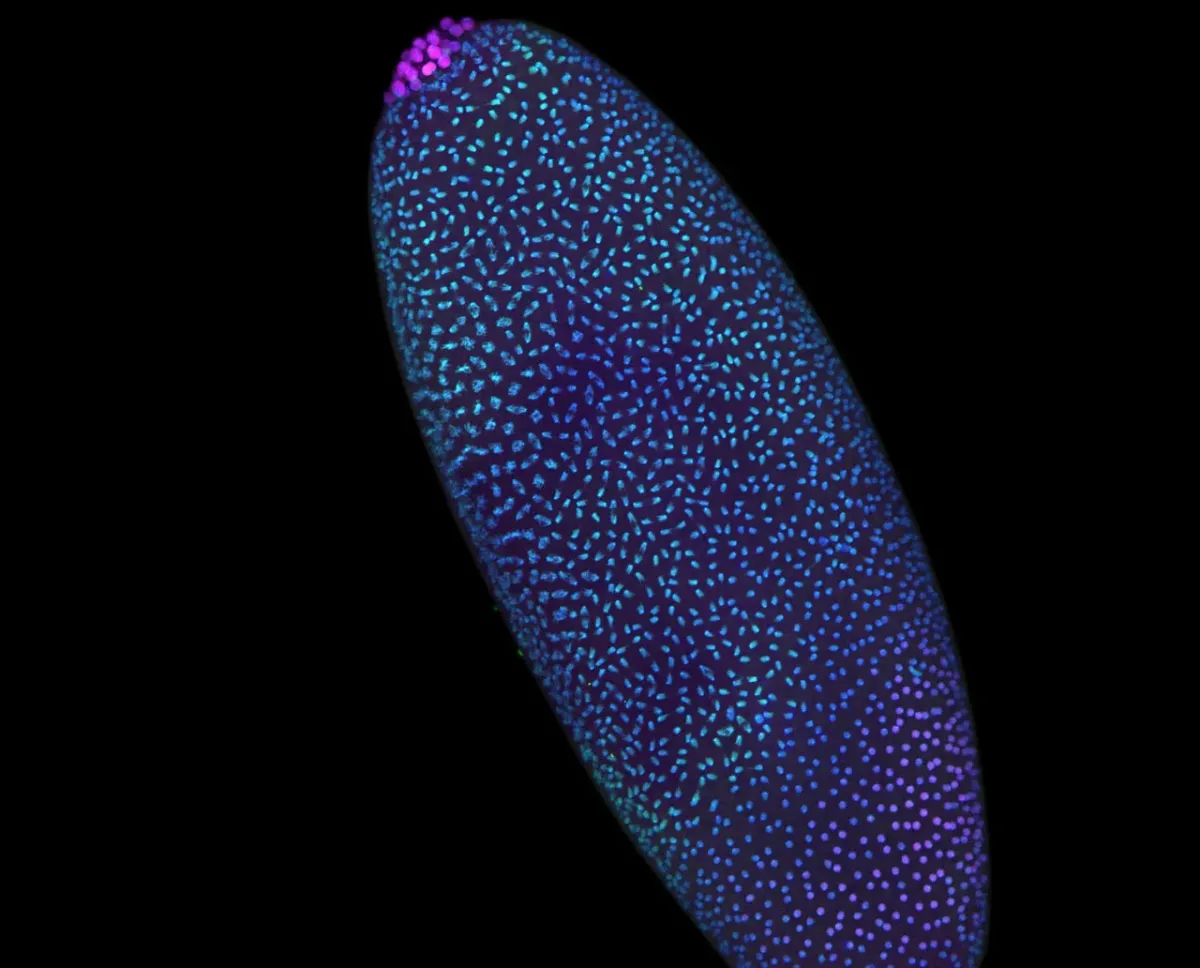
The breakthrough came from a new technique called Pico-C, which lets scientists map the three-dimensional architecture of DNA with unprecedented precision. When Vaquerizas's team used it to study fruit fly embryos in their first hours after fertilization, they found something unexpected: DNA wasn't folding randomly. Instead, it was forming loops and structures in a modular, deliberate pattern—long before the genome's "on" switch was fully engaged.
We're a new kind of news feed.
Regular news is designed to drain you. We're a non-profit built to restore you. Every story we publish is scored for impact, progress, and hope.
Start Your News Detox"We used to think of the time before the genome awakens as a period of chaos," explains Noura Maziak, the study's lead author. "But by zooming in closer than ever before, we can see that it's actually a highly disciplined construction site."
Why the shape matters
This matters because DNA's three-dimensional structure determines which genes can be activated and when. The way the molecule folds in space is essentially a master schedule for development. Get the architecture right, and cells develop properly. Let it collapse, and disease can follow.
Pico-C works on fruit fly embryos because they divide rapidly in their first hours, creating thousands of cells in a compressed window—ideal for watching how genomes organize themselves. But the technique also requires ten times less material than older methods, opening possibilities for studying DNA folding in systems where samples are scarce.
The real significance emerges in a companion study from ETH Zürich, published in Nature Cell Biology. When researchers deliberately disrupted the molecular anchors that hold the genome's three-dimensional structure together in human cells, the results were stark: cells misinterpreted the breakdown as a viral attack. The immune system triggered an alarm, activating inflammation and potentially driving disease.
"The first study shows us how the genome's three-dimensional structure is carefully built at the start of life," Vaquerizas says. "The second shows us the disastrous consequences for human health if that structure is allowed to collapse."
The two papers together tell a connected story: life doesn't begin in genetic disorder and gradually find its way to organization. It arrives organized. The precision is built in from the moment of fertilization, a hidden architecture that ensures every cell knows what to do before it's even asked.