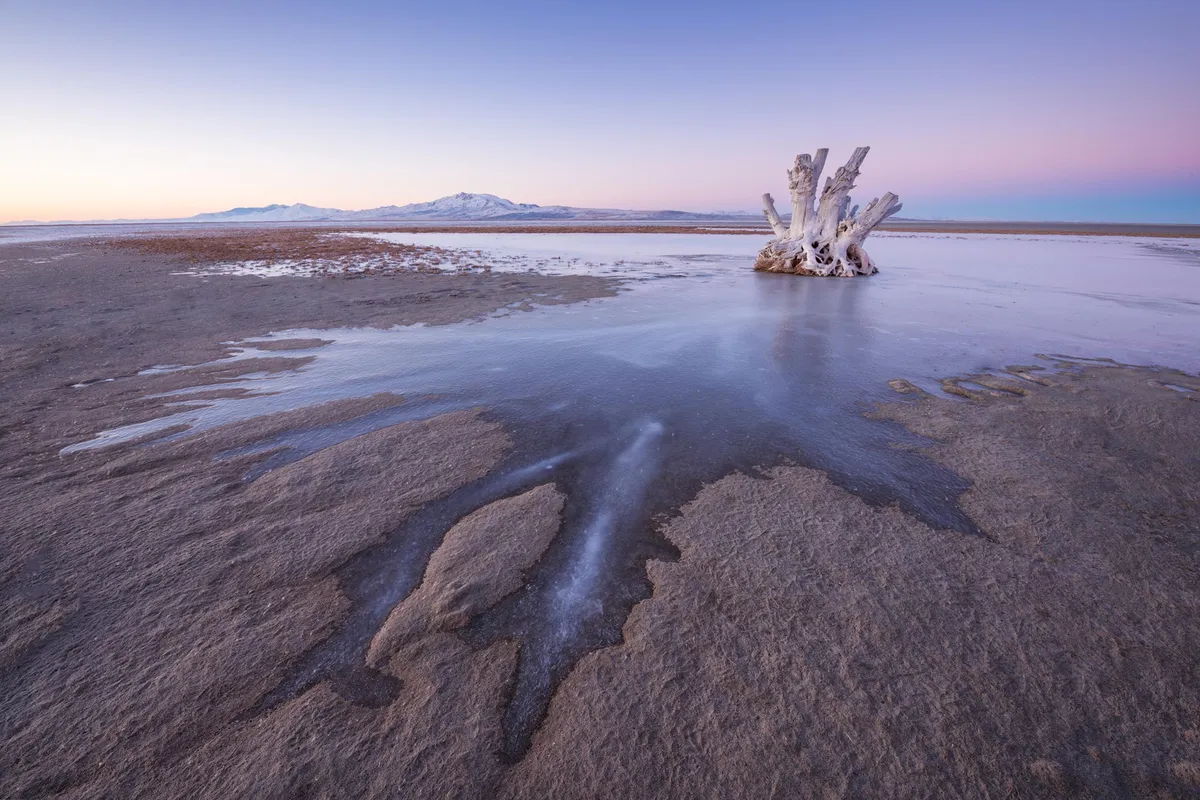
The Great Salt Lake is known for its salty water, which few animals can survive. Now, scientists have found a new resident: a tiny worm that seems to live nowhere else on Earth.
Researchers at the University of Utah have formally described this new free-living nematode. It was found in the lake's microbialites, which are reef-like mineral mounds on the lakebed.
The species is called Diplolaimelloides woaabi. It is less than 1.5 millimeters long. This discovery could help us understand life in one of North America's most extreme water environments.
We're a new kind of news feed.
Regular news is designed to drain you. We're a non-profit built to restore you. Every story we publish is scored for impact, progress, and hope.
Start Your News DetoxThe name Wo'aabi honors the Northwestern Band of the Shoshone Nation. Their ancestral lands include the lake. Michael Werner, a biology professor who led the research, consulted tribal elders. They suggested Wo'aabi, an Indigenous word for "worm."
A Tiny Animal in a Harsh Lake
Nematodes are very common animals. They live in many places, from soil to deep ocean vents. More than 250,000 species are known. However, until 2022, none had been confirmed in the Great Salt Lake.
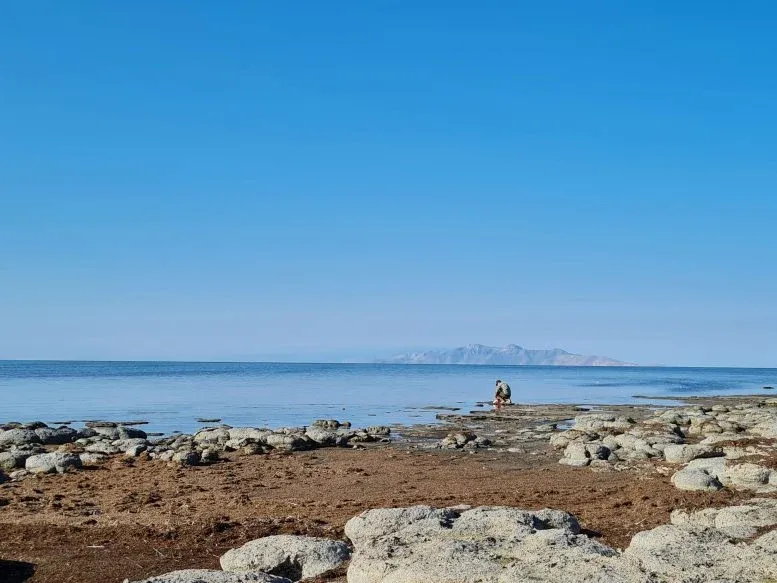
This changed when Julie Jung, a researcher in Werner's lab, found nematodes during trips to the lake. The worms were living in microbialites. These hardened structures are built by tiny living communities and support the lake's food web.
Jung, now a professor at Weber State University, said they suspected it was a new species from the start. It took three years of extra work to confirm this.
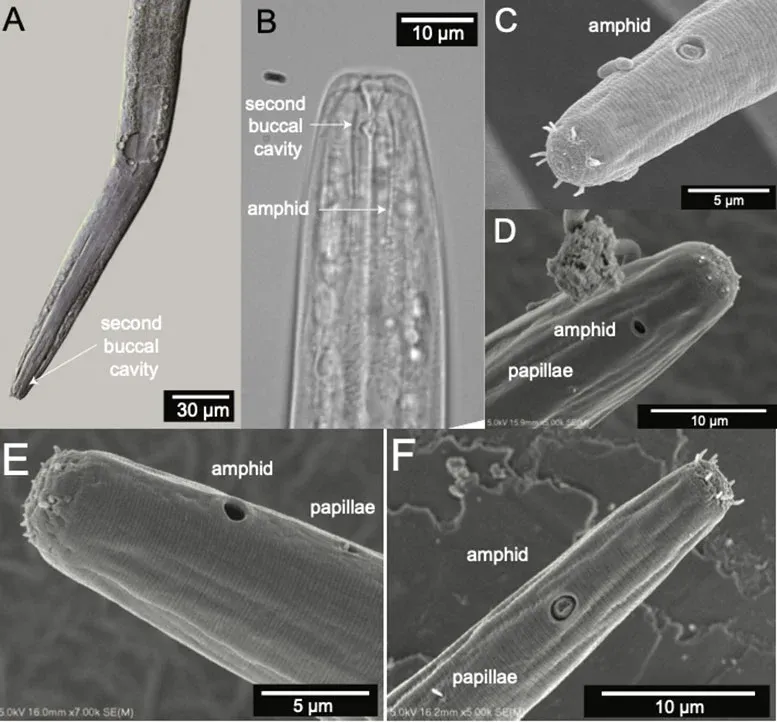
The team used DNA sequencing and detailed studies with microscopes. These methods showed tiny but important features. These included eyespots, fused lips, a funnel-shaped mouth, short sensory bristles, and special male reproductive parts.
Only the Third Animal Group in the Lake
This discovery makes nematodes only the third animal group known to live in the Great Salt Lake's super salty waters. The other two are brine shrimp and brine flies. These animals feed many migratory birds.
Diplolaimelloides woaabi belongs to a group known for tolerating salty or extreme places. Its genus is usually found in coastal marine or brackish (slightly salty) environments. This makes its presence in Utah puzzling. The Great Salt Lake is about 4,200 feet above sea level and about 800 miles from the nearest ocean.
Researchers have also found signs that a second nematode species might live in the lake. More study is needed to confirm this.
Werner noted that it's hard to tell the species apart by sight. However, genetic evidence shows at least two populations exist.
How Did It Get There?
The worm's origin is a big mystery. One idea goes back to the Cretaceous Period. At that time, a large seaway split North America. Parts of what is now Utah were next to marine water. Co-author Byron Adams, a biology professor and nematode expert, thinks the worms might be ancient survivors from that time.
Adams explained that this area was once a beach along that seaway. Streams and rivers flowing into the beach would have been good homes for these organisms. When the Colorado Plateau rose, it formed a great basin, trapping these animals. This idea needs more testing, but it's a strong possibility.
If the nematode has been there for 100 million years, it survived huge changes in the region. This includes the freshwater Lake Bonneville, which covered northern Utah 20,000 to 30,000 years ago. Werner said if the worm is that old, it has lived through dramatic shifts in saltiness at least once, probably a few times.
Another idea is that the worms arrived more recently on migratory birds. They might have been carried in feathers or mud from other salty lakes. Werner finds this hard to believe, but it seems like one of these two options must be true.
A Warning System for a Changing Lake
The worms seem closely linked to microbialites. They live in algal mats and eat bacteria. Researchers found them mostly in the top few centimeters of the mats.
This small habitat could make the species very important. Microbialites help the lake's biological life thrive. So, any animal that interacts with their microbial communities could affect the whole ecosystem.
The team also found a puzzling sex ratio. In wild samples, less than 1% of the worms were male. But in lab cultures, males made up about half the population. Werner said they are happy to grow them in the lab, but something is clearly different from the lake environment.
Nematodes often react quickly to environmental stress. Scientists use them to check water quality, saltiness, and ecosystem changes. This could make Diplolaimelloides woaabi valuable as the Great Salt Lake faces problems. These include drought, water diversion, shrinking lake levels, and rising saltiness.
Adams noted that when only a few species can live in such environments, and they are sensitive to change, they act as good warning signs. They show how healthy the ecosystem is.
For now, Diplolaimelloides woaabi is both a new species and a new mystery. It might be a leftover from ancient seas, a traveler carried by birds, or part of a hidden microbial world that scientists are just starting to understand.
Deep Dive & References
Diplolaimelloides woaabi sp. n. (Nematoda: Monhysteridae): A Novel Species of Free-Living Nematode from the Great Salt Lake, Utah - Journal of Nematology, 2025