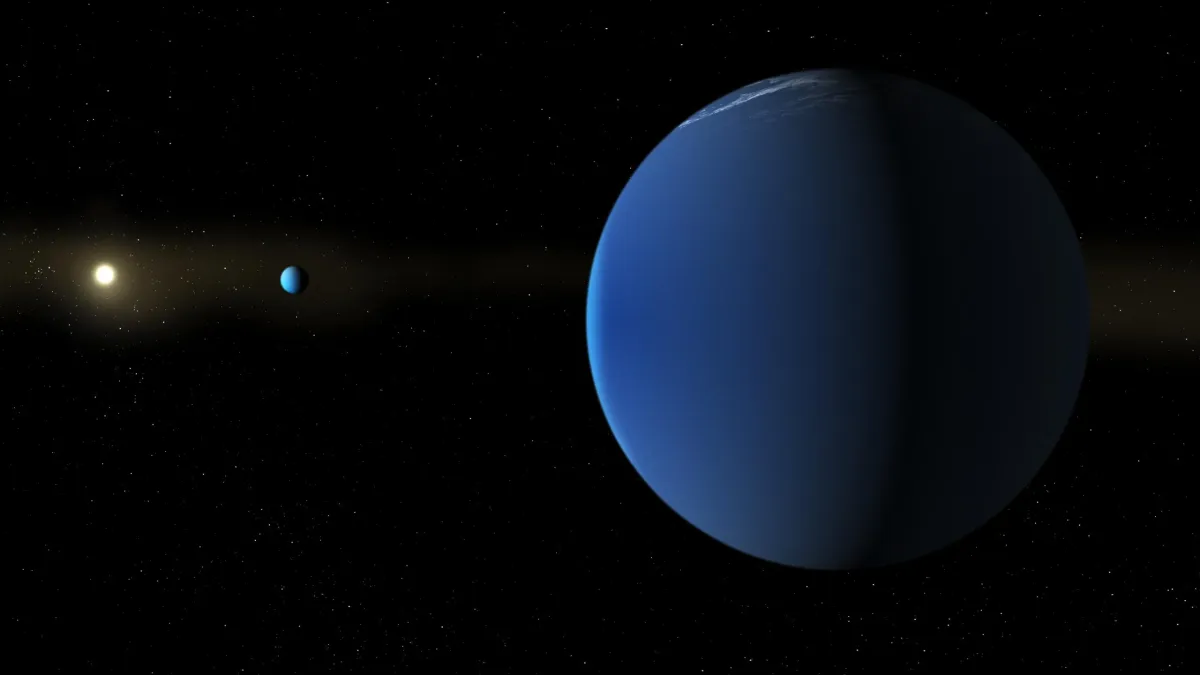
Two giant planets, lighter than cotton candy, are offering astronomers new insights into how some of the galaxy's most unusual worlds form. These "super-puff" planets are among the least dense giant planets ever measured.
The discovery was made by an international team from the University of Oxford, Université Côte d’Azur/Observatoire de la Côte d’Azur, and the University of Birmingham. Their findings were published in Monthly Notices of the Royal Astronomical Society.
Extremely Low-Density Giant Planets
The exoplanets, named TOI-791 b and TOI-791 c, orbit an F7-type dwarf star. This star is about 1,110 light-years from Earth in the southern constellation Volans.
We're a new kind of news feed.
Regular news is designed to drain you. We're a non-profit built to restore you. Every story we publish is scored for impact, progress, and hope.
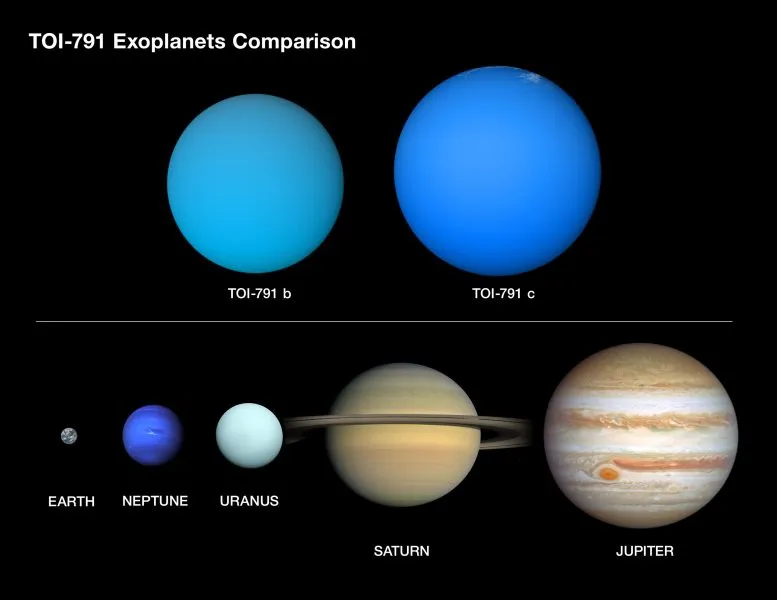
Start Your News DetoxBoth planets are about the size of Jupiter. However, they contain much less material than their large size suggests. TOI-791 b has a density of only 0.038 grams per cubic centimeter. TOI-791 c has a density of 0.047 grams per cubic centimeter.
For comparison, Jupiter's average density is 1.33 grams per cubic centimeter. This means Jupiter is 28 to 35 times denser than these new planets. Cotton candy typically has a density of about 0.05 grams per cubic centimeter, making both planets even less dense. Earth is much more compact, with a density of 5.5 grams per cubic centimeter.
Planetary Siblings in an Orbital Dance
Scientists believe these two planets formed together from the same disk of gas and dust around their young star. This makes them planetary "siblings."
They also share an unusual gravitational pattern called a 5:3 mean-motion resonance. For every five orbits the inner planet makes around the star, the outer planet completes almost exactly three.
As the planets orbit, their gravity pulls on each other. These interactions cause small, detectable changes in the times when each planet crosses in front of the star.
Only four other known planetary systems have more than one super-puff planet. This rarity makes the TOI-791 system very important for studying how such unusual worlds develop over time.
Dr. George Dransfield, the lead author from the University of Oxford, noted that finding two super-puffy planets in the same system is rare. Their extremely low densities make them key targets for understanding how planetary systems form and change.
Citizen Scientists and Antarctic Observations
TOI-791 b and TOI-791 c were first identified as possible planets in 2019 and 2023. Volunteers found them through the Planet Hunters TESS citizen-science project. This project uses observations from NASA’s Transiting Exoplanet Survey Satellite (TESS) to find unknown worlds.
Astronomers then used telescopes worldwide to measure the planets' sizes and masses. Combining these measurements allowed them to calculate the planets' remarkably low densities.
A planet can be detected when it passes in front of its star, blocking some of the star's light. This event is called a 'transit.' The amount of light blocked helps astronomers estimate the planet's size.
In the TOI-791 system, scientists noticed that the transits did not happen at perfectly regular times. These slight timing changes were caused by the planets pulling on each other as they orbited the star. By studying these variations, the team estimated each world's mass and confirmed their diffuse nature.
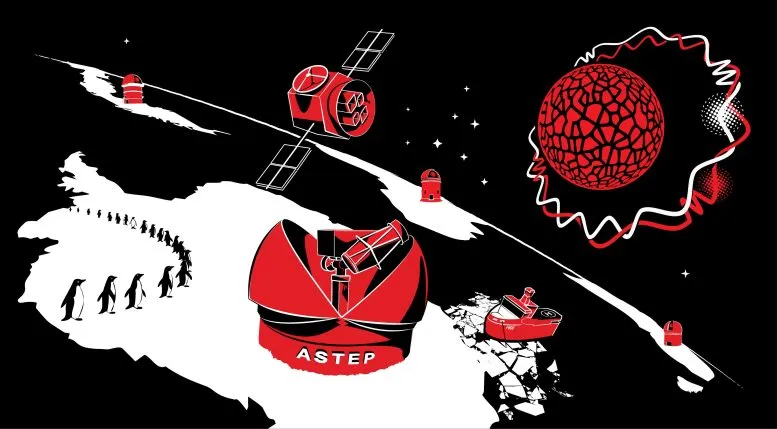
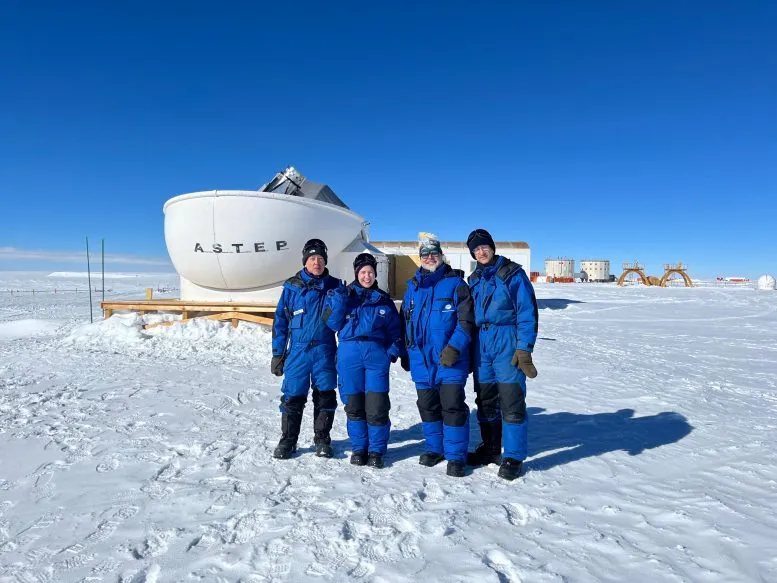
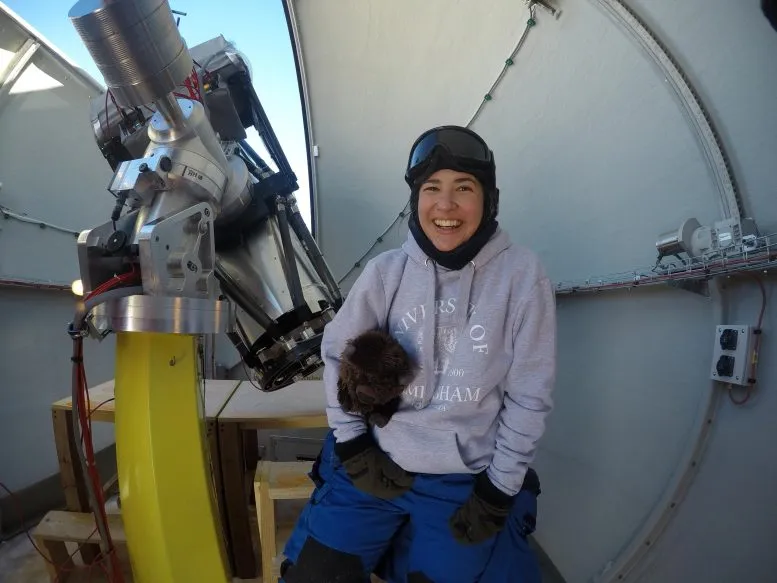
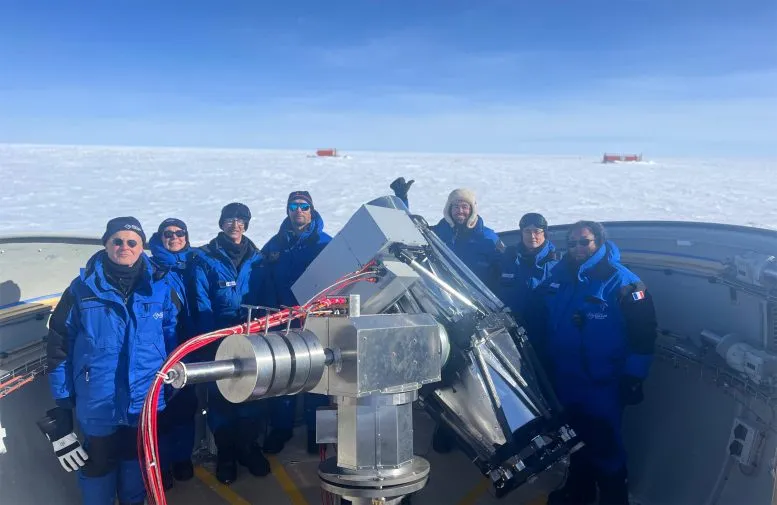
The discovery used eight years of observations from various facilities, including the ASTEP (Antarctic Search for Transiting ExoPlanets) telescope at Concordia Station in Antarctica. This telescope is run by researchers from Université Côte d’Azur/Observatoire de la Côte d’Azur and international partners.
Antarctica provided a key advantage. During winter, the region has months of continuous darkness. This allowed astronomers to watch the planets cross their star without daylight interrupting the observations. Each transit lasted over 11 hours. These are the longest continuous planetary transits ever fully recorded from the ground.
How Do Super-Puff Planets Form?
Scientists are still working to understand how super-puff planets become so large and yet so light. One main idea is that these worlds have huge atmospheres rich in hydrogen and helium. These gas layers might make up a large part of the planet's total mass while greatly increasing its visible size.
The planets might have formed far from their star in a cold part of the protoplanetary disk. In these conditions, gas could have cooled and gathered quickly around a solid planetary core. This would create a massive, lightweight outer layer.
The research team plans more observations to figure out how the planets formed. They want to test different ideas for their unusually low densities.
Future Research with James Webb
Professor Amaury Triaud from the University of Birmingham, a co-author, explained that this system is a unique laboratory for understanding how super-puff planets form and evolve. He proposes using the James Webb Space Telescope to see if the puffy atmospheres contain carbon, nitrogen, and oxygen. This could reveal new insights into how these unusual planets formed.
Studying the planets with the James Webb Space Telescope could show which chemicals are in their vast atmospheres. This information might help researchers figure out where and under what conditions the planets began.
Professor Tristan Guillot from Université Côte d’Azur, also a co-author, added that these multi-planetary systems are complex. They have gravitational interactions between planets that change over very long periods. This discovery highlights the importance of international collaboration in astronomy. Combining observations from Antarctica, space telescopes, and observatories across several continents was crucial to understanding these extraordinary planets.
Deep Dive & References
ASTEP confirmation of a pair of long-period Jupiter-sized planets with extremely low densities transiting TOI-791 - Monthly Notices of the Royal Astronomical Society, 2026