Scientists have made a big step toward safely freezing and bringing back brain tissue. They found a way to stop tiny ice crystals from forming, which usually damages delicate tissue.
Imagine if living tissue could be frozen for years and then brought back to life without losing its function. Researchers looked to the Siberian salamander for inspiration. This small amphibian can survive extremely cold temperatures, even trapped in permafrost for decades. When it warms up, it simply goes back to normal.
Nature's Antifreeze System
The salamander's secret is a natural "antifreeze" system. Its liver makes glycerol, an alcohol that lowers the freezing point inside its body. This protects cells and tissues when they freeze and thaw. Without this protection, extreme cold usually harms living things because ice crystals form inside tissues.
We're a new kind of news feed.
Regular news is designed to drain you. We're a non-profit built to restore you. Every story we publish is scored for impact, progress, and hope.
Start Your News DetoxDr. Alexander German from Uniklinikum Erlangen explained that ice crystals can physically damage cells. This destroys the delicate structure of the tissue.
Human embryos can also be stored for many years by deep freezing. Chemicals are used to stop ice crystals from forming, similar to glycerol. Dr. German noted that when cooled below -130 degrees Celsius, the water in and between cells turns into a glass-like state. This process is called vitrification. Glass is solid like ice, but its molecules are arranged randomly, not in an organized crystal pattern.
Until now, scientists couldn't freeze nerve tissue or whole brain regions and have them work again after thawing. One big problem is that the antifreeze substances can be toxic to delicate cells. Brain tissue is especially fragile because it has millions of nerve cells connected by tiny points called synapses. These connections are how neurons communicate.
Optimizing Preservation
Older vitrification methods damaged this complex network and its synapses. Even if the cells survived, the structure couldn't work properly. Dr. German's team improved the preservatives and the cooling process. This keeps the neural tissue intact.
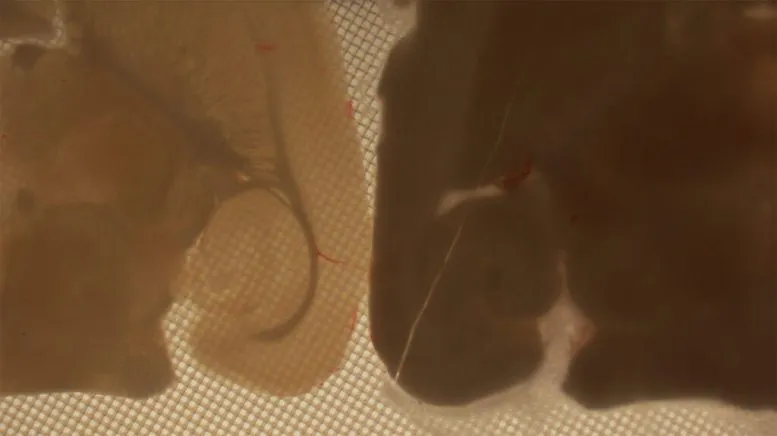
The researchers tested their method on brain sections. They cooled the hippocampus, a part of a rodent brain involved in memory, to -130 degrees Celsius. Electron microscopy showed that the tissue's tiny structure was not changed by freezing. After thawing, electrical signals started again in the hippocampus and moved normally through the neural networks.
The nerve cells not only resumed signaling, but Fang Zheng, a brain researcher at FAU, also showed that long-term potentiation could be triggered at the synapses. This is a key process where frequently used synapses get stronger, helping them transmit information better. Dr. German explained that this mechanism is vital for learning and storing new memories.
Future Possibilities
This new method could allow brain tissue to be preserved and studied later. For example, nerve cells removed from epilepsy patients during surgery could be stored. Years later, these samples could be used to test medications. Freezing diseased tissue could also help research into brain disorders.
Dr. Alexander German hopes that one day, entire organisms might be put into artificial hibernation and revived. He suggested this could be useful for space travel or for people with currently untreatable diseases. This way, they could wait for future treatments that might help them.
Deep Dive & References
Functional recovery of the adult murine hippocampus after cryopreservation by vitrification - Proceedings of the National Academy of Sciences, 2026