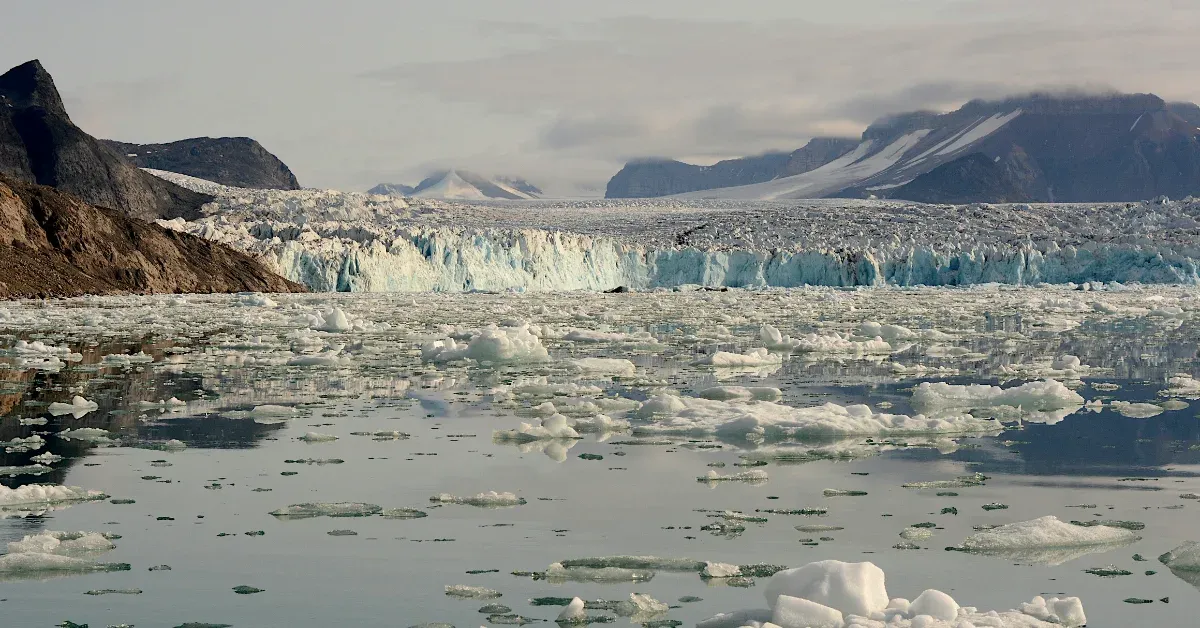
Alaska's permafrost, the ground that's been frozen solid for at least two years, is essentially a giant, icy time capsule. And like any good time capsule, it’s not meant to be opened prematurely. But thanks to rising global temperatures, it’s thawing, collapsing like a particularly bad Jenga game, and taking roads, buildings, and pipes down with it.
For years, getting a real-time handle on this slow-motion disaster was a pipe dream. How do you map something you can't see without digging a trench? Turns out, you don't. You just watch the lakes.
The Case of the Vanishing Ponds
When ice-rich permafrost thaws, the ground slumps. These depressions fill with water, creating what scientists charmingly call thermokarst ponds. The Arctic, which is warming two to three times faster than the rest of the planet, is now absolutely dotted with them. From space, these ponds are like giant, liquid acne on the planet's face — easy to spot.
We're a new kind of news feed.
Regular news is designed to drain you. We're a non-profit built to restore you. Every story we publish is scored for impact, progress, and hope.
Start Your News DetoxBut here's the kicker: sometimes, these ponds don't just appear; they disappear. A lake that took a millennium to form can vanish in a few hours, thanks to a warm summer and some unfortunate permafrost beneath it. It’s like nature’s own magic trick, but with far more serious implications than a rabbit in a hat.
When a lake suddenly drains, leaving behind a circular basin of bare ground, it's a neon sign that the permafrost below just gave up the ghost. This sudden vanishing act is exactly what a team of hydrologists and data scientists are now tracking in near real-time, using satellite images and a little help from AI.
They're monitoring over 4 million lakes across the Arctic, including 70 million thermokarst ponds in the Alaska tundra. The goal: to give communities a heads-up on where building is basically asking for trouble, and where the ground might actually stay put.
The Great Drain-Off of 2026
Take the Seward and Baldwin peninsulas in northwestern Alaska. These spots are basically ground zero for disappearing lakes. In the summer of 2018, almost 200 of the region's 4,600 lakes shrank by over a quarter of their area after an unusually warm winter. And even a supposedly cold winter in 2025-26 didn't stop the trend; another 30 lakes drained in June and July of 2026 alone.
Of course, not every disappearing lake is a permafrost problem. Beavers, those industrious little engineers, can also drain and recreate lakes. Because apparently, even the animal kingdom wants in on the land-shaping action.
In the past, understanding permafrost thaw meant waiting years for scientific papers to drop. Now, with near real-time data streaming in, researchers and communities alike can actually see what’s happening as it happens. It's less "we told you so" and more "here's where not to build your new Walmart." Which, if you think about it, is both impressive and slightly terrifying.