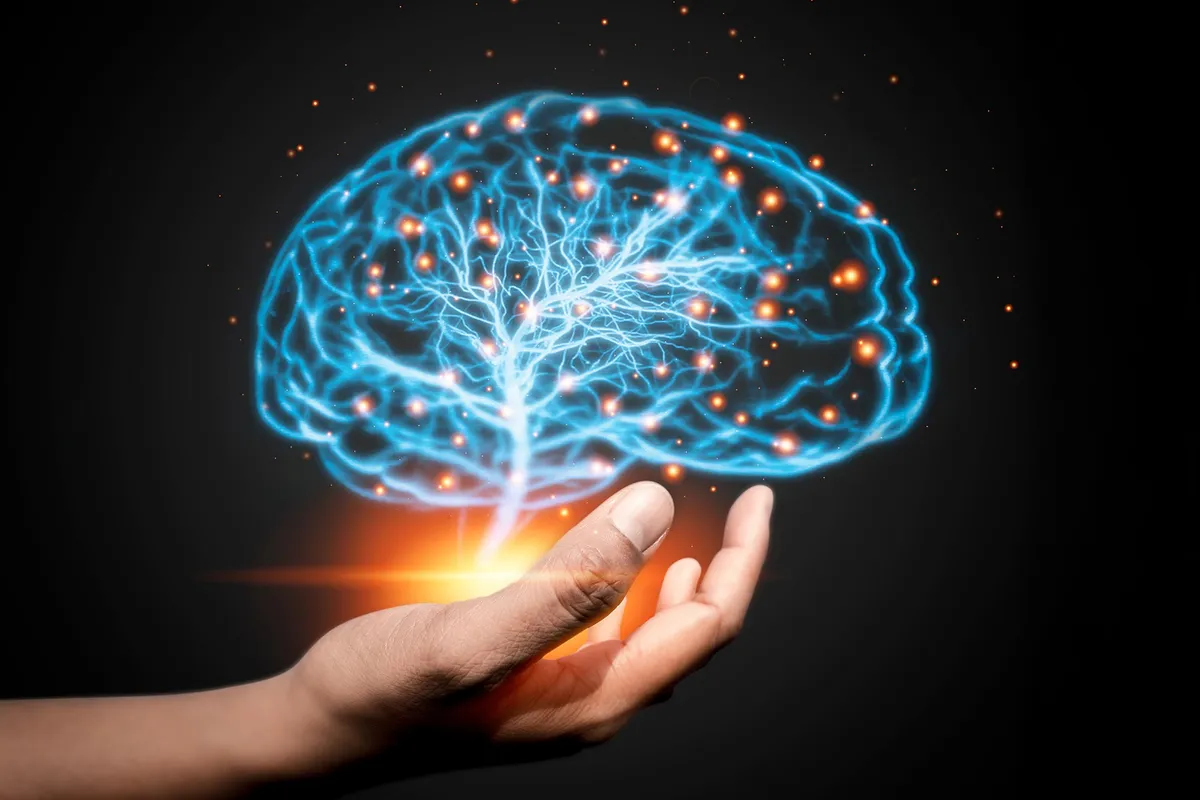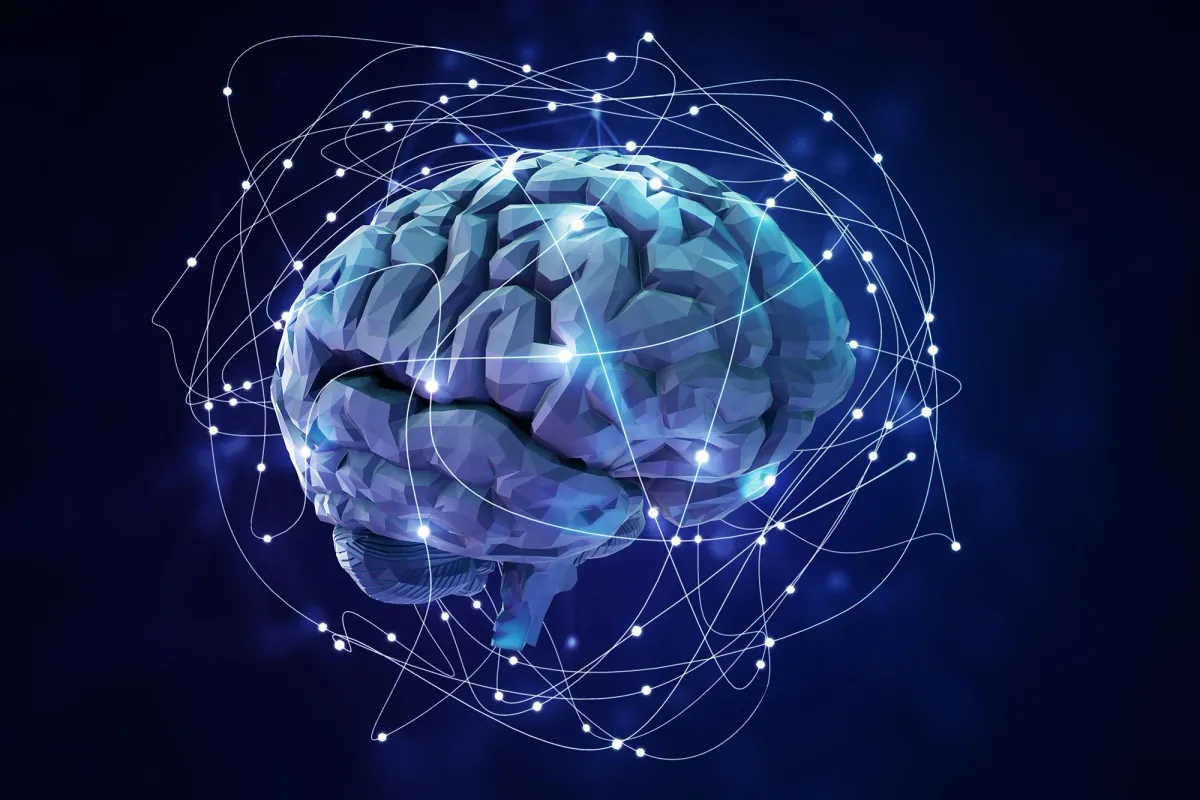
Yale University researchers have created a brain-computer interface (BCI) that lets people play video games using only their thoughts. This system helps users learn quickly with very little training.
How Brain-Controlled Gaming Works
The researchers used real-time fMRI, a type of brain scan, to show that people can control a computer efficiently with their thoughts. Their findings were published in Nature Neuroscience.
The study found that brain activity follows natural pathways. Learning to use a BCI is much easier when the system works with these existing pathways. When a BCI matches the brain's natural organization, users gain control quickly. Their brain activity also adapts to help with learning. Systems that don't match this structure show little to no improvement.
We're a new kind of news feed.
Regular news is designed to drain you. We're a non-profit built to restore you. Every story we publish is scored for impact, progress, and hope.
Start Your News DetoxErica Busch, the study's first author, noted that these findings have wide implications. They could help people with movement or communication issues. They might also lead to new treatments for depression or anxiety. Even future consumer games and technologies could benefit from designs that work with the brain's natural structure.
BCIs allow people to interact with computers using brain activity. While these systems have been around for years, many human BCIs have had limited success. Older fMRI-based systems often needed up to ten long training sessions. Even then, improvements were small, and about one-third of participants never learned to control the system.
Busch and her team believed the problem was in how these systems were designed. Many BCIs asked the brain to learn patterns that didn't fit its natural organization. The researchers thought that better tools could tailor neurofeedback to each brain's unique structure. This could greatly improve both learning speed and performance.
Smita Krishnaswamy, a professor at Yale and a study author, wondered if they could build a smart system. This system would discover the brain's natural structure in real time using noninvasive brain imaging.
Building a Personalized Brain-Computer Interface
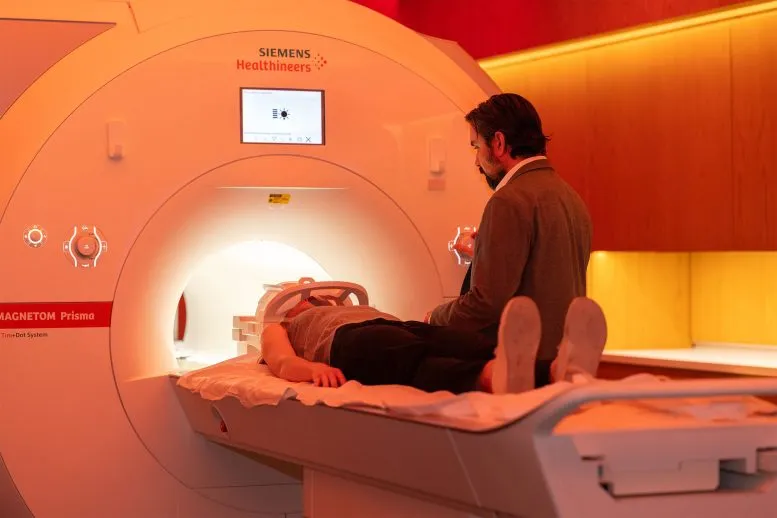
To test their idea, the researchers had healthy young adults participate in four fMRI sessions. In the first session, participants played a video game using a joystick while their brain activity was recorded. They focused on brain areas involved in navigation and spatial movement.
The team then used an algorithm called T-PHATE. This method identifies the natural structure of an individual's brain activity, known as a "neural manifold."
Using each person's neural manifold, the researchers created three different brain-to-game control systems:
- Intuitive mapping: This followed the brain's strongest and most natural activity patterns.
- Within-manifold perturbation: This used less dominant but still natural activity patterns.
- Outside-manifold perturbation: This required activity patterns the brain doesn't naturally create.
Next, they built a system that analyzed a new brain scan every two seconds. It immediately turned that information into movement commands for the game avatar. In the remaining three sessions, participants tried to control the avatar using only their thoughts, with one session for each mapping approach.
Faster Learning Through Natural Brain Patterns
The results showed that participants learned to control the avatar in less than an hour when the BCI followed the brain's natural manifold. Some learned even faster. However, participants could not learn the mapping that fell outside these natural neural patterns in the same amount of time.
These effects went beyond just behavior. As participants learned, their brains reorganized their activity to better match the BCI's demands. In some cases, how much the brain reorganized predicted performance. These changes also spread beyond the targeted brain regions, showing that BCI learning can affect wider neural networks.
Nick Turk-Browne, a psychology professor at Yale and a study author, explained that the neural manifold acts as both a limit and an opportunity. It determines what people can learn and how fast.
The researchers believe these findings might explain why some skills are easier to learn than others. Success may depend on how well a task fits with the brain's existing neural structure, not just effort or ability.
Future Impact on Mental Health and Human Abilities
The potential uses go far beyond lab experiments. In mental health, these findings suggest that conditions like depression and anxiety might be better treated with methods that work with the brain's existing patterns. This is different from trying to completely change them.
This research could also lead to more reliable BCIs for people with motor or communication challenges. More broadly, it opens up the possibility of improving cognitive performance in healthy individuals by training them in ways that align with the brain's natural organization.
Busch noted that people spend a lot of effort trying to improve themselves through education, practice, and therapy. Understanding the structure of our minds and brains could help us do this much more effectively.
Deep Dive & References
Human learning of noninvasive brain–computer interfaces via manifold geometry - Nature Neuroscience, 2026