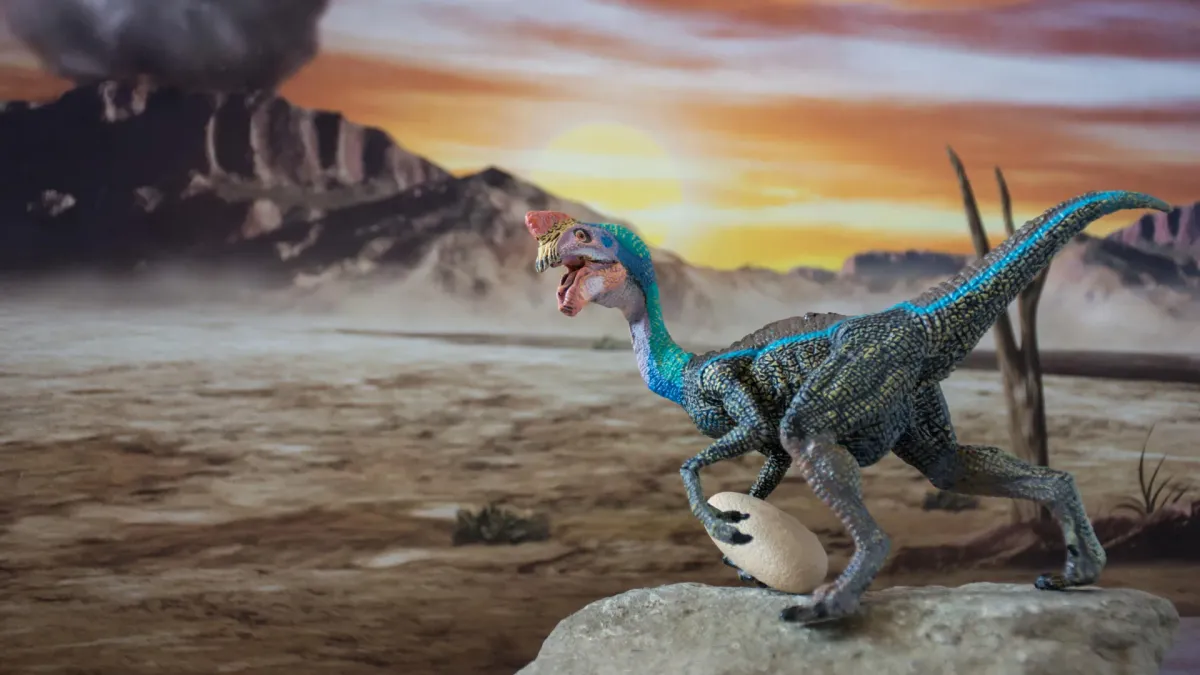
Oviraptors, which were bird-like dinosaurs that couldn't fly, have puzzled scientists for a long time. Researchers wondered if they hatched their eggs using heat from their surroundings, like crocodiles, or by sitting on them, like birds. A new study looked into this mystery.
Scientists in Taiwan used computer models and real-life experiments to understand how these dinosaurs incubated their eggs. They even built a full-size oviraptor and a nest model to see how heat moved through the eggs.
Dr. Tzu-Ruei Yang, a senior author from Taiwan's National Museum of Natural Science, said that the way oviraptors hatched their eggs depended on where the adult sat in relation to the eggs. The study also found that oviraptors were much less efficient at incubating eggs than modern birds.
We're a new kind of news feed.
Regular news is designed to drain you. We're a non-profit built to restore you. Every story we publish is scored for impact, progress, and hope.
Start Your News DetoxBuilding a Dinosaur Nest
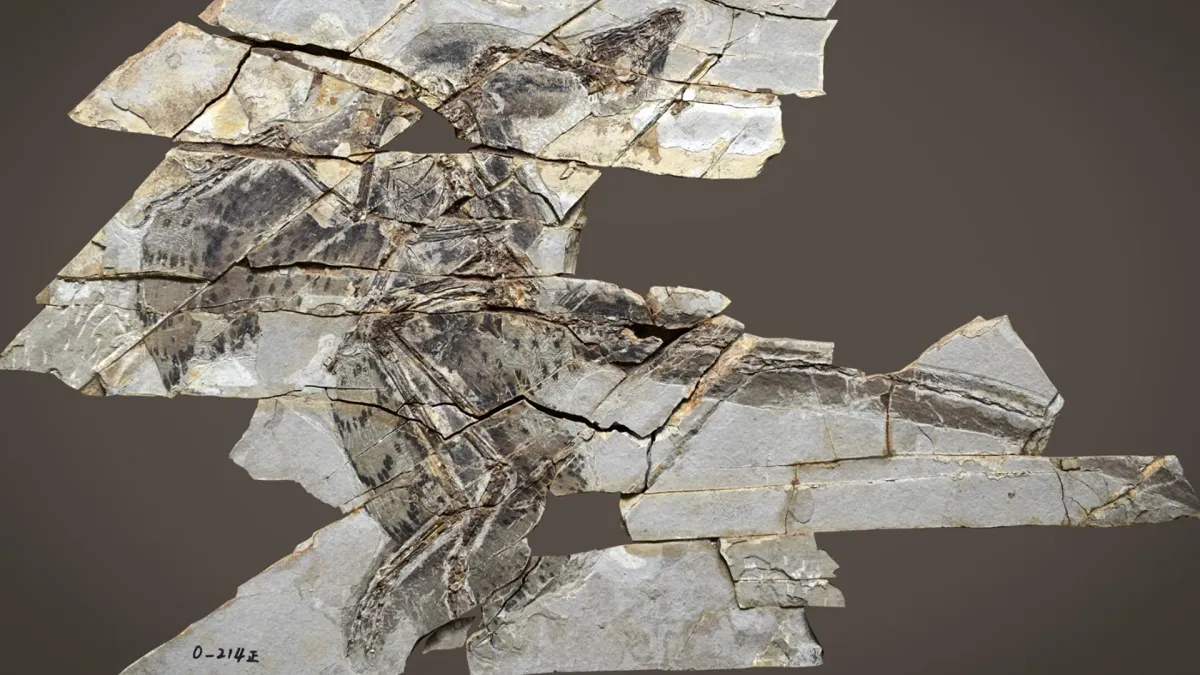
The team based their model on Heyuannia huangi, an oviraptor that lived about 70 to 66 million years ago in China. This dinosaur was about 1.5 meters long and weighed around 20 kilograms. It built nests with eggs arranged in multiple rings.
To create the oviraptor model, researchers used polystyrene foam, a wooden frame, cotton, bubble paper, and fabric. The eggs were made from casting resin. They arranged two clutches of eggs in double rings, just like fossil evidence shows.
Chun-Yu Su, the first author, noted that recreating the oviraptor incubation was tricky. He explained that their eggs are unique, so they had to invent resin eggs to be as close to real oviraptor eggs as possible.
How Heat and Nest Design Affected Hatching
The team studied how the adult dinosaur's presence and the environment affected egg temperatures and hatching.
In colder weather, when an adult was on the nest, the outer ring of eggs could have temperature differences of up to 6°C. This could mean eggs hatched at different times. In warmer weather, this difference was much smaller, about 0.6°C. This suggests that sunlight might have helped keep temperatures even in warmer climates.
Yang explained that large dinosaurs likely didn't sit on their eggs. Instead, they probably used heat from the sun or soil, similar to turtles. Since oviraptor nests were open, sunlight was probably more important than soil heat.
Comparing Dinosaur and Bird Incubation
The researchers also compared oviraptor incubation to that of modern birds. Most birds use "thermoregulatory contact incubation" (TCI), where they sit directly on their eggs to provide heat. For TCI to work, the adult must touch all eggs, be the main heat source, and keep temperatures steady.
Oviraptors likely couldn't do this. Their ring-shaped nests meant the adult couldn't touch every egg at once.
Su suggested that oviraptors might not have used TCI like modern birds. Instead, they probably combined their body heat with environmental heat, acting as "co-incubators." This method was less efficient than modern birds' but suited their nesting style, which seemed to change from buried to semi-open nests.
Yang clarified that modern birds aren't "better" at hatching eggs. He said that birds and oviraptors simply have different ways of incubating, depending on their environment.
New Insights into Dinosaur Parenting
The researchers noted that their study used a reconstructed nest and modern environmental conditions, which might be different from the Late Cretaceous period. These differences could affect the results. They also believe oviraptors likely had longer incubation times than modern birds.
Despite these factors, the study offers new ideas about how oviraptors cared for their eggs. By combining physical models with simulations, this research opens new doors for studying dinosaur reproduction.
Yang added that this work is encouraging for students, especially in Taiwan, where there are no dinosaur fossils. It shows that dinosaur studies can still be done there.
Deep Dive & References
Heat transfer in a realistic clutch reveals a lower efficiency in incubation of oviraptorid dinosaurs than of modern birds - Frontiers in Ecology and Evolution, 2026