Scientists are finding surprising connections between aging and the trillions of microbes living in the human gut. They are exploring if the key to aging well might be found in our gut microbiome. Early research suggests these microbes could affect everything from inflammation to how long we live. This opens new doors for future treatments.
People once looked for the mythical Fountain of Youth. Now, scientists are studying a modern version by looking at gut microbes. They want to see if these tiny organisms can help us understand healthy aging.
The gut microbiome is a huge community of tiny living things like bacteria, fungi, and viruses. They mostly live in the colon. These microbes help us digest food and create molecules that affect both our body and brain. Many things shape a person's microbiome, including genetics, diet, environment, medicines, and age.
We're a new kind of news feed.
Regular news is designed to drain you. We're a non-profit built to restore you. Every story we publish is scored for impact, progress, and hope.
Start Your News DetoxAs we learn that the gut microbiome changes with age, researchers are exploring if a healthier gut could lead to healthier aging.
Your Gut Microbes and Aging
We often notice outward signs of aging like wrinkles. But there are also tiny changes happening deep inside our bodies. Older people tend to have less diverse gut microbes. They also have more bacteria that cause inflammation and other signs of aging.
Changes in the microbiome over time are so consistent that computer programs can guess a person's age just by looking at their microbiome.
However, there are exceptions. Older adults and supercentenarians who age very well have gut microbiomes that look more like those of younger people. This suggests that keeping a "youthful" microbiome might help us age healthily and live longer.

To prove that young microbes affect aging, scientists use a method called fecal microbiota transplantation. This involves replacing a person's gut microbes with those from a donor's stool. For example, giving young mouse microbes to an old mouse can reduce age-related inflammation in the gut, brain, and eyes.
On the other hand, giving old mouse microbes to a young mouse speeds up these aging signs. Other studies show that young mouse microbes can change metabolism. This helps reduce inflammation that makes aging happen faster.
The link between aging and the microbiome is strong. But fecal transplantation has risks. It's only approved for severe C. difficile infections as a last resort. Because of these issues, researchers are looking for safer ways to create an age-friendly microbiome.
Diet and Exercise Can Slow Aging
Eating well and exercising have long been connected to better aging and a longer life. These habits might help by influencing our gut microbes.
What we eat directly affects our gut microbiomes. The typical American diet, full of ultra-processed foods high in sugar, fat, and salt, and low in nutrients and fiber, can reduce microbiome diversity in just a few days.
Moving from a non-Western country to the U.S. is also linked to a loss of gut microbiome diversity. This is partly due to changes in diet.
Not getting enough fiber is a main reason the microbiome can shift to a state linked with poor aging. Studies in roundworms, mice, and rats found that fiber supplements improved overall health and extended their lives by 20% to 35%.
A 2025 study showed that women who ate more fiber were up to 37% more likely to age healthily.
Fiber acts as a prebiotic. This means it's a food component that our bodies can't digest, but it feeds our gut microbes. Gut bacteria turn fiber into compounds like short-chain fatty acids. These promote better aging by improving metabolism, brain function, and immune function, while also reducing long-term inflammation.
Good sources of prebiotics include most fruits and vegetables, whole grains, legumes, nuts, and seeds.
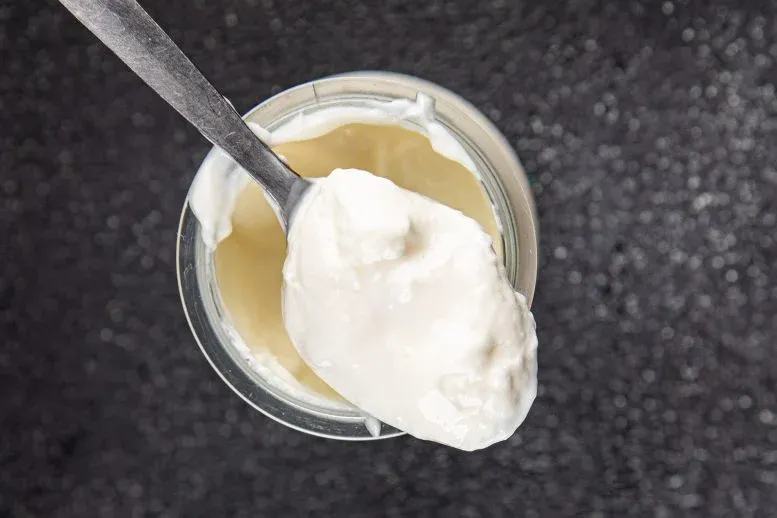
Some foods, like yogurt and kefir, or dietary supplements contain probiotics. These are living microbes that might benefit the gut microbiome. Research on probiotic foods and supplements is varied. This is because of the different types of bacteria and amounts in these products. The health benefits of different probiotics are still being studied.
Physical activity is also linked to a youthful microbiome. Regular exercise can change the microbiomes of older adults to look more like those of younger adults. One study found that when people aged 50 to 75 did 24 weeks of heart and strength exercises, their microbiomes gained healthier bacteria. Their blood also had higher levels of aging-friendly short-chain fatty acids.
New Treatments to Change the Microbiome
Making healthy lifestyle changes is a simple way to build a youthful microbiome that might slow aging. Scientists are also looking into treatments to adjust the gut microbiome for better health.
One option is postbiotics. These are non-living but active compounds that probiotic microbes produce. For example, mouse studies have found that short-chain fatty acid supplements can improve age-related heart and lung problems.
Similarly, elderly mice given heat-killed bacteria from a human infant showed less metabolic issues and inflammation. They also had better thinking skills.
The microbiome can also be changed with medicines, especially antibiotics. A low-dose oral antibiotic can make gut bacteria release factors that might promote good health and aging. This could happen by strengthening the gut barrier or reducing inflammation.
One such antibiotic, cephaloridine, extends the lifespan of roundworms and mice. It does this by making gut bacteria produce colanic acid, an anti-aging compound.
Bacteriophages, or phages, offer another way to change the microbiome for health. Phages are very specific viruses that infect and kill certain types of bacteria.
Phages have been used to treat severe infections from bacteria that resist antibiotics. Since phages can change the gut microbiome of mice, researchers are studying if they could remove gut bacteria linked to unhealthy aging.
Aging is a natural process that can bring many good things. Having a healthy microbiome could help people enjoy their later years more fully.
Deep Dive & References
- The gut microbiome and the brain: a bidirectional link - Gut, 2022
- Factors shaping the gut microbiome - FEMS Microbiology Ecology, 2021
- The gut microbiome shifts with age - Annual Review of Genetics, 2019
- Gut bacteria and the immune system: how aging changes the microbiome and can lead to ‘inflammaging’ - The Conversation, 2024
- Predicting age based on microbiome composition - Science, 2019
- What the gut microbiome of the world’s oldest person can tell us about ageing - The Conversation, 2024
- Youthful microbiome fosters healthy aging and longevity - Nature Metabolism, 2021
- Transplanting microbiota from a young mouse into an elderly mouse reverses age-associated inflammation - Microbiome, 2022
- Microbiota from young mice alter metabolism - mSystems, 2024
- Inflammation that accelerates aging - Nature Reviews Immunology, 2018
- Fecal transplantation is not without risk - Clinical Endoscopy, 2021
- FDA approves first orally administered fecal microbiota product for prevention of recurrence of Clostridioides difficile - FDA, 2023
- Influence of diet and exercise on gut microbes - Nutrients, 2024
- The standard American diet - Journal of the American Dietetic Association, 2010
- Depletes microbiome diversity within days - Gut Microbes, 2016
- Loss of gut microbiome diversity due to dietary changes - Cell, 2018
- Fiber is your body’s natural guide to weight management - The Conversation, 2023
- Lack of fiber is a major reason - Microorganisms, 2022
- Fiber supplements improved overall health and extended lifespan in roundworms - Journal of Functional Foods, 2020
- Fiber supplements improved overall health and extended lifespan in mice - Journal of Advanced Research, 2023
- Fiber supplements improved overall health and extended lifespan in rats - British Journal of Nutrition, 2008
- Increasing the amount of fiber in your diet is linked to as much as a 37% greater likelihood of healthy aging in women - JAMA Network Open, 2025
- Fiber functions as a prebiotic - Foods, 2019
- Short-chain fatty acids - Frontiers in Neuroscience, 2023
- Good sources of prebiotics - Children's Hospital of Philadelphia
- Research on probiotic foods and supplements is still under study - ScienceDaily, 2018
- Physical activity is also linked to a youthful microbiome - Oxidative Medicine and Cellular Longevity, 2017
- Regular exercise can reshape the microbiome - MicrobiologyOpen, 2020
- Microbiomes became populated by healthier bacteria - Journal of Sport and Health Science, 2021
- Treatments to tailor the gut microbiome - Nature Reviews Gastroenterology & Hepatology, 2022
- Postbiotics, nonliving but active compounds - Trends in Food Science & Technology, 2018
- Short-chain fatty acid supplements can improve age-related heart problems - Aging Biology, 2024
- Short-chain fatty acid supplements can improve age-related lung problems - American Journal of Physiology-Lung Cellular and Molecular Physiology, 2023
- Elderly mice given heat-killed bacteria from a human infant - Biogerontology, 2019
- Cephaloridine extends the lifespan of roundworms and mice - PLOS Biology, 2024
- Colanic acid, an anti-aging compound - Cell, 2017
- Bacteriophages, or phages - The Conversation, 2023
- Highly selective viruses - The Conversation, 2021
- Phages have been used to treat severe infections - Infection and Drug Resistance, 2024
- Phages can alter the gut microbiome of mice - Cell Host & Microbe, 2019
- Eliminate gut bacteria associated with unhealthy aging - Clinical and Translational Gastroenterology, 2024