Turns out, the secret to keeping humanity's first campfires burning, oh, just 780,000 years ago, wasn't some ancient Boy Scout merit badge. It was a lake. And probably some seriously old driftwood.
New research from a site in northern Israel, Gesher Benot Ya’aqov (GBY), has unearthed charcoal fragments that tell a surprisingly detailed story. Forget carefully selected kindling; our early ancestors were apparently just really good at finding stuff that floated ashore. Because apparently, that's where we were 800 millennia ago.
Controlling fire was, as you might imagine, a pretty big deal for human evolution. But keeping that fire lit requires fuel. And the scientists behind this study now suggest that easy access to firewood might have been the original real estate driver, determining where people set up camp almost 800,000 years ago.
We're a new kind of news feed.
Regular news is designed to drain you. We're a non-profit built to restore you. Every story we publish is scored for impact, progress, and hope.
Start Your News DetoxThe Original All-Inclusive Resort
Around 780,000 years ago, the GBY area was basically a prehistoric paradise. Picture the edge of ancient Lake Hula: freshwater, wetlands, lush woods, and enough animals to make a modern safari guide weep. Basically, an all-inclusive resort for hunter-gatherers.
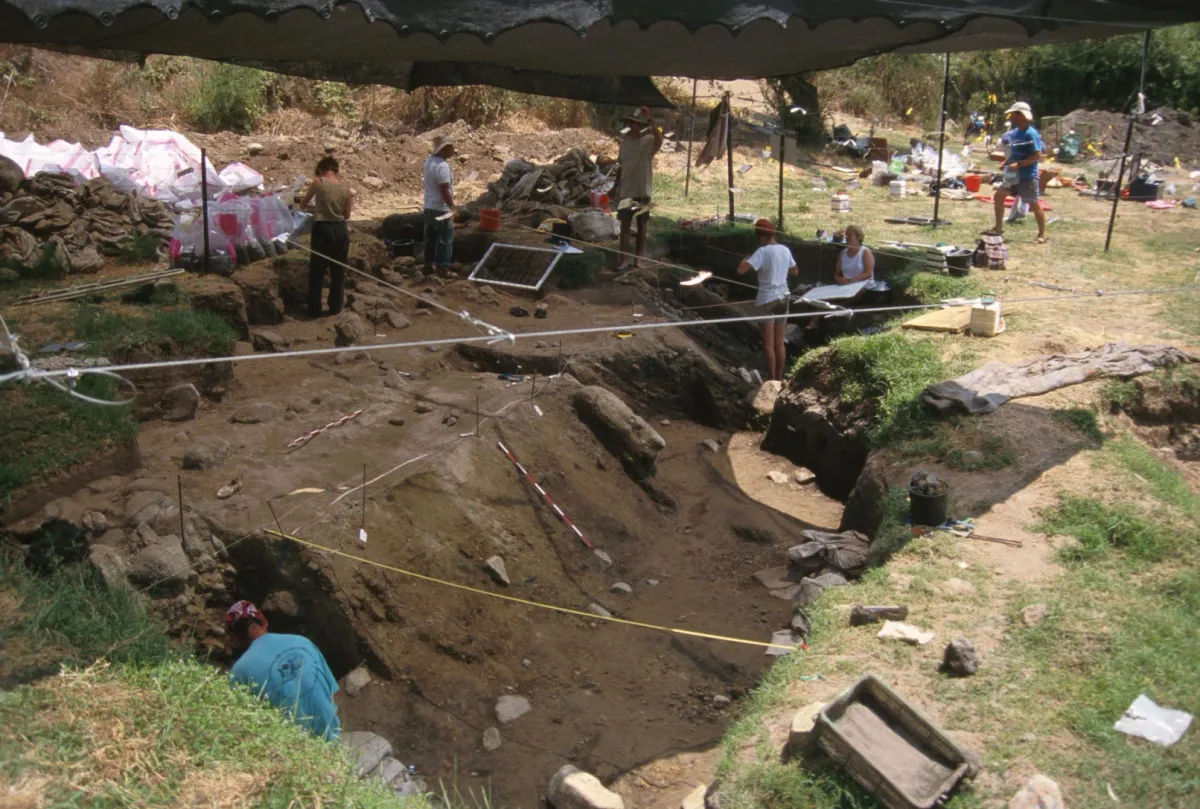
Archaeologists found over 20 distinct layers of occupation, meaning Acheulian hominins (our early human ancestors) kept coming back to this spot for thousands of years. Professor Naama Goren-Inbar and her team from the Hebrew University of Jerusalem dug up stone tools, plant foods, fish bones, and the remains of massive animals. We're talking straight-tusked elephants, considerably larger than their modern African cousins, whose bones suggested they were butchered right there. It's a rare glimpse into the Lower Paleolithic version of a backyard BBQ.
Tiny Clues, Big Revelations
While butchered elephants are undeniably cool, the real stars of this show are the charcoal pieces. Charcoal rarely survives for hundreds of thousands of years, making the GBY collection a bit of a scientific unicorn. Each tiny fragment of burned wood is a botanical snapshot, revealing what grew in the ancient landscape.
The team meticulously examined 266 charcoal pieces under a microscope, identifying the tree species they came from. The results painted a picture of a diverse forest: ash, willow, grapevine, oleander, olive, oak, pistachio, and pomegranate trees. Yes, pomegranate. This is the earliest known evidence of the fruit tree in the Levant, pushing back its documented history by hundreds of thousands of years. Someone's ancient smoothie recipe just got a lot more interesting.
What's more, the charcoal diversity was far greater than other plant remains found at the site, like seeds and fruits. Which brings us back to the lake.
The Smartest, Laziest Firewood Strategy
The study suggests that these early humans weren't exactly connoisseurs of firewood. They weren't carefully selecting specific tree species for optimal burn time or aroma. Their method was far simpler, and frankly, brilliant: they used driftwood.
Branches and logs carried by the lake's currents would pile up on the shore, creating a continuous, low-effort supply of fuel. Gathering it required minimal energy, which, if you think about it, is both impressive and slightly terrifying in its efficiency. Why wander into the woods when the woods come to you?
This constant, easy firewood supply, combined with the abundance of food and water, is likely why groups kept returning to GBY. It was the original one-stop shop for survival.
Beyond just warmth and light, the charcoal also tells us about how fire was used. Researchers found it often clustered near fish remains, particularly large carp teeth. This strongly suggests that our ancestors were cooking fish almost 800,000 years ago. So, not only were they resourceful, but they also had some pretty good culinary instincts.
The evidence paints a picture of a surprisingly capable community, one that understood the value of a good location and an even better, effortless fuel source. Turns out, even 780,000 years ago, convenience was king. Now, if only we could get that kind of delivery service today.