Clams and snails are common on beaches today because their ancestors survived Earth's worst mass extinction. This event happened about 252 million years ago. It wiped out nearly all ocean life.
A new study from Stanford University helps explain why some species survived and others didn't.
The Great Dying: A Catastrophe for Ocean Life
The Permian-Triassic extinction event, also called the "Great Dying," killed 96% of marine species. It also eliminated 70% of land animals. This was far more destructive than the event that killed the dinosaurs.
We're a new kind of news feed.
Regular news is designed to drain you. We're a non-profit built to restore you. Every story we publish is scored for impact, progress, and hope.
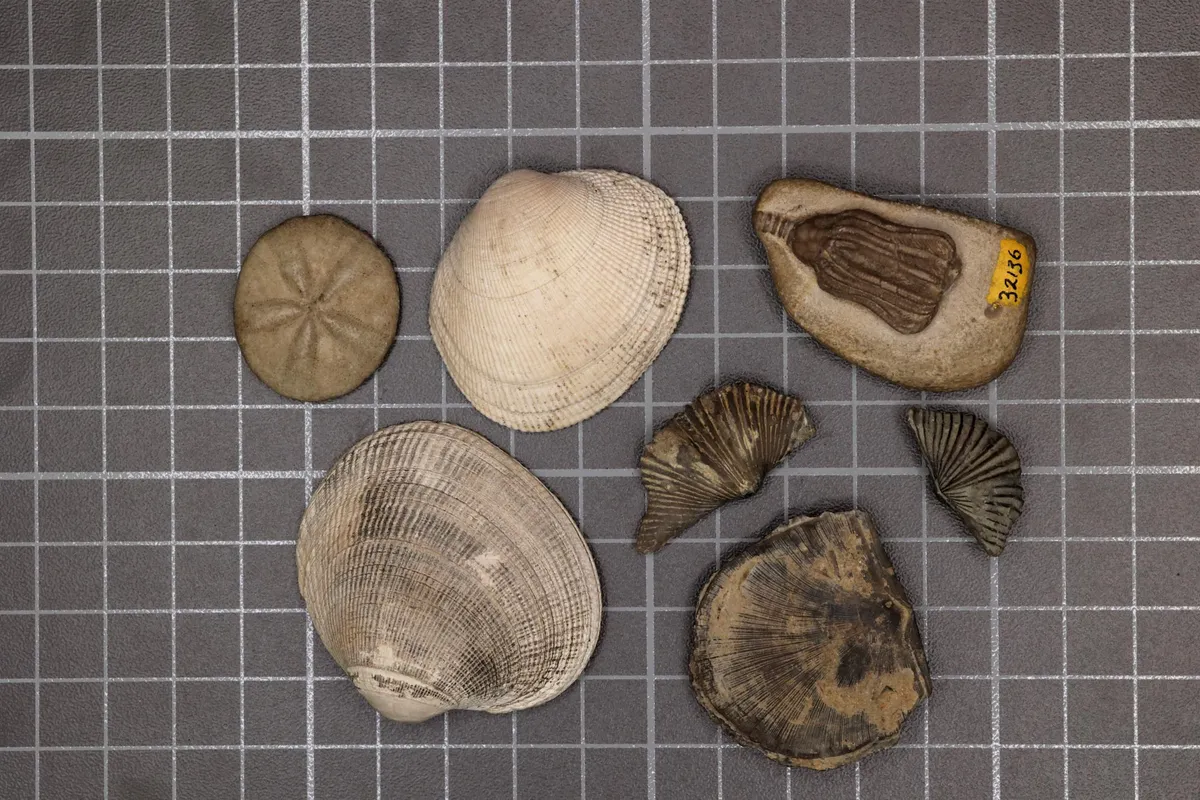
Start Your News DetoxSome animal groups that had ruled the oceans for millions of years suffered huge losses. Others survived and took their place. Brachiopods, shelled animals similar to clams, were hit hard. Before the extinction, they were very common on the seafloor. Crinoids, or sea lilies, and other stationary bottom dwellers also declined sharply.
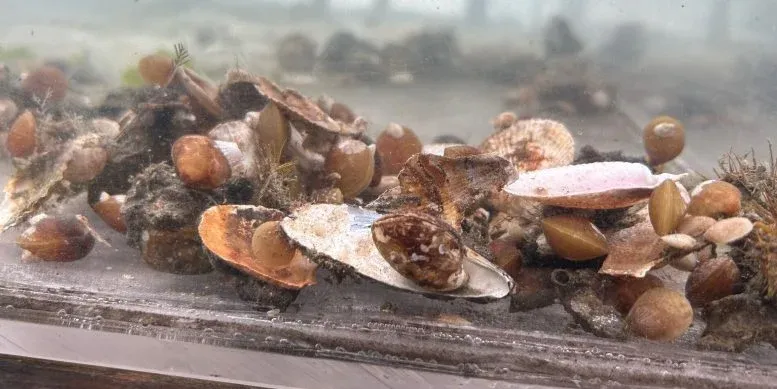
Mollusks, like clams and snails, did much better. Only about half of their species disappeared. Their survival led to the oceans we see today, where mollusks, fish, starfish, and sea urchins are more common than brachiopods.
The study, published in Proceedings of the National Academy of Sciences, found that metabolism was key to survival. Animals that were less able to handle rising temperatures and lower oxygen levels were more likely to die out.
Jose Andres Marquez, the lead author, said the study aimed to solve why we find clam and snail shells, not brachiopod shells, on beaches. He noted that groups vulnerable to temperature increases and oxygen decreases had much higher extinction rates.
Volcanic Activity and Ocean Changes
The crisis started with massive volcanic eruptions. These released carbon dioxide, methane, and other gases. This warmed the planet and changed ocean chemistry.
Warm water holds less dissolved oxygen. At the same time, heat speeds up chemical reactions in an animal's body, making it need more oxygen. Marine life faced a double threat: less oxygen available, and a greater need for it.
Erik Sperling, the study's senior author, said this study confirms what caused the Permian-Triassic mass extinction. He noted that the world then was similar to today, with a cool, oxygen-rich ocean. Then, a huge amount of carbon dioxide entered the Earth system. Understanding this past event can help us prepare for the future.
How Metabolism Determined Survival
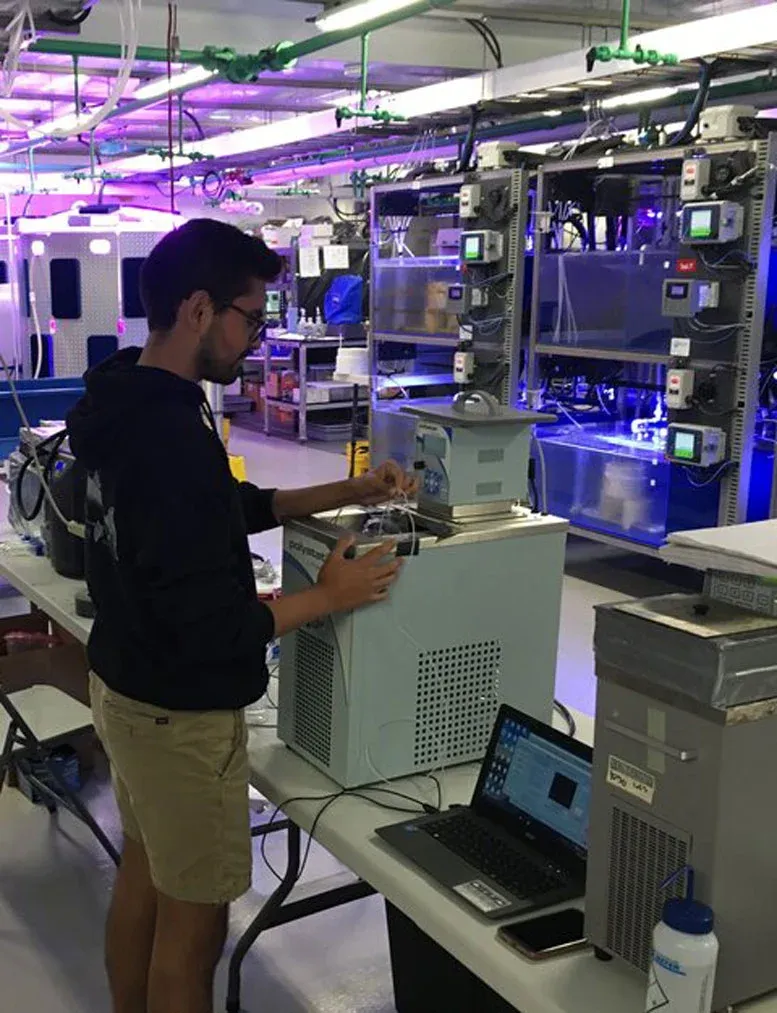
To understand why some animals were more vulnerable, researchers studied living relatives of ancient marine groups. They looked at how these animals react to heat and low oxygen.
During the Paleozoic period, many common ocean animals had slow metabolisms. They lived on the seafloor, moved little, and filtered food from the water. Brachiopods, crinoids, and some corals fit this pattern. This low-energy lifestyle worked well in stable conditions. However, experiments suggest it became a big problem as oceans warmed.
Animals that became dominant after the extinction were often more mobile and had more active metabolisms. Fish are a clear example. Snails, sea urchins, and bivalves (like clams and oysters) also thrived. Bivalves have heavier bodies and a muscular "foot" for movement. This requires more energy than the simpler bodies of brachiopods. Sperling joked, "This is why we eat clam chowder and we don’t eat brachiopod chowder."
The researchers found that slow-metabolism animals could survive in low-oxygen water that would kill many modern species. But this advantage disappeared as the water got warmer. Their oxygen needs rose sharply with temperature. Their slow metabolisms and limited respiratory systems couldn't get enough oxygen.
Modern animals started with higher oxygen needs. But their stronger muscles and gills allowed them to take in more oxygen when temperatures rose. Paleozoic animals were efficient in cool, stable conditions but couldn't adapt to a changing environment. More active animals used more energy but had the biology to survive a warming ocean. Sperling emphasized that warming and oxygen loss were the main drivers.
Lessons for Today's Oceans
This research builds on a 2018 study that used climate simulations and fossil patterns. That study showed how warming and oxygen loss could explain the extinction's severity. However, earlier physiological measurements mostly came from modern fish and crustaceans. These were not good representatives for brachiopods and other groups that suffered the most. Sperling noted that the new study filled this gap by looking at the physiology of Paleozoic fauna.
Before the Great Dying, brachiopods outnumbered bivalves. Today, only about 400 brachiopod species remain. Meanwhile, 10,000 to 15,000 bivalve species live in marine and freshwater environments. Sperling compared this shift to the extinction of dinosaurs, after which mammals took over. The Great Dying did something similar in the oceans, making way for mollusks and other survivors.
Ocean acidification likely also played a role. Carbon dioxide in seawater makes it harder for some animals to build shells. The researchers believe acidification contributed but was less destructive than heat and oxygen loss.
The Stanford team plans to study more marine groups and how warming, oxygen loss, and acidification interact. All three are increasing in parts of the modern ocean. While the Great Dying happened over thousands of years due to massive volcanic activity, the underlying problem is similar. Warming water holds less oxygen and makes animals need more.
Sperling warned that worst-case scenarios project warming levels similar to the Permian-Triassic. Temperatures rose 8-12° Celsius during the Great Dying over thousands of years. Modern projections show temperatures could rise 1.5-4° Celsius by 2100, a much faster change. However, Sperling concluded, "The good news is, we’re still at the point where we can change things and do something about it."
Deep Dive & References
- Differences in physiological tolerance to global warming caused the Permian–Triassic transition between the Paleozoic and Modern faunas - Proceedings of the National Academy of Sciences, 2026