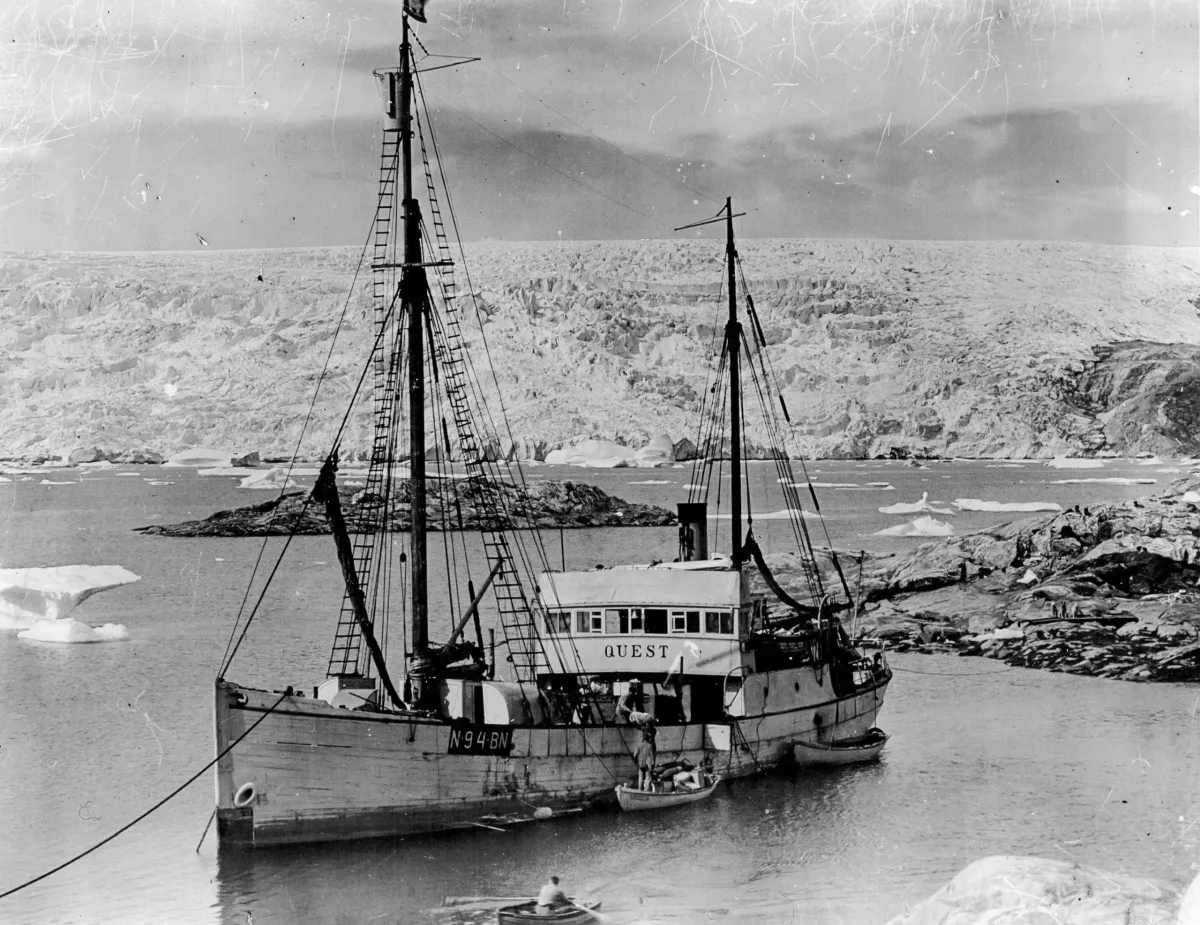
More than a century after explorer Ernest Shackleton last stood on its deck, his final ship, Quest, has been found. It rests at the bottom of the Labrador Sea.
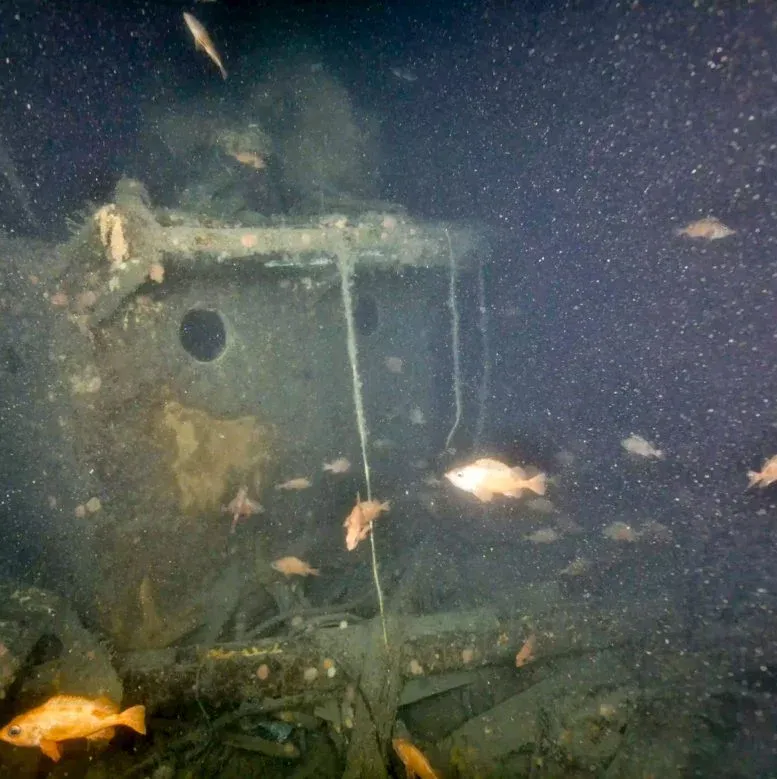
The first close-up images of Quest show a damaged but recognizable vessel. Its bow, deck, and several portholes are still visible, covered by pink corals. Fish like cod and redfish now swim through the wreck.
Exploring the Wreck of Quest
The Royal Canadian Geographical Society and Woods Hole Oceanographic Institution (WHOI) led a joint expedition to capture these images. They used WHOI’s Falcon remotely operated vehicle and the human-occupied submersible Alvin. Alvin is famous for carrying the first people to the Titanic wreck 40 years ago.
We're a new kind of news feed.
Regular news is designed to drain you. We're a non-profit built to restore you. Every story we publish is scored for impact, progress, and hope.
Start Your News DetoxJohn Geiger, the expedition leader and CEO of the Royal Canadian Geographical Society, joined Alvin’s first dive. He called seeing Quest a "moving experience." He described the moment the bow appeared from the darkness as "incredible."
Quest was discovered in 2024, sitting upright about 390 meters (1,280 feet) deep. The initial discovery only provided side-scan sonar images, showing just an outline. This new mission allowed researchers to see the ship directly. They found the main mast lying down and significant damage. Large fishing nets also covered parts of the wreck, blocking views and raising concerns about commercial fishing's impact on the ocean floor.
Geiger noted the extensive damage and the "sad story" of the nets. He believes people need to take responsibility for how they treat the oceans.
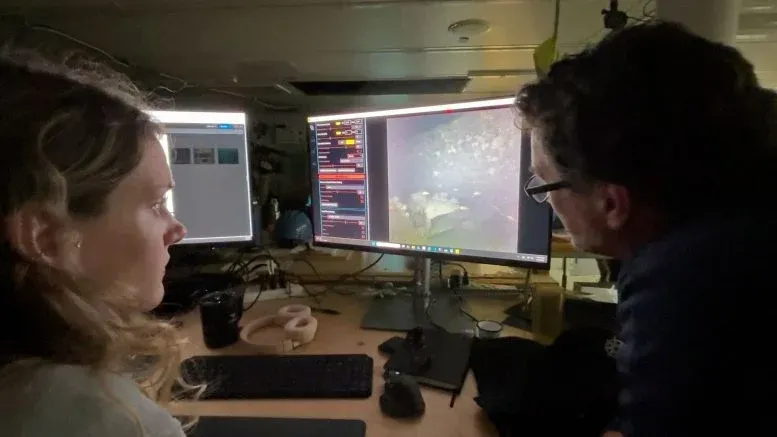
Despite the damage, Quest has become a thriving artificial reef. Corals grow on its wooden remains, and fish find shelter around the ship. Mark Pathy, Chief Mission Specialist, hopes the expedition will inspire a new generation to explore with the same curiosity as Shackleton and Robert Falcon Scott.
Shackleton's Final Journey
Quest holds a special place in history as the setting for the end of Shackleton’s life. Shackleton is famous for his Endurance expedition, a remarkable survival story where he saved his entire crew after their ship was crushed by ice in Antarctica.
He returned to the Antarctic aboard Quest in 1921. Shackleton died on the ship in 1922 at age 47, while it was anchored at South Georgia. The expedition had not yet fully begun.
Quest continued its story for another four decades. It worked in the Arctic, served in World War II, and then resumed sealing. On May 5, 1962, ice floes crushed its hull near Labrador, sending it to the seabed. The crew safely escaped.
Creating a Digital Twin
The current expedition took years to plan. It brought together experts in deep-sea operations, marine archaeology, mapping, and underwater imaging. Alvin pilot Bruce Strickrott noted the complexity of exploring a wreck with a human-occupied submersible. He credited the team's success to their extensive experience.
Over three days, the team surveyed and mapped Quest using Canadian-made underwater photogrammetry equipment from Voyis. Thousands of images will be combined to create a detailed digital twin of the wreck. This model will preserve the ship's current condition, even as currents, fishing gear, marine life, and natural decay continue to change the site. It will also allow researchers and the public to explore Quest virtually without disturbing it.
Dwight Coleman, Co-Chief Scientist from WHOI, explained that this 3D modeling technology is new in ocean science. It offers new ways to explore historic wrecks and make them real for everyone.
Reuniting Shackleton and Scott's Ships
The expedition will next head northeast towards Greenland to survey Terra Nova. This ship is linked to Robert Falcon Scott, another famous polar explorer. Terra Nova carried Scott on his final Antarctic expedition. Scott reached the South Pole in 1912, only to find a Norwegian team had arrived earlier. Scott and four companions died on their return journey.
Like Quest, Terra Nova later worked as a sealing vessel in Canadian waters before sinking. Shackleton had initially planned to take Quest to the Canadian Arctic before changing his final expedition's course to Antarctica. These two wrecks offer a rare chance to document the final ships of two of the most famous figures from the Heroic Age of Antarctic exploration.
Alvin and Atlantis are owned by the U.S. Navy and operated by WHOI, with support from the U.S. National Science Foundation (NSF). The mission’s remotely operated vehicle is provided through the NSF-supported Ocean Observatories Initiative (OOI) at WHOI.