A Georgia Tech student, Diya Godavarti, helped create a tool to improve how workers respond to chemical spills. Godavarti, then a second-year chemical and biomolecular engineering student, was part of a course focused on chemical equity. This class aimed to reduce chemical exposure in vulnerable communities.
The class is part of Georgia Tech's Vertically Integrated Projects (VIP) program. This program places students in long-term research teams that involve different subjects and last multiple semesters.
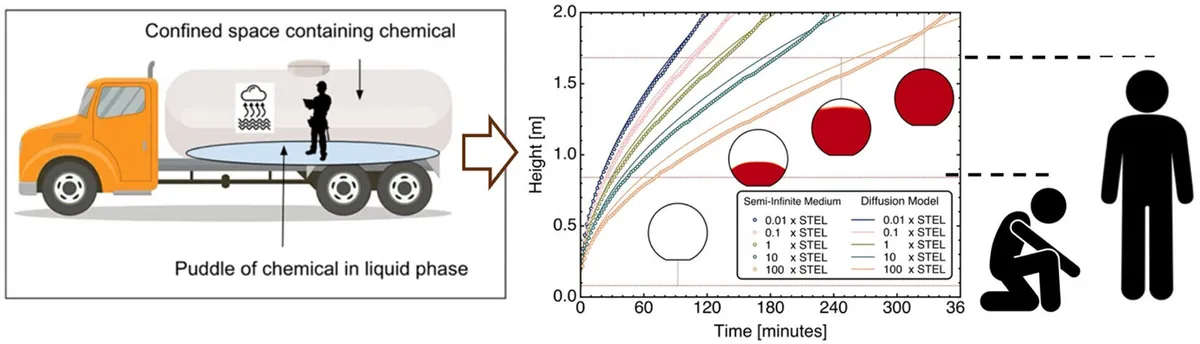
Godavarti and her classmates developed a computer model. It estimates how dangerous chemical vapors build up in closed spaces, like tanker trucks. Their work was published in ACS Chemical Health & Safety. The paper is titled "Modeling Time-Dependent Chemical Concentrations in Confined Spaces for General Safety Applications."
We're a new kind of news feed.
Regular news is designed to drain you. We're a non-profit built to restore you. Every story we publish is scored for impact, progress, and hope.
Start Your News DetoxGodavarti said the project helped her future career plans. She realized she enjoyed open-ended projects and confirmed her desire to pursue a Ph.D. She will start her doctoral studies at Northwestern University in the fall.
Connecting Different Fields
The VIP class started because of a gap between research labs and real-world situations. Pamela Pollet, a faculty member at Tech's School of Chemistry and Biochemistry, usually works in labs with safety measures like vent hoods. But after helping with a project where workers were exposed to harmful chemicals, she began to think about safety differently.
Pollet noted a difference between how chemicals are handled in controlled lab settings and how people interact with them daily.
To bridge this gap, Pollet partnered with Jenny Houlroyd. Houlroyd is the occupational group health manager for the Enterprise Innovation Institute's (EI2) Safety, Health, and Environmental Services Program. She helps Georgia businesses reduce workplace dangers and protect employees.
Houlroyd said that chemical safety researchers and chemists often work separately, even though their skills complement each other. This led to the idea for the class.
The VIP format made this collaboration possible. The team of 20 students included majors from chemistry, biochemistry, biology, computer science, neuroscience, and chemical and biomolecular engineering. Students also heard from guest speakers, including journalists, lawyers, and policymakers, who work with chemical safety.
Modeling Real-World Risk
The students focused on a practical problem in industrial hygiene. This involves quickly estimating a person's exposure to hazardous chemicals after a spill or an open container in a confined space.
Houlroyd explained that hiring an industrial hygienist takes time and money. But in a chemical spill, safety data is needed immediately.
To solve this, the students built a computer model. It simulates how chemicals evaporate and spread through the air in enclosed areas. They used benzene, a common solvent, as a test. The model predicts how benzene concentrations change over time, from minutes to hours after a spill. It can also estimate exposure at different heights, considering if someone is standing or crouching.
John Pederson, a chemistry Ph.D. student who mentored the team, said they are addressing important gaps in modeling chemical exposures. He noted that while there's been good work in industrial settings, less attention has been given to environments in transportation, agriculture, and sanitation. Working with paints, coatings, and cleaning solutions can pose a risk of exposure.
From Classroom to Impact
The team hopes to make the model widely available and create a user-friendly app. Pollet and Houlroyd believe the project already shows the power of learning across different fields.
Pollet said the project was a good overlap of their fields. It helps students understand real-world situations in a way that traditional classrooms cannot.
Houlroyd noted that the collaboration also expanded her impact. She works to help businesses across Georgia. This project allowed her to share her field knowledge with students. She expressed pride in the students for turning a big issue into something the industry can use.
Deep Dive & References
Modeling Time-Dependent Chemical Concentrations in Confined Spaces for General Safety Applications - ACS Chemical Health & Safety, 2026