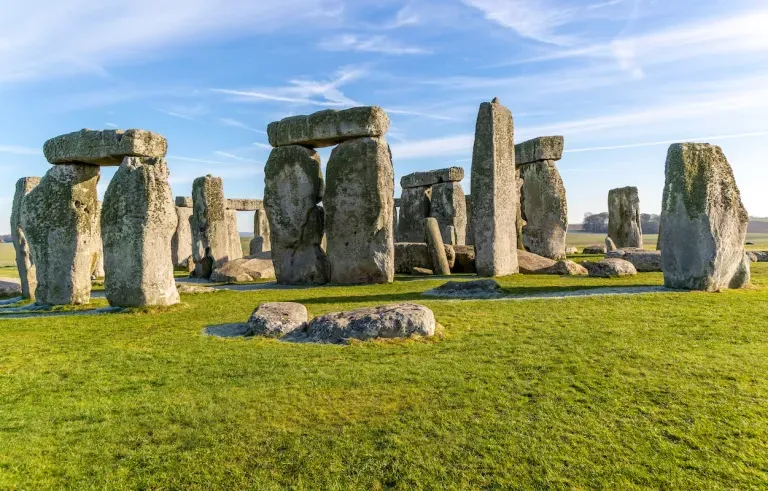
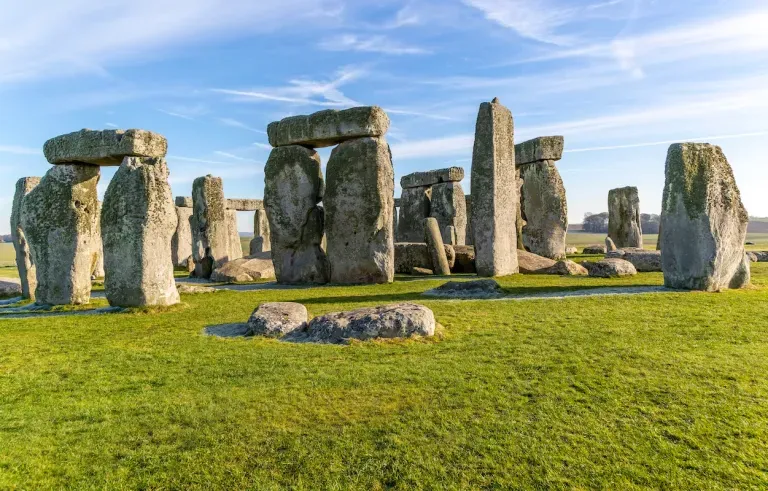
For centuries, the biggest mystery at Stonehenge wasn't how they built it, but where the heck they got all those rocks. The massive sarsen stones came from about 20 miles away, which is still a feat. The smaller bluestones? Those were a respectable 180 miles from Wales. But the Altar Stone, that central slab, was a complete enigma.
Now, a new study has traced its origins to Northeast Scotland. That's a casual 430-mile trek to Salisbury Plain. Imagine the ancient equivalent of a cross-country moving company, only with more ropes and fewer complaints about traffic.
The Glacial Express, Then Human Power
Scientists from Curtin University and their UK colleagues have been busy. Earlier this year, they definitively ruled out glaciers for the bluestones, concluding those were a purely human effort. Now, for the Altar Stone, they're proposing a tag-team approach: nature did some of the heavy lifting, and then humans finished the job.
We're a new kind of news feed.
Regular news is designed to drain you. We're a non-profit built to restore you. Every story we publish is scored for impact, progress, and hope.
Start Your News DetoxTheir theory, published in the Journal of Quaternary Science, suggests that during Britain's last ice age (between 33,000 and 11,700 years ago), a glacier picked up the Altar Stone from the Orcadian Basin in Scotland. It then might have carried it as far south as Dogger Bank, a now-submerged landmass that once connected Britain to mainland Europe.
Think of it as the geological equivalent of a free ride, until the glacier decided it was done. "Glaciers might have moved rocks part of the way... but they did not carry them into southern England," explains Dr. Anthony Clarke, a co-lead author. So, humans still had to haul this thing hundreds of kilometers.
Dr. Remy Veness, another co-lead, points out that the people of Doggerland (who lived on that now-underwater landmass) might have found the stone and seen its significance long before Stonehenge was even a twinkle in an ancient architect's eye. It was important enough for them to move it twice: first, to save it from rising sea levels as the ice melted, and then again, to its final resting place on Salisbury Plain.
Moving a multi-ton rock across hundreds of miles, even with a glacial assist, requires some serious logistical wizardry and an even more serious understanding of the land. It also suggests that some rocks just have a destiny, and a remarkable ability to find their way to a very famous prehistoric monument. Because apparently that's where we are now.