Scientists have captured a famous "sandwich" molecule in a rare, hidden state. This discovery reveals a long-missing step in how these important molecules form.
For over 70 years, metallocenes have been key molecules in chemistry. They have a metal atom sandwiched between two carbon-based rings. These molecules are used in many areas, like making catalysts, new materials, and even in drug delivery.
Despite their importance, scientists haven't been able to see exactly how metallocenes form. This is because some intermediate structures appear only for a very short time before changing.
We're a new kind of news feed.
Regular news is designed to drain you. We're a non-profit built to restore you. Every story we publish is scored for impact, progress, and hope.
Start Your News DetoxNow, researchers at the Okinawa Institute of Science and Technology (OIST) have found and studied a never-before-seen intermediate stage. Their findings, published in the Journal of the American Chemical Society, offer new insights into how these molecules are built and how they react. This could help redesign them for future uses.
A Rare "Double Ring-Slip" Structure
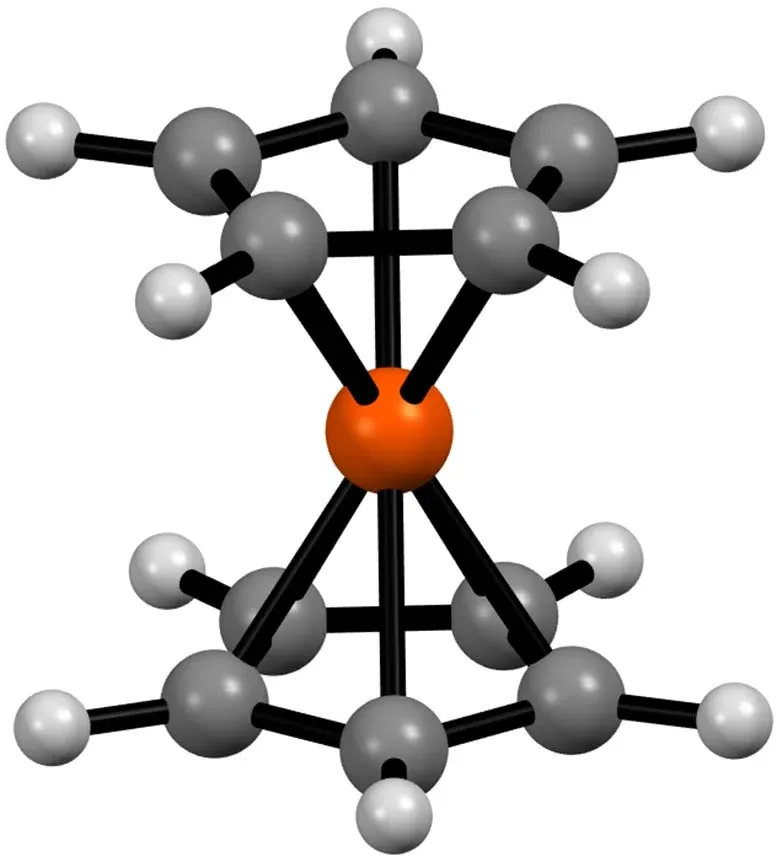
Ferrocene is a well-known metallocene. It has an iron atom between two five-carbon rings. Its discovery was so important that it led to a Nobel Prize in Chemistry in 1973.
Ferrocene also follows a rule in chemistry: stable metal complexes usually have 18 electrons in their outer shell.
Dr. Satoshi Takebayashi's team at OIST has been exploring ways to go beyond this 18-electron limit. Last year, they found unusual ferrocene derivatives with 20 electrons. While trying to make similar 20-electron complexes with ruthenium, they unexpectedly created standard 18-electron compounds instead.
This surprise led to a closer look.
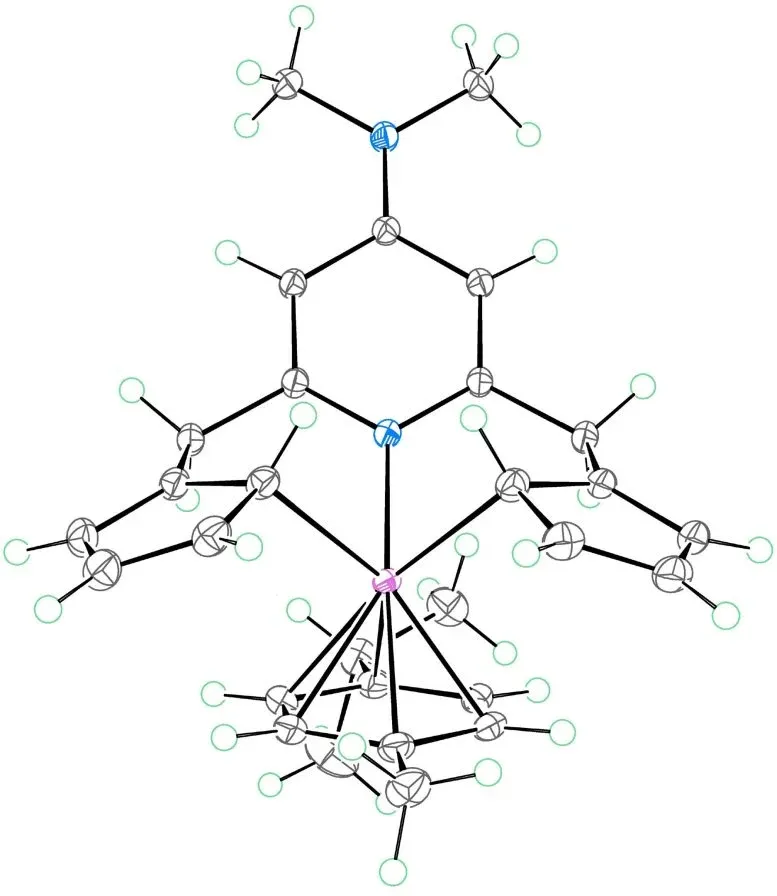
"We isolated an intermediate structure from our ruthenium complex reaction," Takebayashi said. "We studied it with X-ray diffraction and found it was 'doubly ring-slipped'."
Ring-slippage happens when fewer atoms in a molecular ring bond with the metal atom. In this new structure, the bonding changed from all five carbon atoms in each ring to just one carbon atom per ring.
This is the first time a double ring-slipped sandwich intermediate has been fully studied at the molecular level.
How Metallocenes Form
To understand the new ruthenocene derivative, the team used several tools. These included nuclear magnetic resonance (NMR) spectroscopy and mass spectrometry.
They also used computer models and lab tests to track the reaction. Their work showed that the doubly ring-slipped structure first creates an unstable single ring-slipped intermediate. Then, it forms the final product.
These findings give a much clearer picture of how metallocenes form and change.
New Smart Materials
This discovery does more than solve a chemistry mystery. It could also lead to practical uses.
"There's new interest in adding metallocenes to materials to get different properties," Takebayashi explained. "By understanding how they react and change shape, we can design structures for drug delivery, catalysts, sensors, and more."
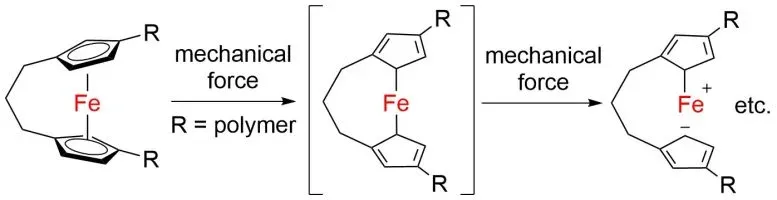
By showing how metallocenes can temporarily bend and rearrange, this research helps guide the design of responsive materials. These materials could have adjustable properties. They might be used in advanced catalysts, chemical sensors, and new drug delivery systems.
Deep Dive & References
Molecular Structure of a Doubly Ring-Slipped Ruthenocene Intermediate - Journal of the American Chemical Society, 2026