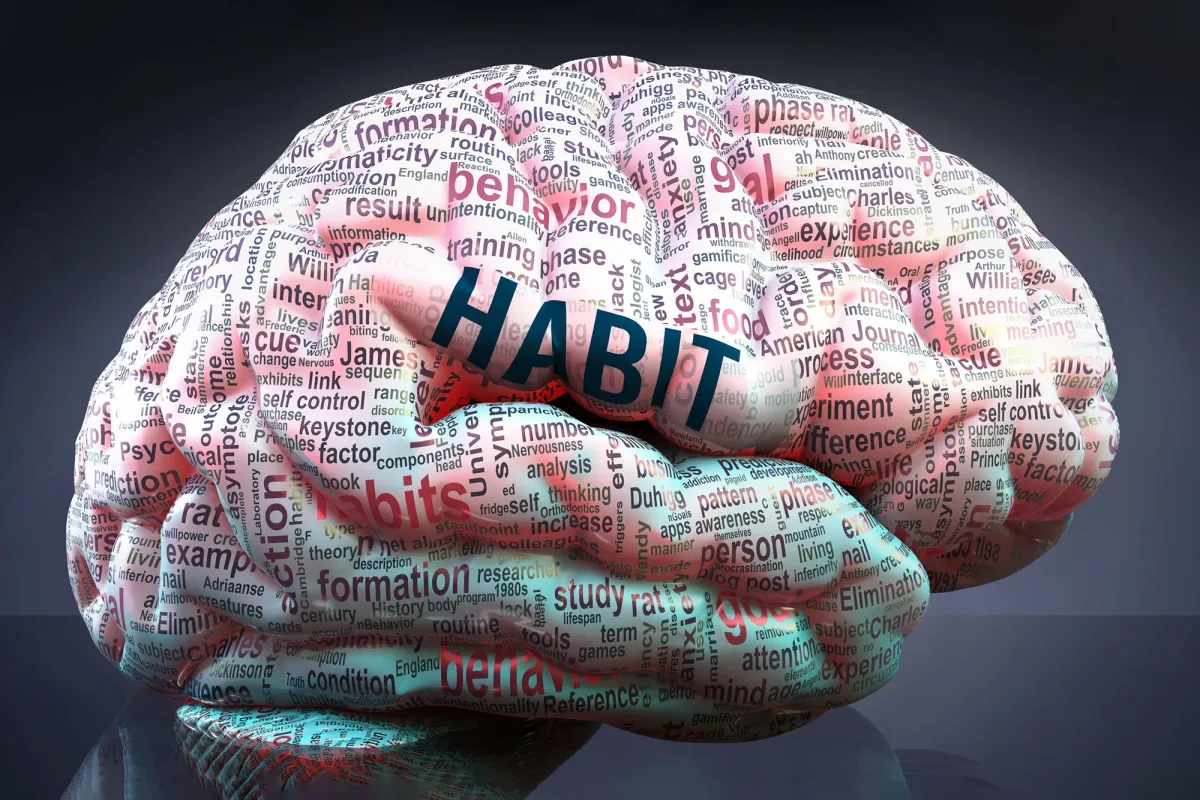
For over a century, scientists figured habits were like a slow-cooker recipe: lots of repetition, then poof, effortless action. Think of all those times you've been told it takes 21 days to form a habit, or 66, or 254. Turns out, your brain might be a lot faster on the uptake, and on the ditching, than anyone ever suspected.
New research from Johns Hopkins University, published in Nature Communications, is shaking up that old theory. The big takeaway? The brain might flip a switch from conscious choice to pure autopilot surprisingly quickly. And that, if you think about it, is both impressive and slightly terrifying.
Your Brain's Shortcut to Autopilot
Habits are the ultimate brain hack. They let you tie your shoes, drive to work, or make that first cup of coffee without much thought, freeing up your mental RAM for more important things, like remembering where you put your keys.
We're a new kind of news feed.
Regular news is designed to drain you. We're a non-profit built to restore you. Every story we publish is scored for impact, progress, and hope.
Start Your News DetoxNeuroscientist Kishore V. Kuchibhotla, a senior author on the study, noted that the prevailing theory for over 100 years was that habits formed gradually. You do something enough, and slowly your brain gets the memo. He suspected that this gradual idea might be more a reflection of how habits were studied, rather than how they actually work.
So, Kuchibhotla and his team designed an experiment to get a closer look at the brain's decision-making process in real time.
They gave mice acidic water (because apparently that's where we are now) so they weren't particularly thirsty. When the mice heard a specific sound, they'd get water they actually liked. At first, the mice were selective — they'd only go for the good water if they really felt like it. This was goal-directed behavior: they acted when they wanted to.
Then, something unexpected happened. At a certain point, the mice suddenly started responding to the sound every single time, even when they didn't really want the water. It was like a switch had been flipped. Lead author Sharlen Moore said they were genuinely surprised, because nothing had changed on their end. The animals just… decided. From one trial to the next. Which is pretty wild, considering how long we've thought these things take.
Brain recordings during the experiment pointed to a specific region that seems to be the mastermind behind this sudden shift, acting as a kind of "controller" between thoughtful action and pure habit.
The Good News for Bad Habits
Even better? Some of the mice, after acting purely out of habit for a while, actually reverted back to goal-directed behavior. They stopped mindlessly responding and started making choices again.
This implies that if there's a controller, there might be a way to reverse bad habits. Imagine that: your brain, a master of fast-tracking routines, might also have an express lane for ditching the ones that don't serve you. Bad habits don't have to be forever. Which, for anyone who's ever tried to quit hitting snooze, is a genuinely hopeful thought.