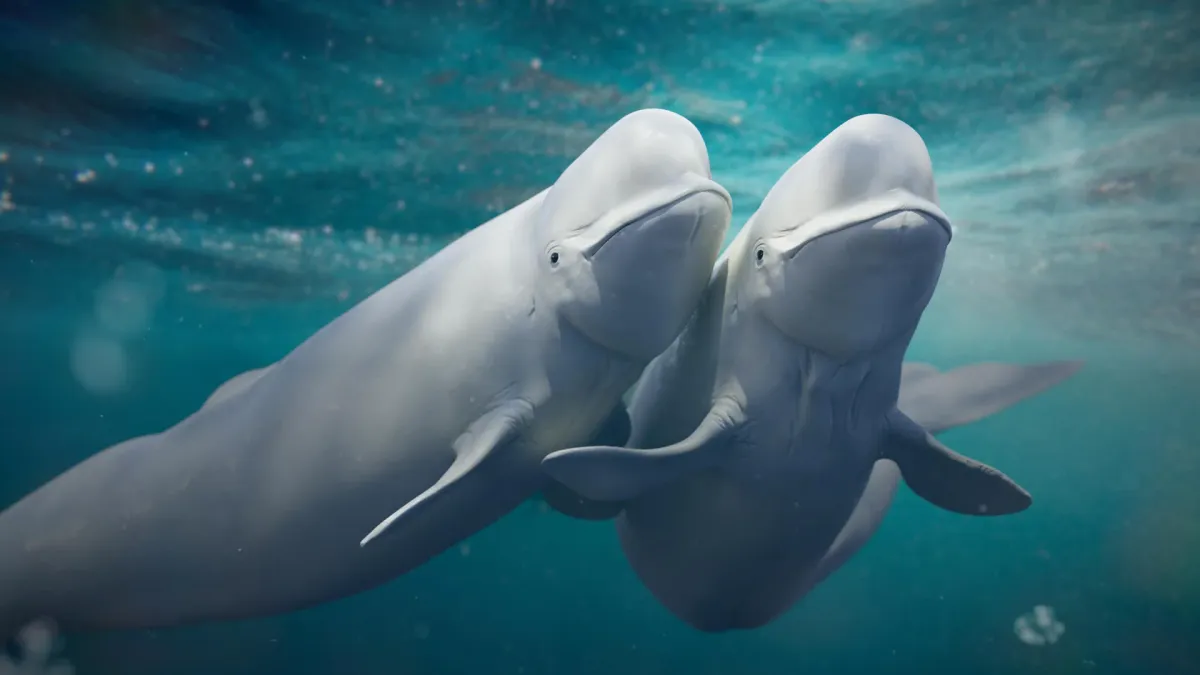
Turns out, Arctic beluga whales are doing just fine in the gene pool department, and it’s all thanks to their surprisingly modern approach to relationships. Forget monogamy; these whales are keeping it fresh, and it's literally saving their species.
For a group of creatures notoriously difficult to study—they live under Arctic ice, which isn't exactly prime real estate for human researchers—a new DNA study has pulled back the curtain on their surprisingly active social lives. What they found in Bristol Bay, Alaska, is a population of about 2,000 belugas, thriving genetically, largely because both males and females are playing the field.
Dr. Greg O'Corry-Crowe from Florida Atlantic University, who led the study, admitted that before this, our understanding of beluga dating was basically guesswork. He even predicted a more traditional setup: a few big, dominant males siring most of the offspring, with zero daddy duty. Because, you know, nature.
We're a new kind of news feed.
Regular news is designed to drain you. We're a non-profit built to restore you. Every story we publish is scored for impact, progress, and hope.
Start Your News DetoxThe DNA Doesn't Lie: Everyone's Dating Around
For 13 years, researchers, including local Alaska Native hunters, painstakingly collected tissue samples from 623 beluga whales. The goal? To finally get a peek at who was making babies with whom. And the results were a delightful surprise.
Instead of a few alpha males dominating, the DNA showed that both male and female belugas were having offspring with different partners over their lifetimes. When calves had siblings, they usually only shared one parent. It seems these whales are less about finding 'the one' and more about finding 'the ones, plural, over several years.'
Males did have varying numbers of offspring, but not the huge disparities you might expect. O'Corry-Crowe figures the vastness of the ocean makes it tough for any one male to corner the market on females. Plus, belugas can live for 90 years. That’s a lot of time to casually date a few new partners each year.
And the ladies? Genetic tests revealed they regularly switch mates across breeding seasons. A savvy move, perhaps, to avoid getting stuck with a low-quality male. You go, belugas.
Genetic Diversity, Against All Odds
Here’s the kicker: this small group of 2,000 belugas showed high genetic diversity and almost no signs of inbreeding. This is huge, because small, isolated populations are usually a geneticist's nightmare, quickly losing diversity and getting tangled in the family tree.
O'Corry-Crowe expected the worst but found the opposite. The belugas in Bristol Bay have genetic diversity comparable to populations ten times their size, and it's remained stable over time. Their frequent mate-switching limits the chances of closely related whales hooking up, which keeps the gene pool sparkling clean.
It’s a testament to nature's resilience, he says. And a testament to the benefits of not putting all your genetic eggs in one basket. Though, he cautions, other beluga populations might not be quite so progressive. Some might still be stuck in a more traditional, alpha-male-dominated dating scene. Which, honestly, sounds a bit boring.
Next up for the researchers: drones. Because while DNA tells you who mated, it can’t quite capture the messy, wonderful details of how it all went down. Which, if you think about it, is probably for the best.