For nearly 200 years, biologists thought they understood the nudibranch genus Thecacera. This group of shell-less molluscs included six known species. They were found in marine areas worldwide and ranged from about half an inch to an inch long.
Then, scientists in Taiwan found a seventh species. It was barely the size of a grain of rice.
It took seven years for this tiny marine animal to be officially described. Ho-Yeung Chan, then an undergraduate at National Taiwan Ocean University, first spotted it.
We're a new kind of news feed.
Regular news is designed to drain you. We're a non-profit built to restore you. Every story we publish is scored for impact, progress, and hope.
Start Your News DetoxThe new species was found near Keelung port, about 10 kilometers (6 miles) north of Taipei. The coastline there is beautiful, with surf beaches, rocky coves, and colorful fishing ports. Large, deep-green mountains rise in every direction except east, where only the ocean and horizon are visible.
However, this area is only good for diving about four months a year. Summer typhoons and dangerous swells make it difficult. This makes it hard for divers to find well-camouflaged sea slugs just a few millimeters long.
Chan contacted Hsini Lin, a "sea slug expert" on Facebook. Lin believed this discovery was entirely new to the nudibranch world.
A Tiny New Species
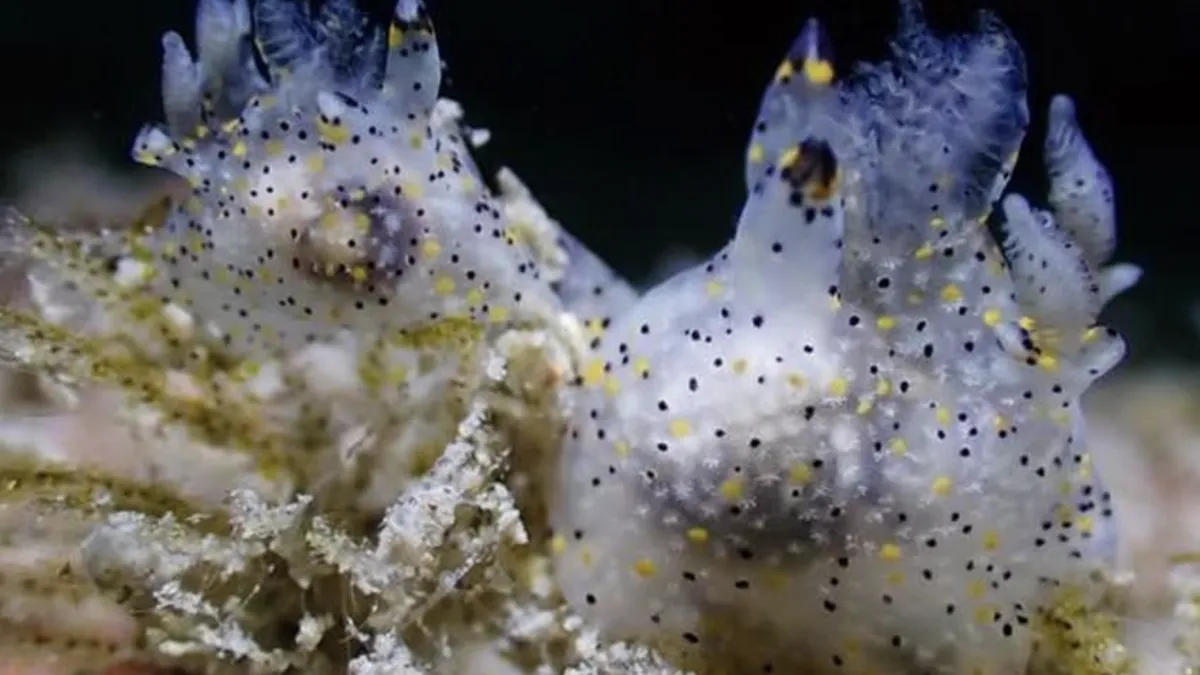
This tiny sea slug measures less than 3 millimeters (0.12 inches). It is translucent with small black and yellow dots. It has now been officially named Thecacera sesama. Researchers chose this name because its size and shape look like a sesame seed.
Six individuals were collected. Three were crucial for classification. Because of their small size, their entire bodies were used for DNA extraction. This work showed a 14.17% genetic difference from its closest relative, Thecacera picta.
The team described T. sesama as unique. It has a translucent white body covered with many small, round black spots and fewer, larger yellow spots. Genetic analysis showed it is a sister species to T. picta. This difference was enough to classify it as a new nudibranch species.
Researchers noted that Taiwanese divers call it "sesame" in Chinese. Its small size also reminded them of a sesame seed.
Life of T. sesama
Besides being adorable, T. sesama has a simple life. It shows only four behaviors: feeding, searching, mating, and laying eggs. It lays its eggs on mossy marine organisms called bryozoans.
The bryozoan that T. sesama prefers might also be a new species. Samples showed only an 82% match with any known species.
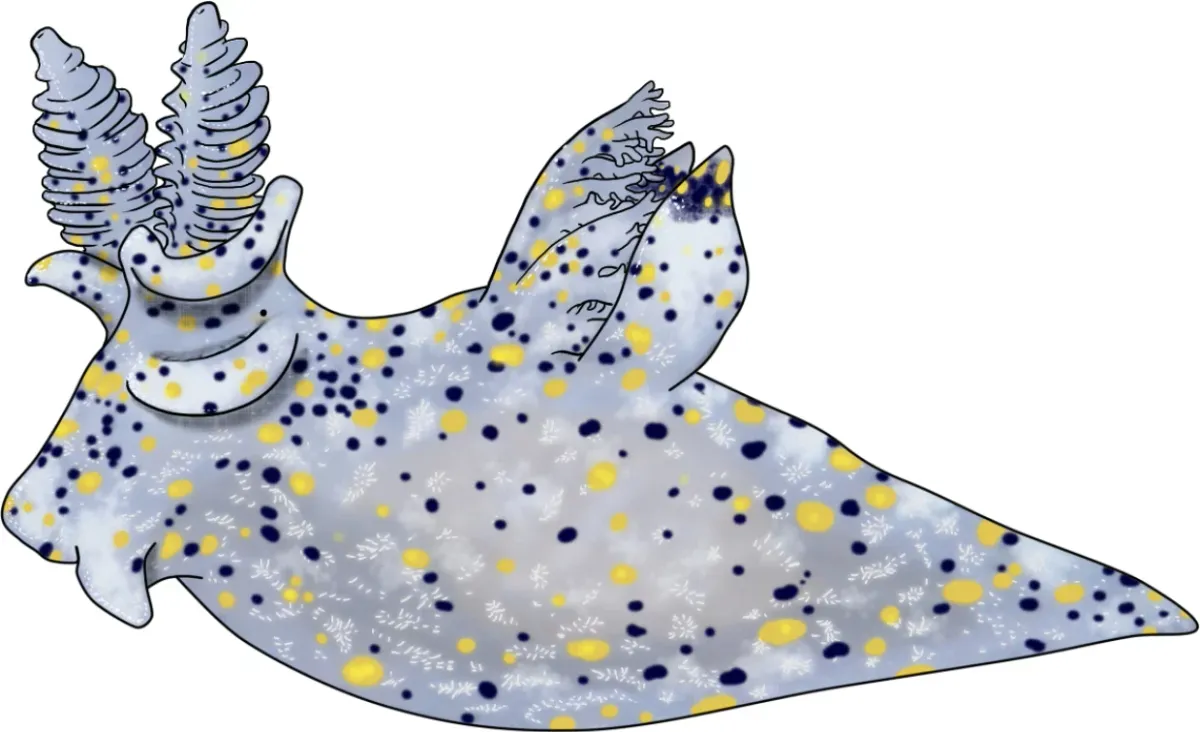 Illustrated appearance and morphological features of Thecacera sesama.
Nudibranchs are important in the marine food web. They are very colorful and can be seen on coral reefs. However, many nudibranchs are tiny and hard to spot underwater with the naked eye.
T. sesama is likely just one of many undiscovered sea mollusc species. These species live in the western Pacific waters around Taiwan.
Deep Dive & References
New species of nudibranch, Thecacera sesama, discovered in Taiwan - ZooKeys, 2024