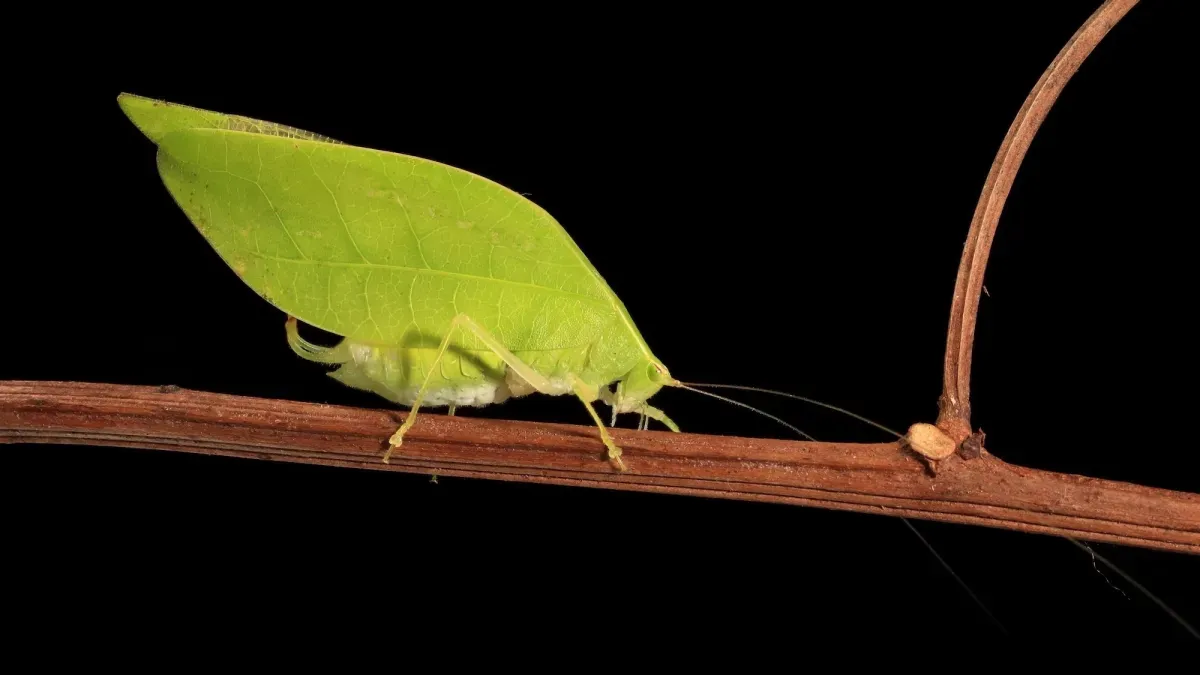
Animals do some truly wild things to find a partner. They scream. They inflate bizarre body parts. They even dress up like their lunch. Enter the katydid, a master of disguise whose leaf-like wings aren't just for hiding, but also for broadcasting the ultimate love song.
Turns out, those perfectly camouflaged wings — the ones that make them look like just another piece of foliage to a hungry bird — are also a secret weapon in the mating game. Scientists, whose findings landed in Proceedings of the Royal Society B, just figured out how.
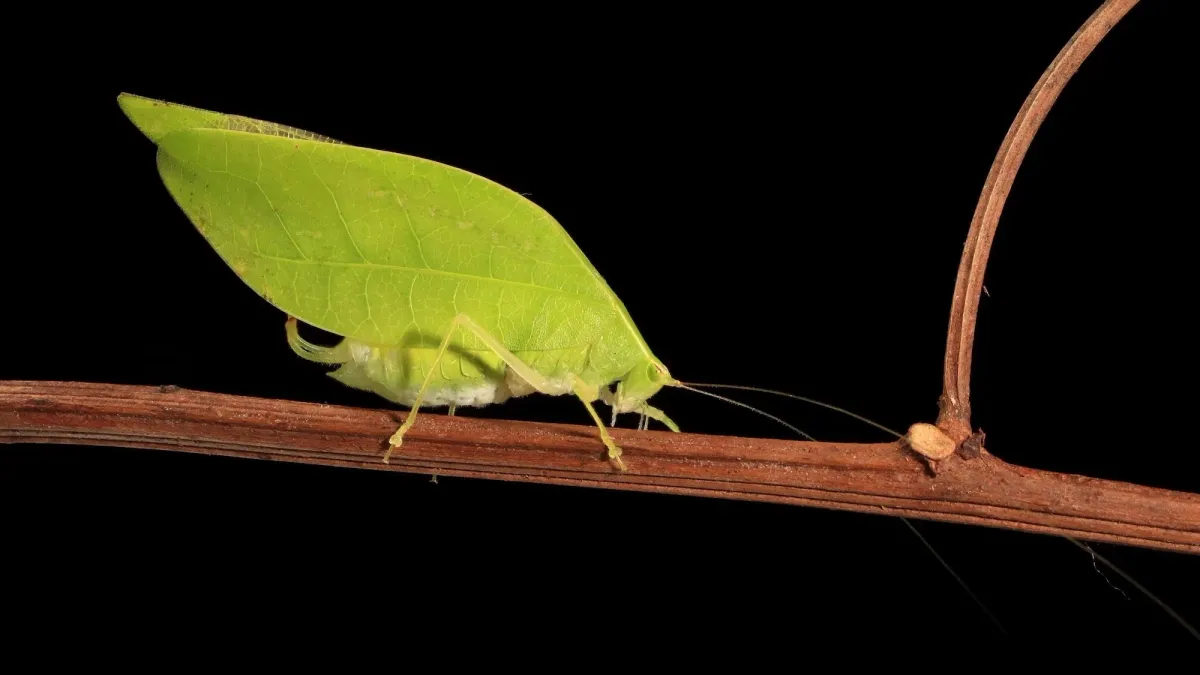
For a long time, the thinking was that survival features and mating features were often at odds. Think of a peacock: that flashy tail is a magnet for mates, but also a giant "eat me!" sign for predators. But Panamanian katydids? They're playing a different game.
We're a new kind of news feed.
Regular news is designed to drain you. We're a non-profit built to restore you. Every story we publish is scored for impact, progress, and hope.
Start Your News DetoxTake Arota festae, for example. These guys can literally change their color from green to pink to match the surrounding leaves. Incredible for hiding. But what about Viadana brunneri? These particular katydids 'sing' by rubbing parts of their wings together. And a new study focused on them revealed a fascinating double-duty for their leafy look.
The Leafy Love Song
Researchers decided to get a little hands-on. They carefully removed the leafy bits from some male V. brunneri wings. The result? Their songs became higher-pitched and changed in volume. When these altered serenades were played for female katydids, the ladies overwhelmingly preferred the lower-pitched, intact-wing versions. Because apparently, subtlety and a deep baritone are still king, even in the insect world.
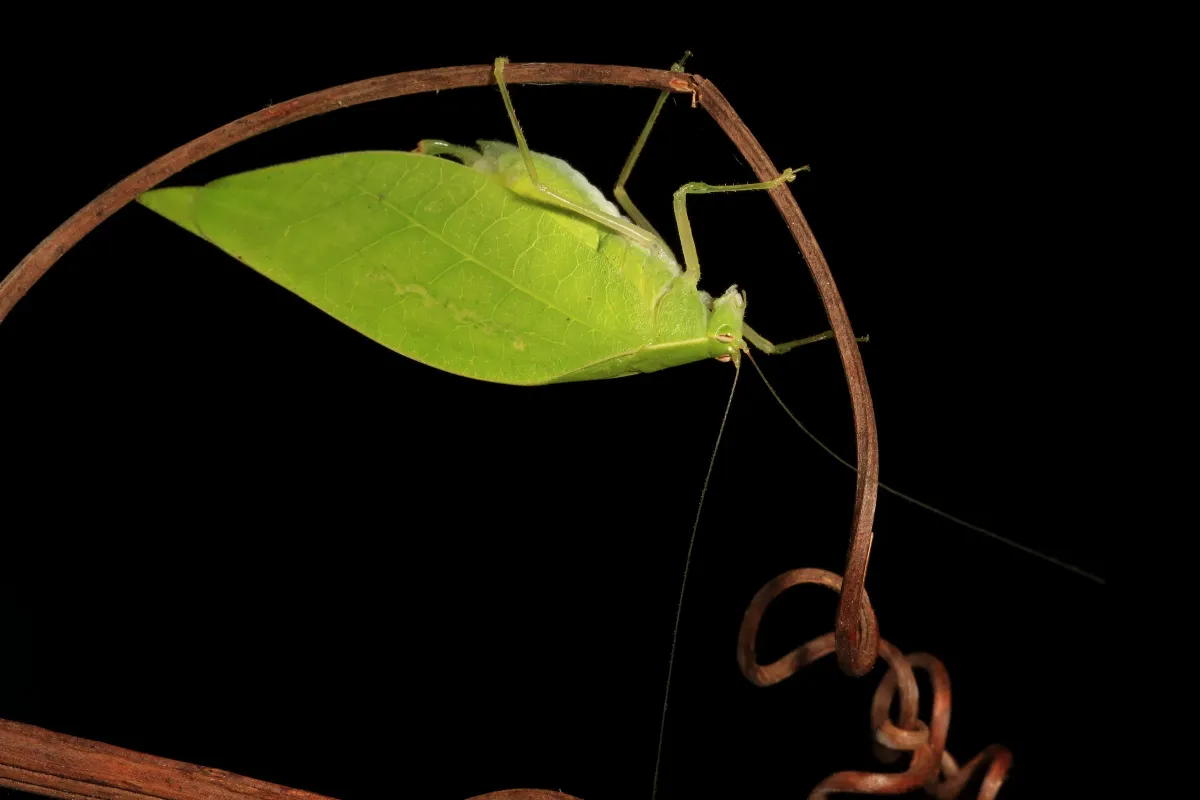
Male katydids belt out short, infrequent calls, sometimes for only two seconds a night. (Talk about playing hard to get.) These are ultrasonic, meaning us humans can't even hear their tiny romantic overtures. The study found that those leafy wing parts vibrate, amplifying the song and making it easier for a discerning female to locate her leafy Romeo.
Dr. Benito Wainwright, an evolutionary biologist and co-author, noted that this is a rare instance where adaptations for defense and reproduction work in perfect harmony. No trade-offs, just pure, unadulterated evolutionary genius. They're now eager to unravel how this delightful little interaction evolved. Which, if you think about it, is both impressive and slightly terrifying. Imagine if your phone, which helps you avoid awkward social situations, also doubled as a dating app that automatically broadcasted your most charming attributes. We'd all be katydids.