A tiny piece of moss helped solve a shocking crime at a cemetery. This small plant evidence revealed where human remains came from and how long they had been buried. This information helped investigators prove that cemetery workers had moved bodies and resold burial plots.
The Burr Oak Cemetery Scandal
In 2009, a major scandal unfolded at Burr Oak Cemetery near Chicago. Employees were accused of digging up old graves, moving the remains, and then selling the empty plots. When the case went to trial in 2015, a surprising piece of evidence became crucial.
A small clump of moss found with the reburied remains helped investigators understand what happened. Researchers have now shared the full scientific details of this investigation in Forensic Sciences Research. They explained how the plant evidence confirmed the crime.
We're a new kind of news feed.
Regular news is designed to drain you. We're a non-profit built to restore you. Every story we publish is scored for impact, progress, and hope.
Start Your News DetoxMatt von Konrat, the lead author of the study and head of botany collections at Chicago’s Field Museum, enjoys detective shows. He never expected his work with moss to be part of a criminal investigation.
Moss Identifies Grave Locations
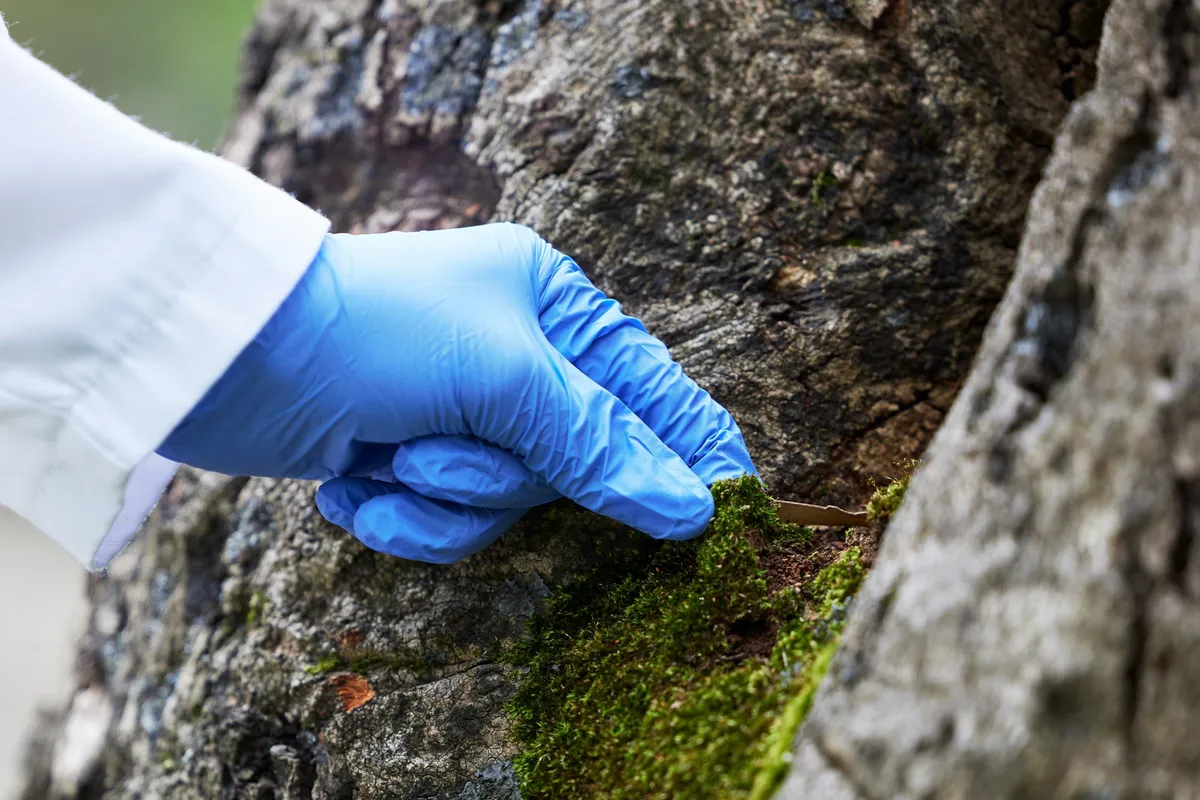
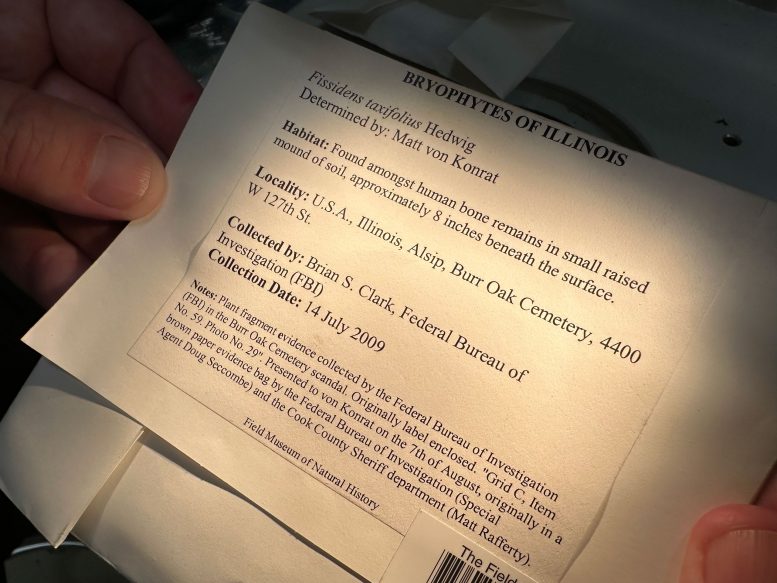
In 2009, the FBI called von Konrat, asking for help identifying some plants. Agents brought a small moss sample found about eight inches underground with reburied human remains at the cemetery. They wanted to know the type of moss and how long it had been buried.
Von Konrat and his team studied the moss under a microscope. They compared it to specimens in the museum's collections. They identified the plant as Fissidens taxifolius, also known as common pocket moss.
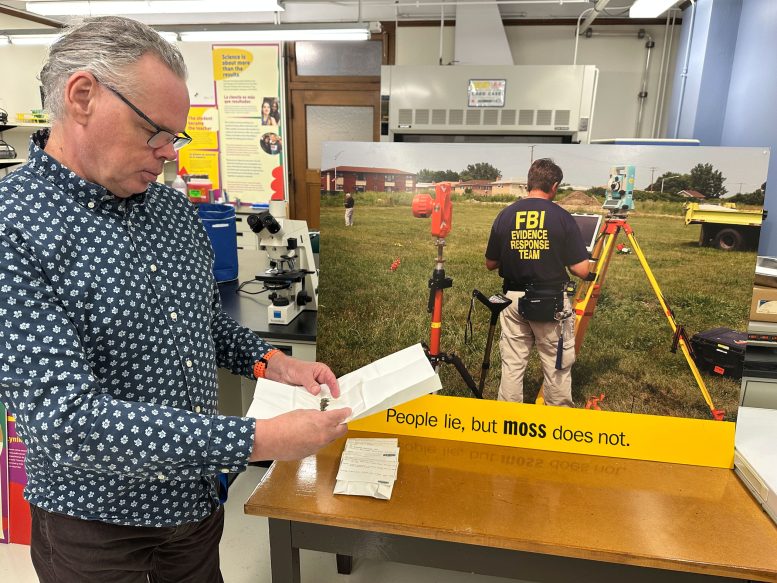
Von Konrat surveyed the crime scene area. He found that this specific moss species was not growing where the remains were found. However, he found a large colony of Fissidens taxifolius in another part of the cemetery. This was the area where investigators suspected the bones had originally been dug up. This provided strong evidence that the remains came from a different section of the cemetery.
Dating the Moss Evidence
Investigators also needed to know the age of the moss. The defendants claimed the remains might have been moved before they started working at the cemetery. By estimating how long the moss had been underground, investigators could determine when the bones were moved.
Moss has a unique physiology. Even when dry and seemingly dead, some cells can remain active. This metabolic activity decreases over time, which can indicate how long ago a moss sample was collected.
Scientists can estimate a plant's metabolic activity by looking at chlorophyll, the green pigment used in photosynthesis. As a plant ages, chlorophyll breaks down. Researchers measured chlorophyll absorption in moss samples of known ages, including fresh moss and specimens stored for 14 years. They then did the same for the moss from the cemetery.
The results showed that the evidence sample was only about one or two years old. This strengthened the case against the cemetery workers. In 2015, the defendants were convicted of desecrating human remains.
Doug Seccombe, a former FBI agent on the case and co-author of the paper, noted the importance of the Field Museum's botanical program. He said the plant material was key to charging and convicting four individuals.
Since the Burr Oak case, von Konrat has helped with other moss-related cases. However, such instances are rare in forensic science. In 2025, he and colleagues published a study reviewing the use of mosses and other bryophytes as forensic evidence. They found only about a dozen documented cases in the past century.
Von Konrat hopes his research will raise awareness about the importance of mosses. He believes these tiny plants can be a valuable tool for law enforcement and help families in the future.
Deep Dive & References
Silent witness: a moss provides important evidence in solving a cemetery crime - Forensic Sciences Research, 2026