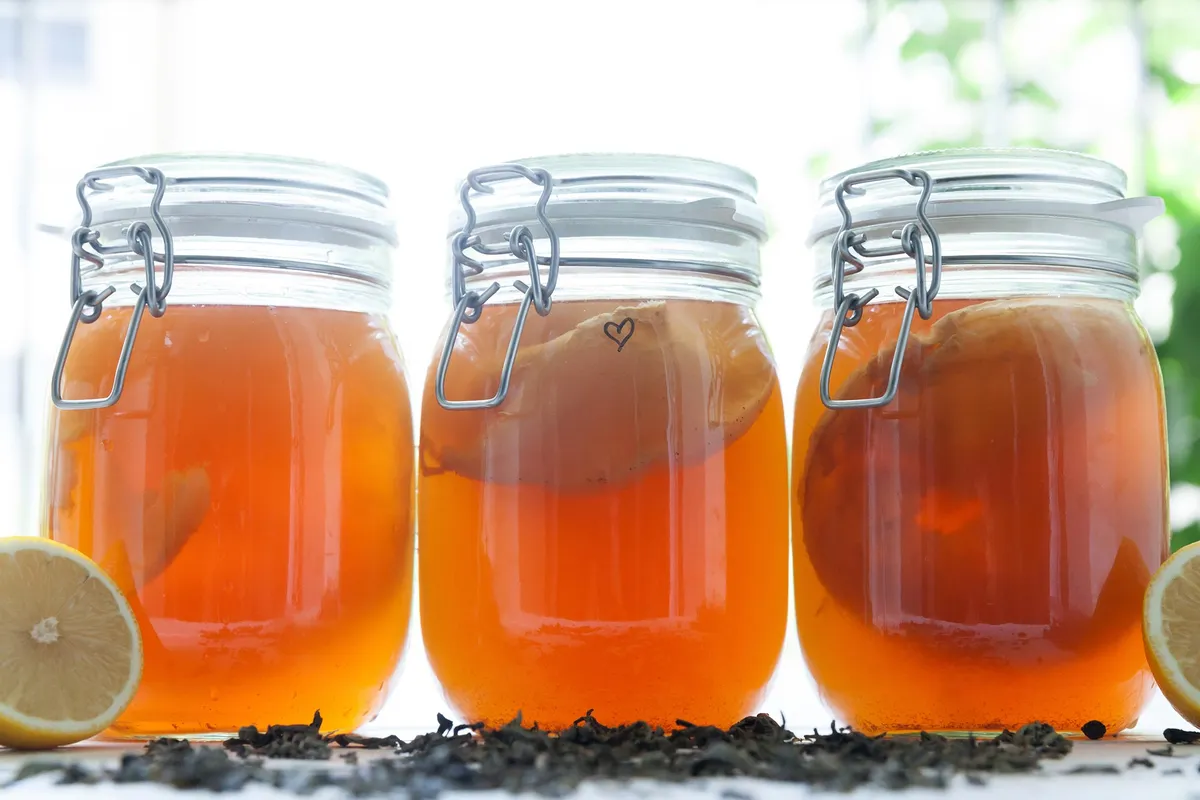
Kombucha has become very popular. Scientists are now looking closely at its chemistry and potential health benefits.
A team from Poland studied how different types of tea change kombucha. They found much bigger differences than expected.
How Tea Changes Kombucha
The researchers compared kombucha made from black, green, white, oolong, and pu-erh teas. Their study appeared in Food Chemistry.
We're a new kind of news feed.
Regular news is designed to drain you. We're a non-profit built to restore you. Every story we publish is scored for impact, progress, and hope.
Start Your News Detox"The type of tea acts like a specific mold," explained Associate Professor Helena Moreira. It shapes how fermentation happens and what the kombucha ends up being.
Different teas have different amounts of polyphenols, catechins, and caffeine. These are all active compounds. SCOBY microorganisms then process these compounds.
SCOBY is a "symbiotic culture of bacteria and yeast." It ferments sweetened tea. Yeast turns sugars into alcohol and carbon dioxide. Bacteria then change these into organic acids. These acids give kombucha its sour taste.
Fermentation also changes the tea's natural compounds. The scientists saw changes in polyphenols, catechins, and other compounds that create flavor and smell.
"Polyphenols and volatile aromatic compounds in tea transform," Moreira said. "This gives the drink its sour, slightly fizzy taste and a more complex smell."
The team found more compounds linked to floral and fruity smells. These include linalool and 2-phenylethanol. These are also found in flowers and essential oils. Some substances typical of fresh tea disappeared. New ones made by the SCOBY took their place.
The researchers used advanced tools to track these changes. They analyzed hundreds of compounds in kombucha made from different teas.
Surprising Differences and Health Potential
"The most surprising thing was how much changed during fermentation," Moreira noted. "And how strongly it depended on the tea used." Even with the same fermentation conditions, the kombuchas had very different smells.
The study also found different biological activities. Kombucha made from green and oolong teas had the strongest antioxidant activity. They were best at fighting free radicals.
Free radicals are molecules that can harm cells and contribute to aging. Antioxidants are important because they can help protect cells.
"Our research shows that tea type affects kombucha's taste, smell, and biological activity," Moreira said. Green and oolong teas showed the most potential.
However, the researchers warn that it's too early to say for sure about health benefits in people. "More clinical studies are needed," Moreira added.
Interest in kombucha is part of a larger focus on fermented foods. Fermentation can make good compounds more available. It can also create new ones and affect gut health.
"Fermented foods are a hot topic," Moreira said. "Kombucha is a great example of a product where its makeup, activity, and taste come from complex interactions."
Why Each Kombucha is Unique
The study shows that kombucha is not all the same. The type of tea used creates big differences in flavor and chemistry.
Green tea kombucha had a fresher, more plant-like smell. Oolong tea kombucha had stronger floral and fruity notes. Black tea and pu-erh kombuchas had richer, earthier smells. They also had more noticeable fermentation characteristics.
Deep Dive & References
Matrix-dependent modulation of chemical composition, volatile profile, and biological activity of kombucha beverages from different tea types - Food Chemistry, 2026