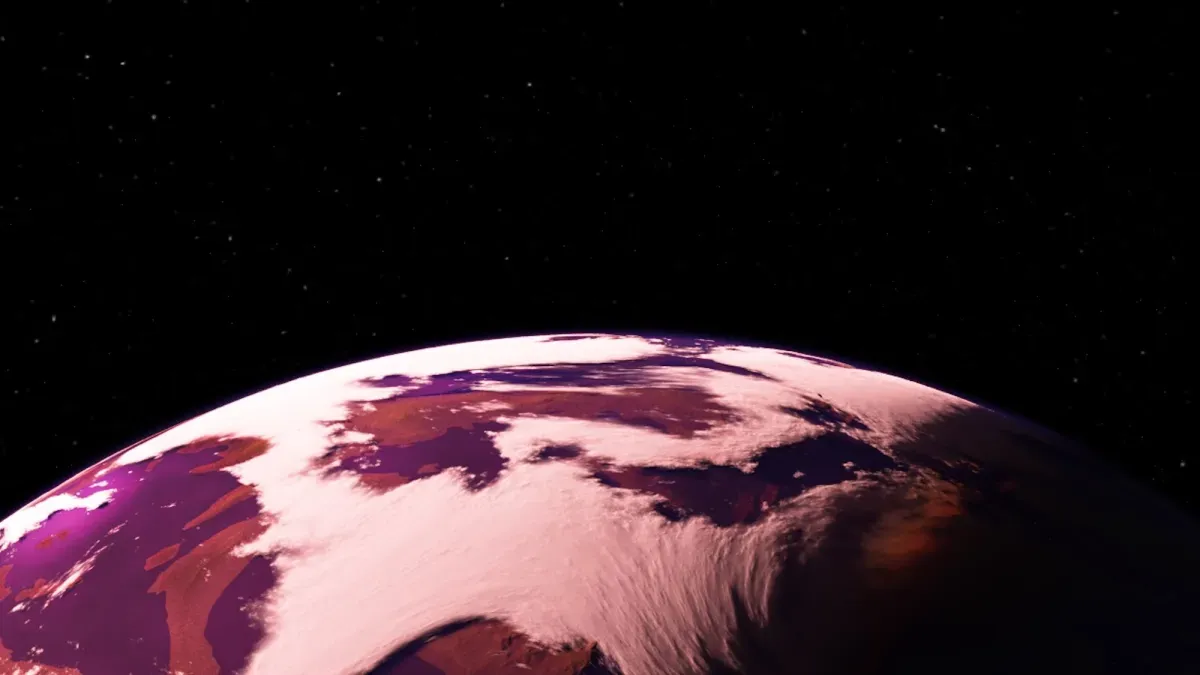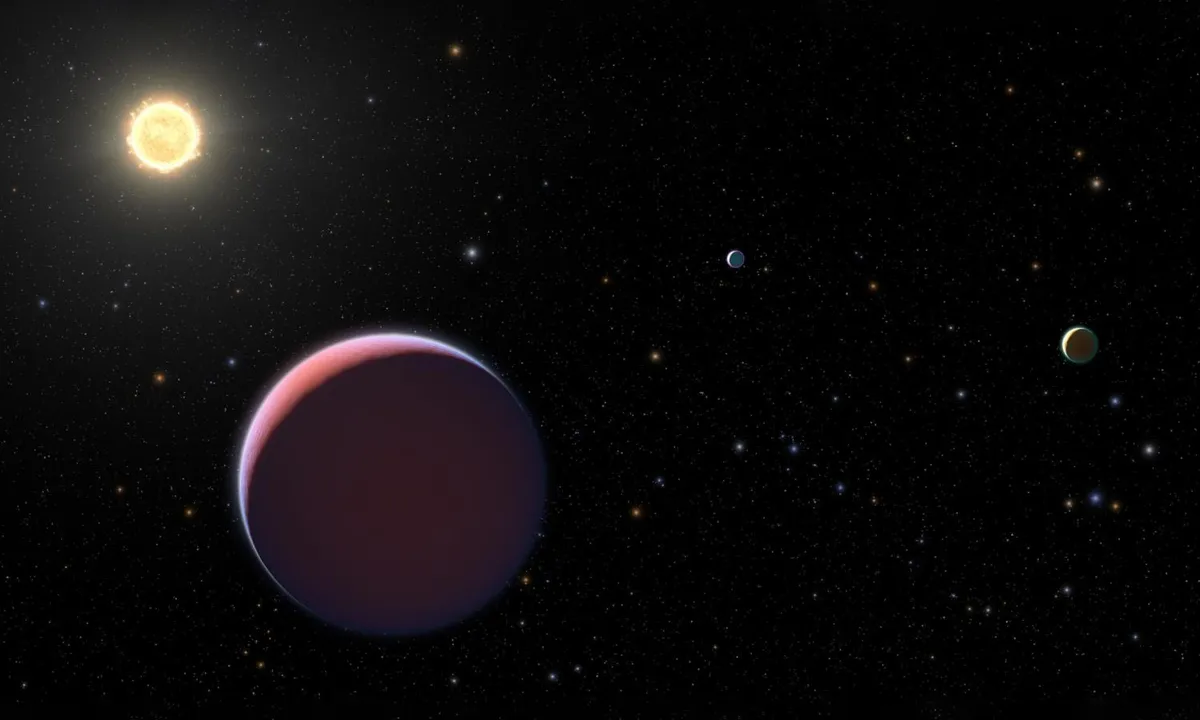
Imagine a planet so weird, so wrapped in mystery, that even the super-powerful James Webb Space Telescope can't see what it's made of. That's Kepler-51d, a world so fluffy it's been nicknamed a "super-puff," and it's making scientists scratch their heads.
This planet is basically a giant ball of cotton candy, about the size of Saturn but only a few times heavier than Earth. New research used the JWST to peek into its atmosphere, hoping to find clues about how it formed. Instead, they hit a wall: the thickest haze ever seen on a planet.
A Planet That Breaks All the Rules
Kepler-51d is one of three such "super-puffs" orbiting a star 2,615 light-years away. These planets are so light because they have tiny cores and massive, gassy atmospheres.
We're a new kind of news feed.
Regular news is designed to drain you. We're a non-profit built to restore you. Every story we publish is scored for impact, progress, and hope.
Start Your News DetoxUsually, gas giants form with dense cores that grab onto huge amounts of gas, like Jupiter and Saturn do. They also tend to form far from their stars. But Kepler-51d orbits its star as close as Venus orbits our Sun. Plus, it seems to lack that dense core.
This is pretty nuts because the star's winds should have blown all that gas away by now. "These planets challenge everything we thought we knew about how gas giants form," says Jessica Libby-Roberts, a lead author on the new study.
Scientists expected to find light elements like hydrogen and helium in its atmosphere. They can do this by watching the planet pass in front of its star. When starlight filters through the atmosphere, different gases absorb different colors of light, creating a kind of "fingerprint."
But the JWST, which can see more detail than ever before, found nothing clear. Suvrath Mahadevan, a professor at Penn State, says the haze is so thick it just absorbs everything. He compares it to Saturn's moon Titan, but way bigger – this haze could be almost Earth-sized.
This means Kepler-51d isn't just a fluffy oddball; it's a cosmic puzzle. It's forcing scientists to rethink how planets come together, especially those that defy all the rules. And get this: another team is already using JWST to check out its sibling planet, Kepler-51b, to see if all super-puffs are this hazy.