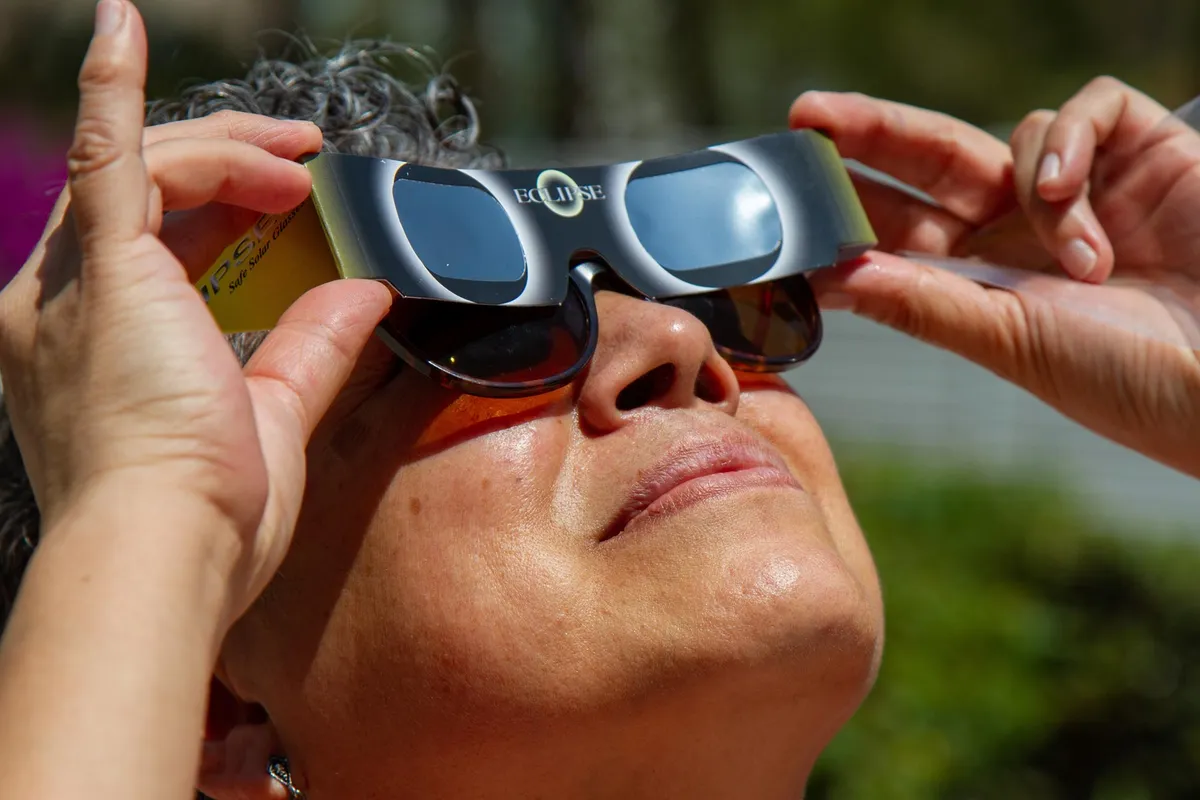
During the total solar eclipse on April 8, 2024, cities in the path of totality became noticeably quieter. This silence wasn't just above ground; it was also detected deep beneath the surface. Scientists found a sharp drop in seismic vibrations, which are often caused by human activity.
Benjamin Fernando, a seismologist at Johns Hopkins University, noticed the quiet firsthand in an Ohio city. He then wondered if this change would show up in seismic data.
How Cities Go Quiet
Most of the constant shaking picked up by seismic tools comes from people. Things like construction, busy roads, and large events create small vibrations that travel through the ground.
We're a new kind of news feed.
Regular news is designed to drain you. We're a non-profit built to restore you. Every story we publish is scored for impact, progress, and hope.
Start Your News DetoxFernando looked at data from hundreds of seismic stations from April 2024. He found a clear pattern linked to the eclipse.
In cities directly in the path of totality, seismic noise went up slightly just before the eclipse peaked. Then, as the Moon fully blocked the Sun, these vibrations dropped sharply. After the eclipse passed, activity picked up again, with noise levels even going a bit higher than usual.
This effect only happened in urban areas that experienced a total eclipse. Rural areas and cities outside the path of totality, like New York with 97% totality, showed no change.
A Pause in Daily Life
The findings suggest that the eclipse was powerful enough to briefly stop normal city routines. Fewer cars on the road and people pausing their daily tasks meant the usual human-made vibrations dropped enough to be measured.
A similar drop in seismic noise happened during the COVID-19 lockdowns in 2020. During that time, human-caused seismic noise fell by about 50% over a few months.
Eclipses and Earthquakes
The study also helped clear up a common misunderstanding. Some people believe that the alignment of the Sun, Moon, and Earth during an eclipse can cause earthquakes. However, the data does not support this idea.
Fernando stated that the narrative about eclipses causing earthquakes is incorrect, and this research further proves it.