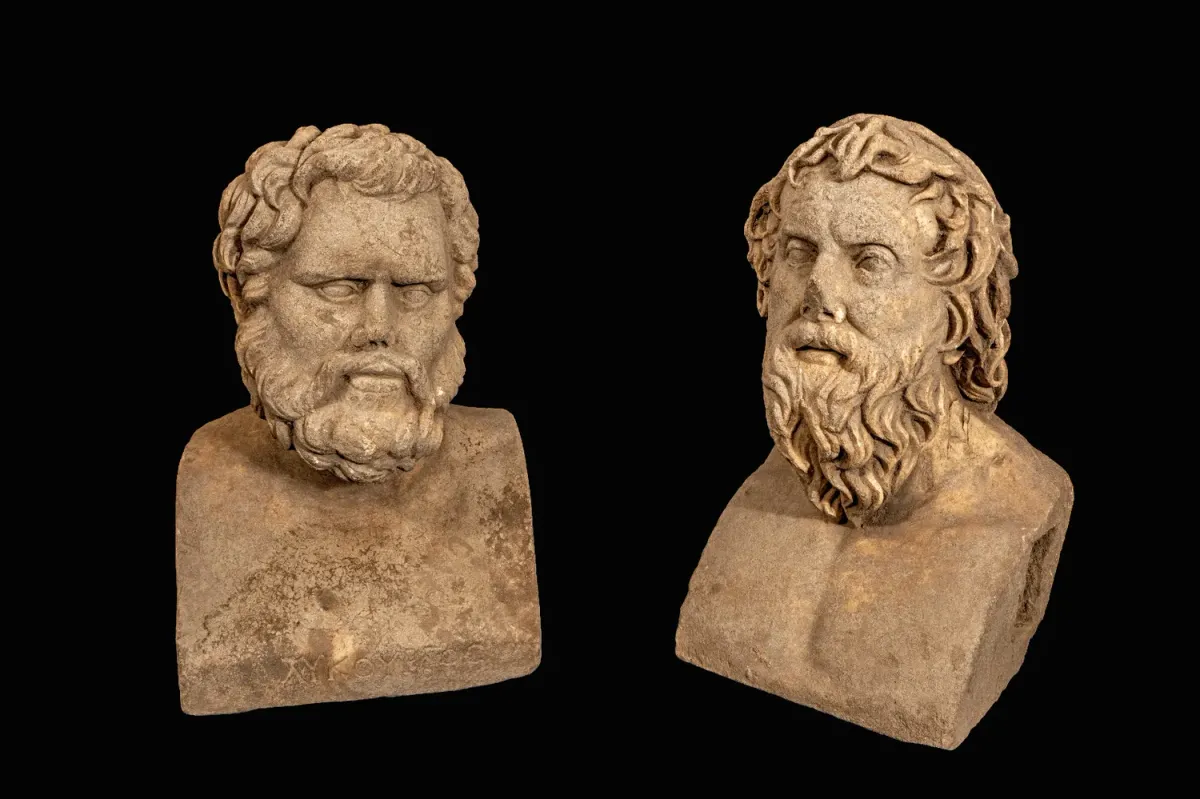
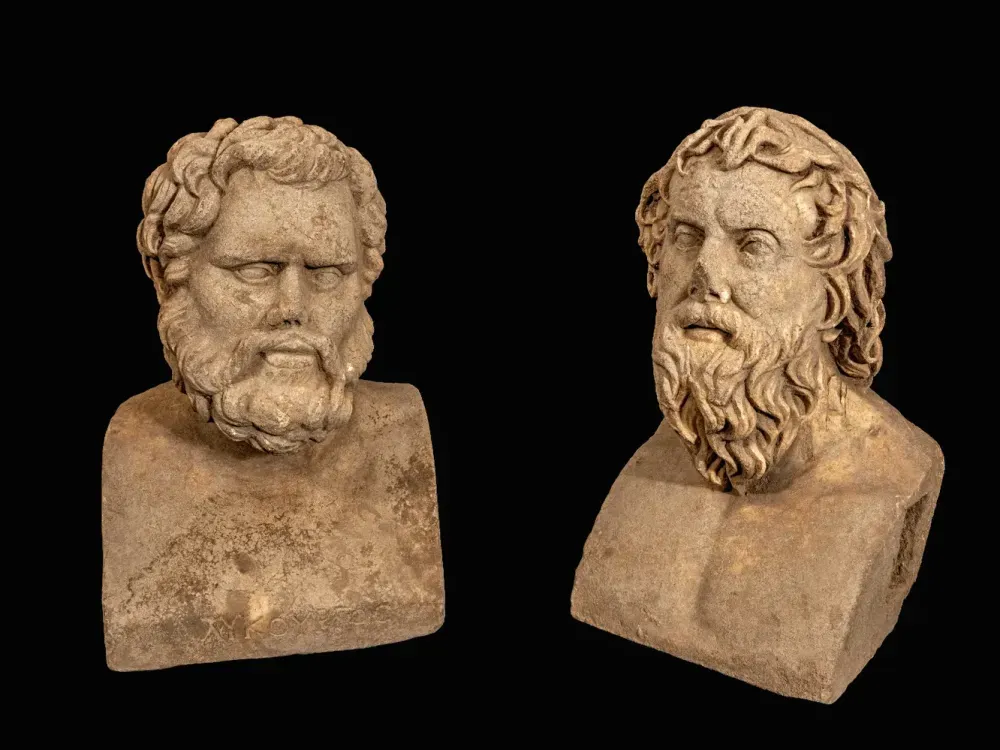
Archaeologists in northern Israel were wrapping up an excavation for a new railway near Binyamina when, on the very last day, they stumbled upon something utterly unexpected. Two remarkably well-preserved Roman marble statues, chilling out face down in an ancient wine collection vat. Because apparently, that's where you store your priceless historical artifacts.
The Israeli Antiques Authority (IAA) announced the find, which looks like something out of a very specific, very ancient episode of Hoarders.
Who Were These Guys?
Dating back about 1,700 years to the 4th century CE, these aren't just any old garden gnomes. Experts believe they depict important figures from the Greco-Roman world. One even has the name "Lycurgus" carved into it. Now, if you're not up on your ancient history, there were a couple of famous Lycurguses: the legendary founder of Sparta, and a 4th-century BC orator.
We're a new kind of news feed.
Regular news is designed to drain you. We're a non-profit built to restore you. Every story we publish is scored for impact, progress, and hope.
Start Your News DetoxDr. Peter Gendelman, an IAA expert, says they're just starting the detective work to figure out which one this is. Which, if it's the Spartan founder, would be quite the flex, considering he lived centuries before the statue was even made. Talk about a throwback.
The statues were likely buried when the winepress went out of commission, possibly for safekeeping. Or maybe, just maybe, someone was really, really upset about a bad vintage.
A Peek into Ancient Affluence
These aren't the kind of decorations you'd find in a humble abode. Statues like these were typically found in public buildings or, more tellingly, the lavish homes of the Roman elite. Wealthy families used them to loudly proclaim their connection to ancient culture and knowledge. (Think of it as the original "I read a lot of books" vibe.)
Nearby, a bathhouse was discovered earlier, which really seals the deal. Eliran Oren, who directed the excavation, suspects these statues once graced a luxurious suburban estate tied to the port city of Caesarea, about ten kilometers away. Caesarea, for 650 years, was the Roman capital of the region. So, not exactly a simple farmhouse then.
Finding statues in this condition is so rare, Oren called it a "once-in-a-lifetime discovery." And to have them pop up on the very last day of digging? Someone clearly enjoys a dramatic exit. Or, perhaps, a dramatic entrance, depending on your perspective.