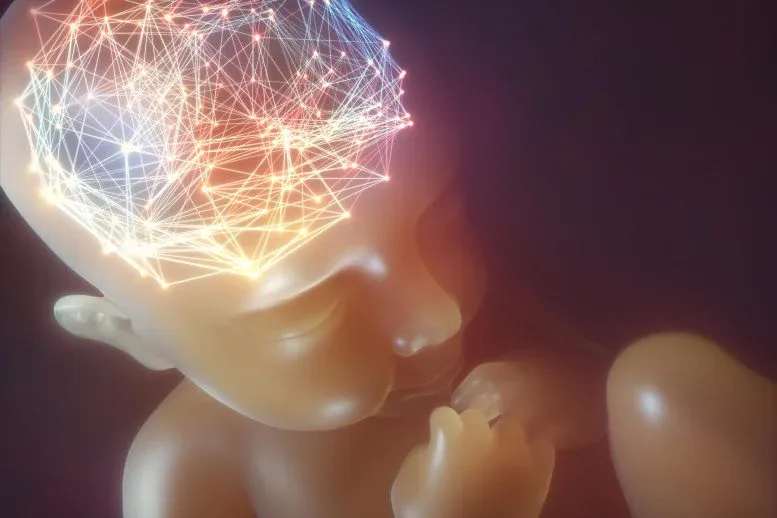
Turns out, building a human brain isn't just about following a genetic blueprint; it's also a surprisingly hands-on, nutrient-driven affair. Scientists have just pulled back the curtain on two unexpected forces that, before you even took your first breath, were busy shaping the most complex organ in your body.
At the heart of this construction project are some truly remarkable cells called radial glia. Think of them as the master architects of your cerebral cortex—the part of your brain that handles all the big stuff like thinking, remembering, and charming people with your witty banter. These cells are the decision-makers, dictating which brain cells get made and when they show up. They're also a big reason why our cortex is so much more expansive than, say, a squirrel's. "Radial glia are the coolest cells that have ever existed," says UCLA Professor Aparna Bhaduri, who clearly knows a cool cell when she sees one. "They're really key to making us human."
Your Brain on Lunch (and Other Brains)
Two new studies, published in Cell and Science, reveal the wild ways these radial glia make their executive decisions. Bhaduri and her team discovered these cells are incredibly responsive—not just to genetic instructions, but also to how they process nutrients and even physical nudges from other parts of the developing brain. Because apparently, even in the womb, networking is everything.
We're a new kind of news feed.
Regular news is designed to drain you. We're a non-profit built to restore you. Every story we publish is scored for impact, progress, and hope.
Start Your News DetoxThe Cell study dove into the metabolic activity of the developing human cortex. Using donated human tissue and those fascinating lab-grown brain organoids, researchers found that metabolism isn't just about fueling the operation. It actively directs what these brain stem cells become. Specifically, radial glia are big fans of the pentose phosphate pathway, which uses glucose to create essential building blocks for rapidly dividing cells. Mess with that pathway, or lower the glucose, and the radial glia start making different kinds of neurons—the kind that usually show up later in development. It's like telling a chef to make a cake, then swapping out the flour for sawdust and expecting the same result.
"What was surprising is that metabolism isn't just a passive thing that happens in the background," Bhaduri noted. "It can really control how stem cells make decisions." Which means a mother's nutrition or metabolic health could have a more direct impact on a baby's developing brain than we previously understood. ## The Thalamus: Early Bird Gets the Glia
The Science study uncovered an entirely different kind of influence: physical contact. Led by Claudia Nguyen, this research focused on the thalamus, the brain's information relay station. We knew the thalamus sends long fibers to the cortex to connect with neurons later on. But in humans, these fibers arrive much earlier than expected. So, why the rush?
Using human stem cell-derived brain "assembloids" (which sounds like a sci-fi movie but is actually cutting-edge science), the UCLA team found these early-bird fibers have another job. They physically touch the radial glia. This direct contact changes what the stem cells produce, pushing them to make more excitatory neurons—the kind crucial for carrying signals in the cortex. This effect was particularly strong for upper-layer neurons, which have expanded significantly during human evolution. It's a bit like a construction site supervisor showing up early to tell the foundation crew exactly what to build.
"This point of contact hasn't been identified before, and it likely doesn't exist in rodents," Bhaduri explained, highlighting a key difference in human brain development. They even linked this unique contact point to a gene called NRXN1, which is known for helping neurons connect and has been implicated in autism spectrum disorder. Altering this gene in assembloids changed the balance of cell production, offering a new avenue to study early brain development and neurological conditions.
So, whether it's the sugar in your system or a direct high-five from another brain region, your brain's earliest architects are taking cues from everything around them. It's a constant conversation that, ultimately, determines the incredible complexity of who you become. And if that's not a reason to appreciate your own radial glia, what is?