Before your cells can split into two, they have to perform a truly Herculean feat: copying all of your DNA. Every single instruction, perfectly duplicated. And now, scientists have pinpointed the exact spot where this genetic epic begins, along with a special molecular 'gate' that kicks off the whole shebang.
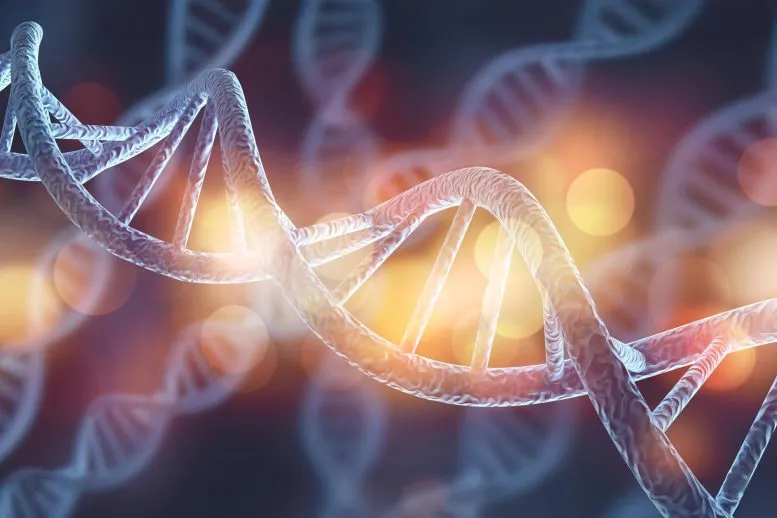
Think of your DNA as a tightly wound, incredibly long double helix – a twisted ladder. To copy it, that ladder first needs to unzip. And errors here? Not ideal. So, the process has to be spectacularly precise from the very first nanosecond.
The Grand Unveiling: DNA's Opening Act
To get the DNA party started, cells deploy molecular machines called helicases. These tiny powerhouses are designed to pry apart the two strands of the DNA double helix. At the heart of this operation is a six-part protein complex known as MCM2-7. Two of these MCM2-7 rings cozy up to the DNA at specific starting points, aptly named replication origins.
We're a new kind of news feed.
Regular news is designed to drain you. We're a non-profit built to restore you. Every story we publish is scored for impact, progress, and hope.
Start Your News DetoxOnce activated, these paired rings do a little dance, separating and then becoming part of two 'replication forks.' Imagine these as tiny, self-propelled construction sites where new DNA strands are meticulously built. But despite decades of research, seeing these first, crucial steps inside living cells has been like trying to watch a hummingbird's wings in slow motion.
Dr. Christopher Weekes and his team, including Professor Christian Speck and Dr. Maximilian Reuter, finally cracked the code. They wanted to know where DNA first opens, how one strand wiggles out of the helicase ring, and how the entire machinery rearranges itself as copying begins. Because, as Dr. Reuter dryly noted, "DNA replication is vital for every cell division. Yet, how it starts inside living cells wasn't fully understood."
They used a combination of synthetic biology, genome-wide DNA mapping, and protein analysis, essentially putting living yeast cells under the ultimate microscope. Their findings? DNA first opens at a very precise spot, right where those two MCM2-7 rings meet. It's like finding the exact pull-tab on a cosmic zipper.
The Secret Gate Swings Open
But wait, there's more. The researchers also discovered a special 'gate' within the helicase complex itself. This gate, they found, is crucial in the initial stages, allowing one DNA strand to exit as the helicase springs into action. It's not just unzipping; it's also making sure the right parts move at the right time.
To prove its importance, they essentially tied parts of the helicase together with a molecular tether, preventing the gate from opening properly. The result? The replication forks couldn't form, and the whole copying process ground to a halt. It turns out, that gate is the bouncer, deciding when the cell can move from prep work to actively copying its entire genome.
These discoveries tie together several previously fragmented events into one elegant sequence. It shows how DNA opening, helicase separation, strand release, and the arrival and departure of other key proteins all choreograph a perfect genetic ballet. They even spotted intermediate forms of the machinery, fleeting states that reveal how inactive complexes transform into fully operational DNA duplication factories.
While this isn't going to lead to a new pill tomorrow, the proteins involved in yeast are remarkably similar to those in humans. This means these fundamental principles could unlock secrets about DNA replication and genome maintenance across countless organisms. And if that's not a reason to tell someone about your inner molecular gates, what is?