Entering and changing dreams sounds like science fiction. But for Walter Gonzalez, a Freeman Hrabowski Scholar, these ideas are becoming real.
At the University of California, San Francisco, Gonzalez and his team are creating advanced tools. They want to enter and change the dreams of songbirds. This work helps them learn how brains learn and communicate.
"I find all those movies fascinating," Gonzalez said. "I would like to remove the fiction from it and make it real and do some science with it."
We're a new kind of news feed.
Regular news is designed to drain you. We're a non-profit built to restore you. Every story we publish is scored for impact, progress, and hope.
Start Your News DetoxNew Tech to Enter Dreams
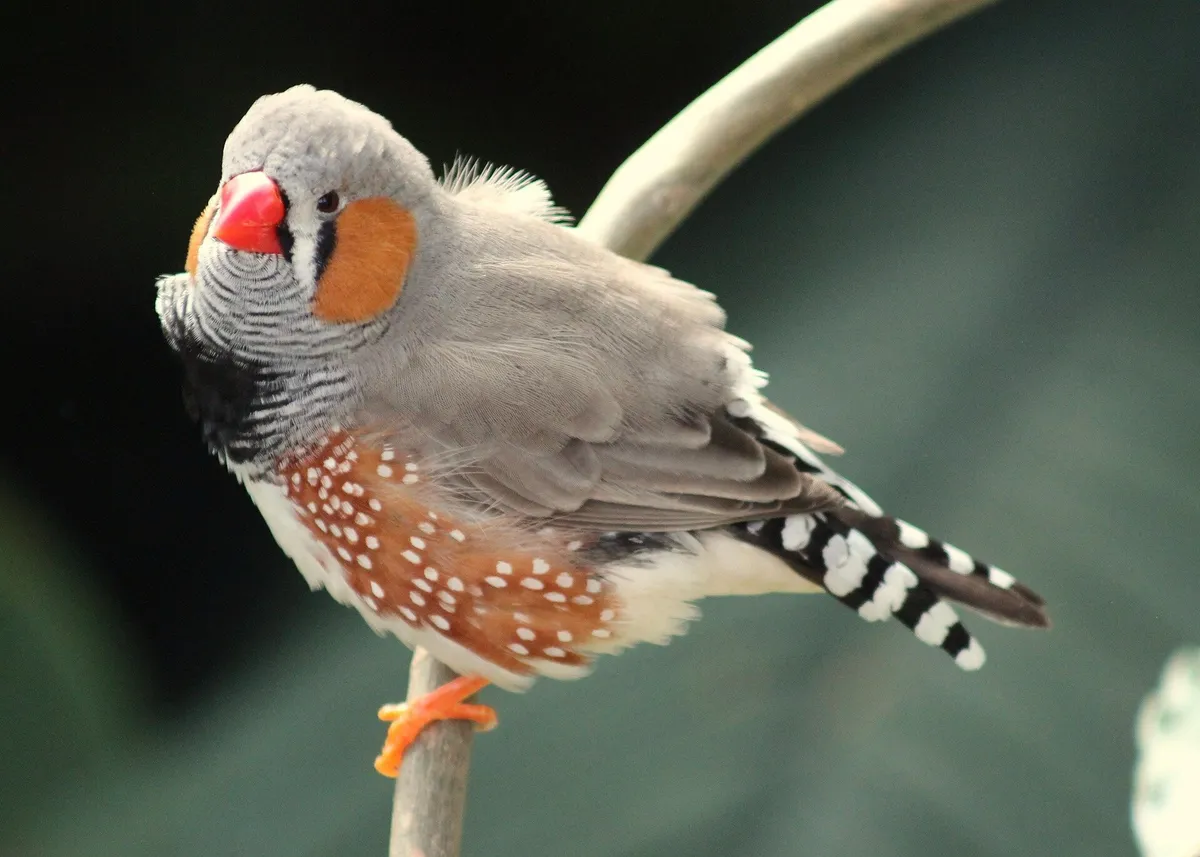
Zebra finches are great for studying how brains process information. Male finches have a special brain circuit. This circuit helps them learn and perfect a simple, unique song. They use this song to attract female birds.
Gonzalez's team has built technology to record activity from hundreds of songbird neurons at once. They use AI to connect this brain activity to the bird's singing. This lets them turn neural firings into music. They can "decode" the bird's brain activity.
When birds are awake, they sing their song consistently. The regular pattern of notes matches what the decoder creates.
"We can literally listen to the brain, and it sounds exactly like the song," Gonzalez explained.
When birds sleep, their song circuit is still active. It's like they are "singing" in their sleep. But when researchers decoded these sleeping patterns, they found something interesting. The patterns matched the birds' learned song less than 5% of the time. It seemed the birds were "singing" a different song while asleep.
To understand these "dreams," researchers play the decoded notes back to the birds. Zebra finches only recognize their own song. Their song circuit only becomes active if they hear their own song.
"Now that we can turn that brain activity into a sound, we can feed that sound back to the bird," Gonzalez said. "We can basically ask its brain: Is this a sound that you recognize? It might not sound to us like the song, but it is maybe a fragmented version of their song."
Decoding How Learning Happens
The next step is to use this technology to change a bird's behavior. This will help them understand how learning works.
Young birds learn their song from an adult male, called a tutor. The researchers want to expose young birds to two tutors while they are awake. This way, the birds will learn two different songs. Then, the team can decode which song the young bird is "dreaming" about while asleep.
The researchers then want to see if they can guide the bird's learning. While the bird sleeps, they plan to silence neurons linked to one song. They will let the activity for the other song continue.
Gonzalez asks: "Can you change the way a bird learns to sing by playing with their dreams?"
Understanding Brain Communication
The team is also studying the bird's visual system during sleep. They are creating tools to turn visual system activity into images. They test these tools with real visual cues. One example is the unique mouth markings on baby finches. These markings tell parent birds when and where to feed them.
The team plans to expand their system to include visual cues between adult birds. Like humans talking, songbirds look at each other when they sing. Male birds also perform complex courtship dances for females.
Recording both song circuit and visual system activity during sleep could show if social sounds and sights are reactivated together. This would give a clearer picture of how sleep helps with learning and social interactions. It could also help researchers understand how brain areas share information and what happens when they miscommunicate.
Studying the brain during sleep removes outside influences. For example, the presence of a female might change a bird's song. This allows scientists to focus only on the neurons and circuits of the brain.
"At this point, all that you have is the brain," Gonzalez said. "The question becomes now: If you remove the constraints of the environment, how wild does your brain go? How many mistakes does your brain make? Are those even mistakes or do they have a purpose?"
Beyond Birds: Possible Applications
Bird brains are different from mammal brains. However, this research could reveal general rules about sleep and its evolution. One idea is that sleep and dreams help animals combine all the complex sensory information they get while awake. This allows them to think through different situations and plan for various outcomes.
This work could also help understand conditions like schizophrenia. Some scientists believe this condition might happen when different brain areas can't communicate properly.
"I am very much interested in hopefully being able, in the future, to try to open the state of sleep as a potential window into how the brain works, without the external world," Gonzalez said. "If you were to go into a zebra finch that's sleeping, could you make a prediction about how this zebra finch is going to behave in the real world and potentially manipulate it as well? That's the hope."
Deep Dive & References
Listening to songbird dreams for clues to how sleeping brains learn - Phys.org, 2026