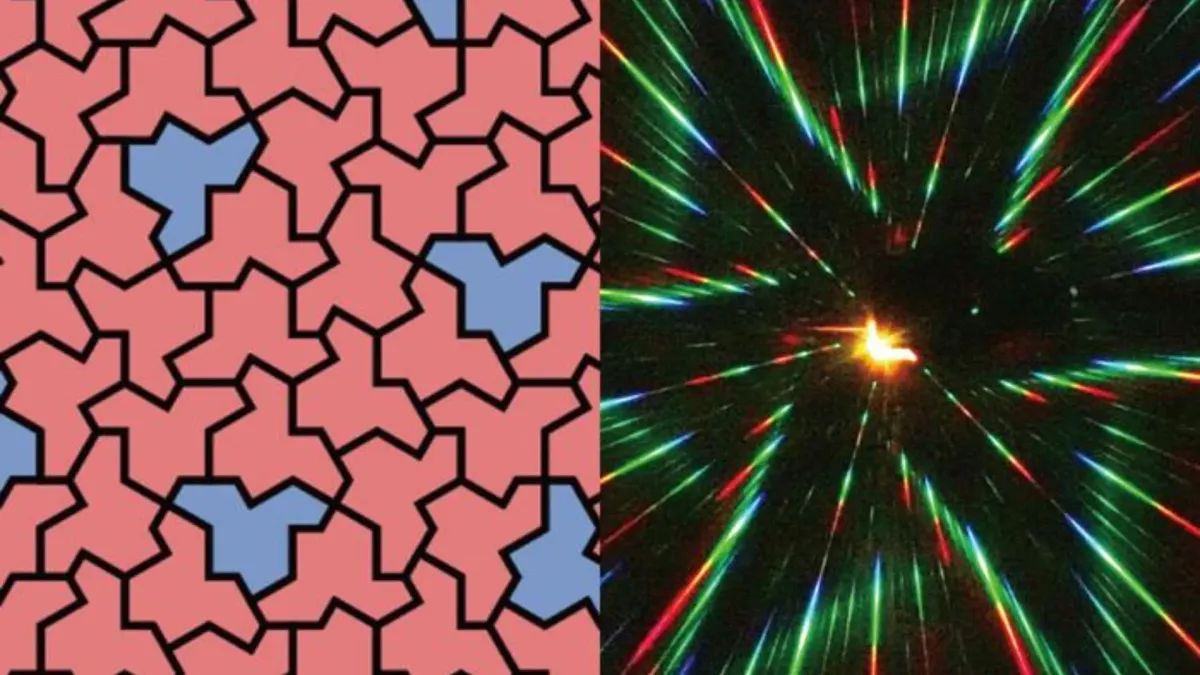
For decades, mathematicians wrestled with the "Ein Stein problem." No, not that Einstein. This one's German for "one stone," and it asks a deceptively simple question: Can a single tile shape cover an entire surface without ever repeating its pattern? Think honeycomb, but make it never boring.
For a long time, the answer seemed to be a resounding "nope." Then, in 2023, an amateur shape enthusiast named David Smith — bless his infinitely patient soul — found a 13-sided polygon. They called it the "Hat" tile, or "Smith's Hat." And just like that, the Ein Stein problem was solved. This little hat could tile a plane perfectly, and aperiodically.
The Hat's New Trick
Now, scientists at the University of Tokyo's Institute of Industrial Science decided to take Smith's clever hat and shine a laser through it. Because apparently, that's where we are now: solving ancient math puzzles and then seeing what happens when we zap them with light.
We're a new kind of news feed.
Regular news is designed to drain you. We're a non-profit built to restore you. Every story we publish is scored for impact, progress, and hope.
Start Your News DetoxAssociate Professor Yuto Moritake and his team took microscopic patterns of Smith's Hat, etched them onto silicon nitride films, and then hit them with a laser. What happened next was pretty wild: distinct, pinwheel-like patterns emerged. This wasn't entirely unexpected, given the Hat tile's chiral nature (meaning it's not identical to its mirror image, like your hands). But this specific laser behavior had never been seen in traditional quasicrystals.
The team noticed that these diffraction patterns would flip and change depending on the laser's polarization and direction. Essentially, if they mirrored the physical structure of the hat tiles, the light's behavior would mirror, too. It was a new kind of symmetry-controlled optical response, a fancy way of saying they found a new dial for manipulating light.
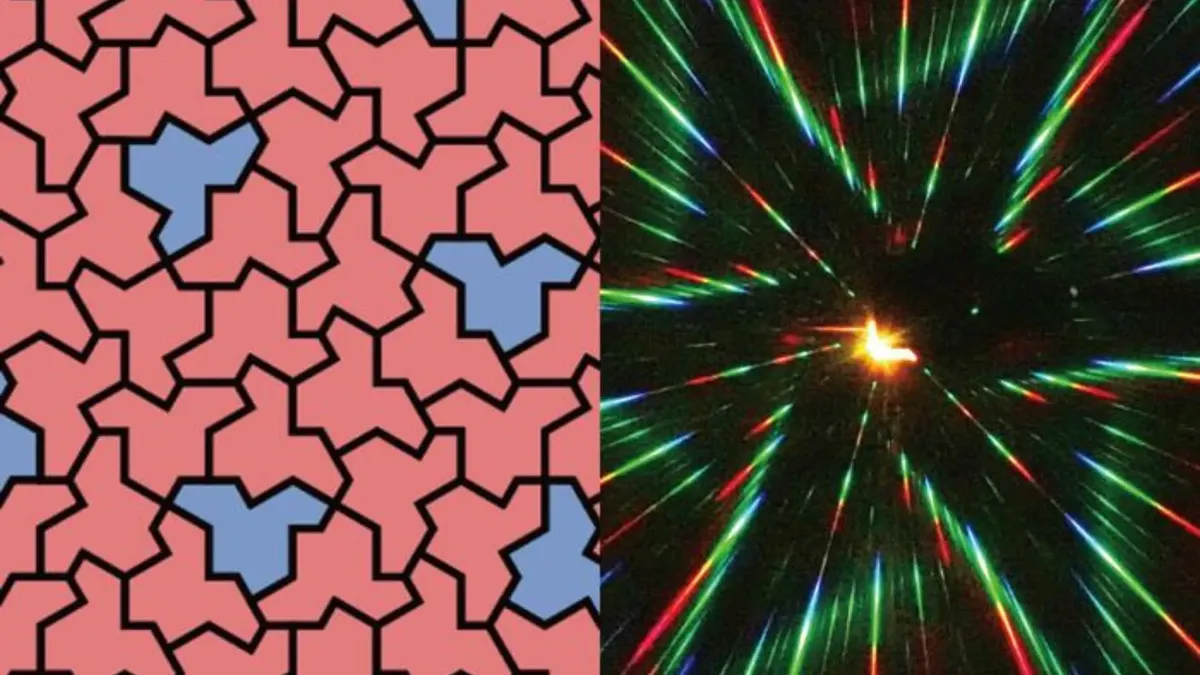
Moritake believes these monotile patterns offer a fresh playground for exploring how symmetry, chirality, and non-repeating designs can mess with light. The hope? New tech for controlling polarization, bending light to our will, and maybe even some optical devices we haven't even dreamed up yet. All thanks to a little hat and a laser pointer.