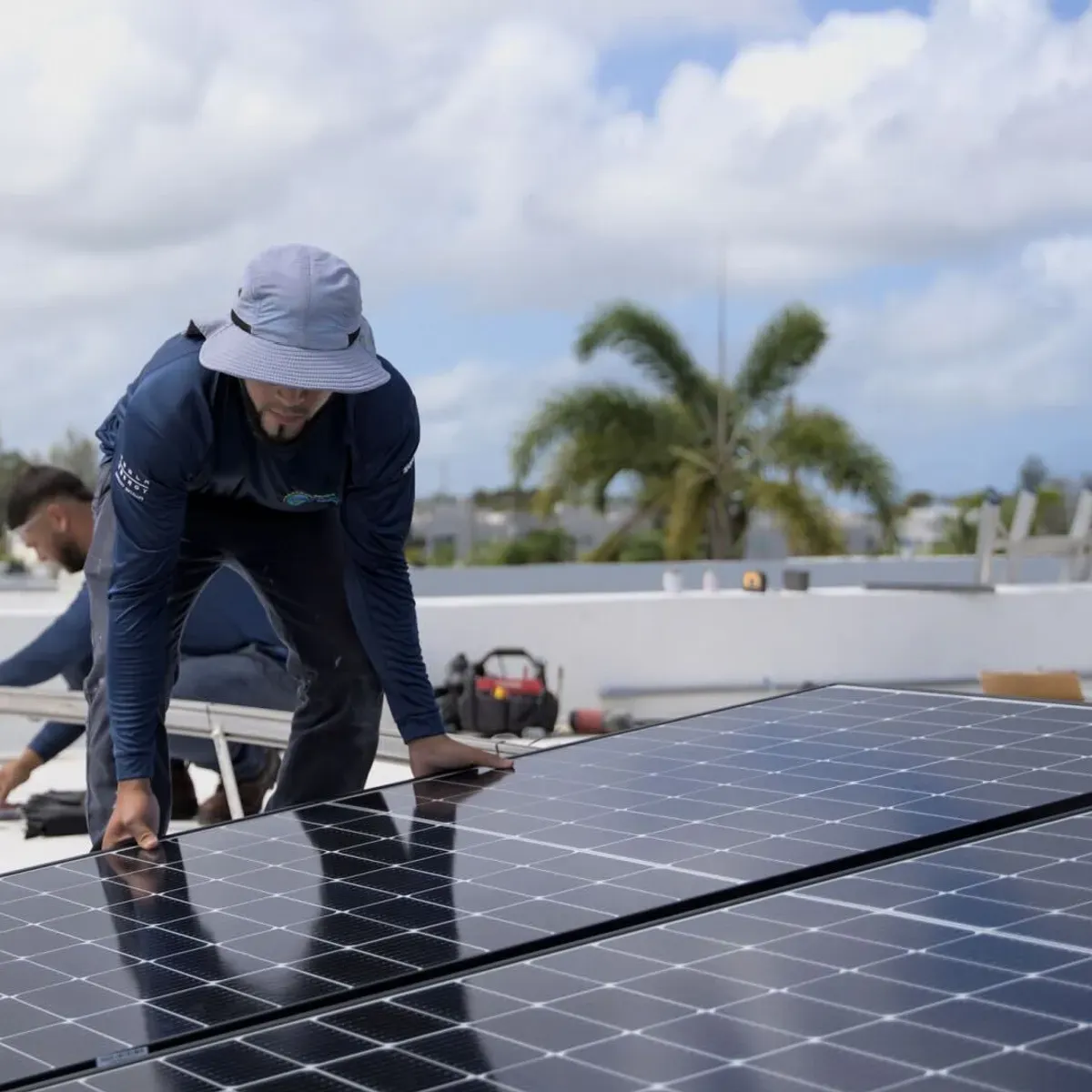
Ever feel like your smart home devices are just a little too clever? Turns out, they might be moonlighting as silent power brokers for the entire U.S. grid. Three energy giants — Sunrun, Tesla, and Renew Home — are teaming up to harness the collective juice of millions of homes. Their goal? A staggering 17 gigawatts (GW) of distributed power, just waiting to ease the strain on an increasingly hungry grid, especially with all those new data centers popping up.
This isn't some futuristic fantasy. It's a "capacity-as-a-solution" plan that pools the resources of the nation's biggest home energy providers. Sunrun and Tesla bring hundreds of thousands of solar-and-battery-equipped customers to the table, many of whom are conveniently located near data center hotbeds like Texas, California, and Virginia. Renew Home, meanwhile, manages a whopping 8 million smart thermostats and other internet-connected devices. Because apparently, your AC unit has bigger aspirations than just keeping you cool.
Chris Rauscher, Sunrun's head of grid services, says this partnership tackles the "speed to power" problem — the urgent need for data centers to plug into the grid yesterday. And for you, the homeowner? You get paid for joining grid programs. So, your smart thermostat isn't just saving you money; it's potentially earning you some too.
We're a new kind of news feed.
Regular news is designed to drain you. We're a non-profit built to restore you. Every story we publish is scored for impact, progress, and hope.
Start Your News DetoxThe Sleeping Giant of Your HVAC System
The companies believe they can deliver 16.8 GW from 12 million devices spread across 9 million U.S. homes. Sunrun and Tesla contribute 7.8 GW from their installed batteries. Renew Home adds another 9 GW, essentially by strategically shifting peak air conditioning use for one hour. Let that satisfying number sink in.
In Texas, the second-largest data center market, this coalition boasts 1.3 GW from HVAC systems and 440 megawatts (MW) from batteries. California, the third-largest, pulls in nearly 1.1 GW from HVAC and 3.6 GW from batteries. Ben Brown, CEO of Renew Home, points out that while experts have talked about distributed energy for years, few realize just how much power is available right now.
Virginia, home to one of the world's largest commercial computing hubs, currently taps into 37 MW from batteries and 276 MW from HVAC systems through this partnership. They expect that combined capacity to hit 500 MW by 2030. Brown predicts a massive surge in battery and EV adoption in the coming years, calling this the "beginning of a big increase."
He also dropped a particularly eye-opening statistic: 80 million U.S. homes have controllable HVAC systems, but only 20 million have smart thermostats. He calls those untapped smart thermostats "the sleeping giant" for market capacity. Which, if you think about it, is both impressive and slightly terrifying.
Puerto Rico: A Glimpse Into the Future
The need for this kind of immediate, distributed power is even more stark in Puerto Rico. The island's grid is battling high demand and aging infrastructure. After Hurricane Maria decimated the grid in 2017, rooftop solar systems — often paired with batteries — now supply 20% of Puerto Rico's power. It's a real-world test case for grid resilience.
Puerto Rico experienced around 225 power outages in late 2023. Rauscher notes that the island is "ahead of the curve" in facing challenges that are likely to intensify there and on the mainland. LUMA Energy, which manages Puerto Rico's grid, has already tapped into Sunrun's PowerOn Puerto Rico virtual power plant at least six times in a single recent month, particularly during this year's sweltering temperatures.
Janisse Quiñones, LUMA's CEO, recently thanked over 200,000 customers with solar and batteries for helping to shorten an outage that affected 170,000 homes and businesses in early June. So, the next time your AC kicks on, remember: it might just be saving the day for someone else's server farm. And that's a pretty cool thought.