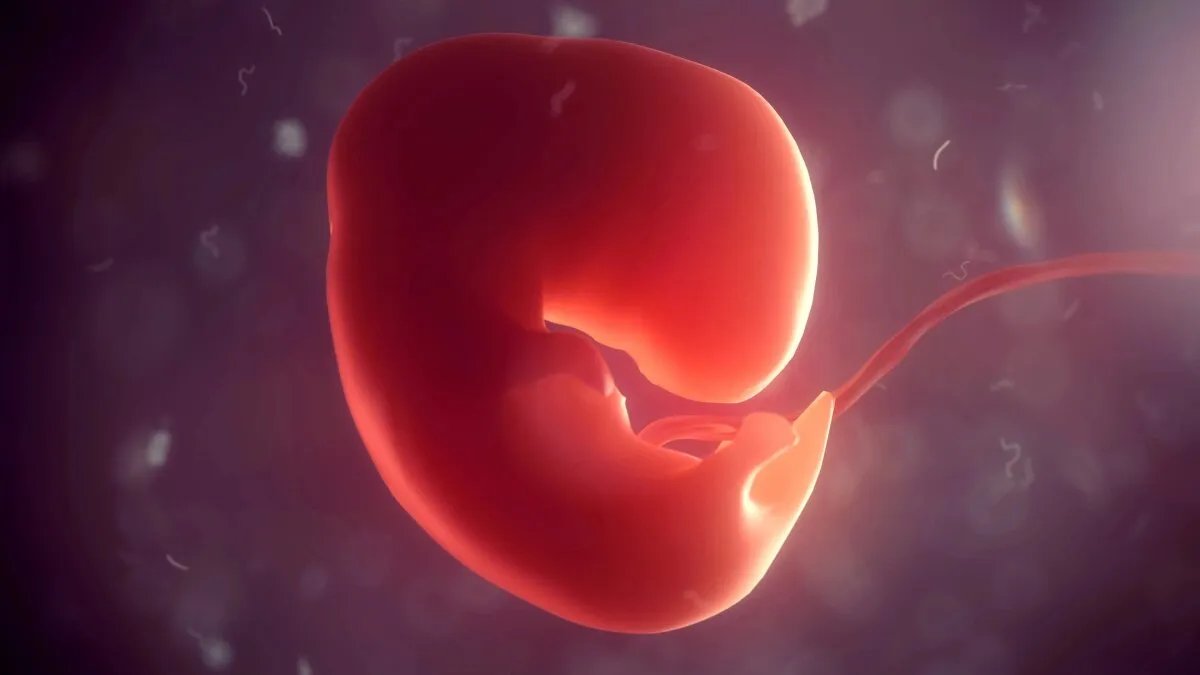
For anyone who's ever wondered how to get a human embryo model to sprout its own tiny organs in a lab, Chinese researchers have just cracked the code. They've created the first-ever embryo-disc model capable of nurturing the 'seed cells' necessary for lab-grown organs. Which, if you think about it, is both impressive and slightly terrifying in the best possible way. This isn't just a science experiment; it's a monumental leap for regenerative medicine and potentially, a future where organ transplants are a lot less about waiting lists and a lot more about precision engineering.
Scientists have been trying to solve this particular biological riddle for years. The main problem? Stem cells are notoriously finicky. Getting them to organize themselves into the complex structures required for artificial organs has been a persistent headache, a kind of biological Rubik's Cube that refused to align.
The 14-Day Rule and the 'Black Box'
Beyond the sheer scientific challenge, there's the small matter of ethics. International guidelines famously put a hard stop on growing human embryos past 14 days post-fertilization. This isn't an arbitrary number; it's when a crucial process called gastrulation kicks in.
We're a new kind of news feed.
Regular news is designed to drain you. We're a non-profit built to restore you. Every story we publish is scored for impact, progress, and hope.
Start Your News DetoxGastrulation is basically the embryo's extreme makeover montage. It transforms from a flat pancake of cells into a multi-layered, three-dimensional structure, laying down the fundamental blueprints for every organ and tissue in the body. As Professor Yu Leqian from the Chinese Academy of Sciences put it, this is when the body's basic structure is set. It's one of the most critical, and until now, most mysterious events in human development – often dubbed the 'black box' of embryology.
Because of that 14-day rule, lab-grown embryo models are the only window into studying the crucial 14-to-21-day period. But past models were, frankly, a bit rubbish at mimicking nature. They'd only make certain cell types and, crucially, failed to produce the 'primitive streak' – a groovy little guide that helps cells develop in an organized, rather than random, fashion.
Enter the Disc-Gastruloids
The breakthrough came with a field called spatial biology, which is essentially about precisely positioning early human cells to trick them into thinking they're the real deal. Using this method, the team cooked up embryonic models they've charmingly named 'disc-Gastruloids.'
These disc-Gastruloids were the first lab models to successfully enter gastrulation and form those all-important primitive-streak-like structures. With this critical stage achieved, the scientists watched cells migrate across the disc's surface, just like they do in actual human embryo growth. More than 80% of these bio-engineered models nailed these developmental processes.
And then came the showstoppers: the disc-Gastruloids started developing neural tubes, a primitive gut complete with lung, liver, and pancreas progenitors, and even a primitive heart chamber that contracted on its own. Let that sink in. A tiny, lab-grown heart beating.
Further analysis confirmed these models were a cellular doppelgänger for a 21-day-old human embryo. This study, published in Cell, isn't just fascinating; it's a foundational step towards mass-producing organ-seed cells in the lab. Imagine the possibilities for tissue repair or even manufacturing entire organs. Cultivated human organs might still be a ways off, but this just got us a whole lot closer. Now, if you'll excuse us, we're off to ponder the implications of lab-grown hearts.