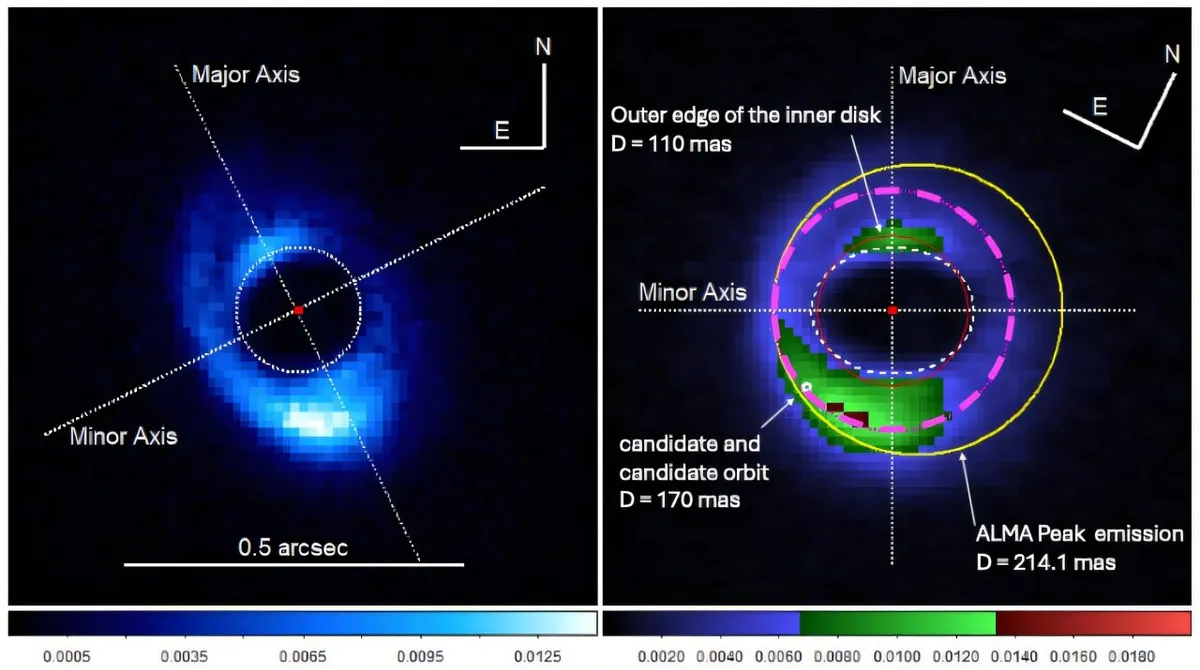
Imagine a cosmic construction site, 492 light-years from Earth, where a star is just getting started on its planetary ambitions. That's the scene around WRAY 15-1880, a relatively young star that's now under intense scrutiny by Italian astronomers.
They've been using the aptly named Very Large Telescope (VLT) to peer into the swirling cloud of gas and dust that surrounds WRAY 15-1880. This isn't just any dust cloud; it's a 'circumstellar disk,' which is essentially a cosmic nursery where planets are born.
The Plot Thickens (and Swirls)
WRAY 15-1880 is a mere 2.8 million years old—practically an infant in star years—and it's roughly the same size as our own sun. Previous peeks at its disk showed a distinct gap, a cosmic clue that something interesting might be happening within its sprawling 87-times-Earth-to-Sun-distance reach.
We're a new kind of news feed.
Regular news is designed to drain you. We're a non-profit built to restore you. Every story we publish is scored for impact, progress, and hope.
Start Your News DetoxEnter Elisabetta Rigliaco and her team from the Astronomical Observatory of Padua, Italy. They aimed the VLT's SPHERE instrument at WRAY 15-1880, combining fresh observations with old data. Their goal: to catch planets in the act of forming.
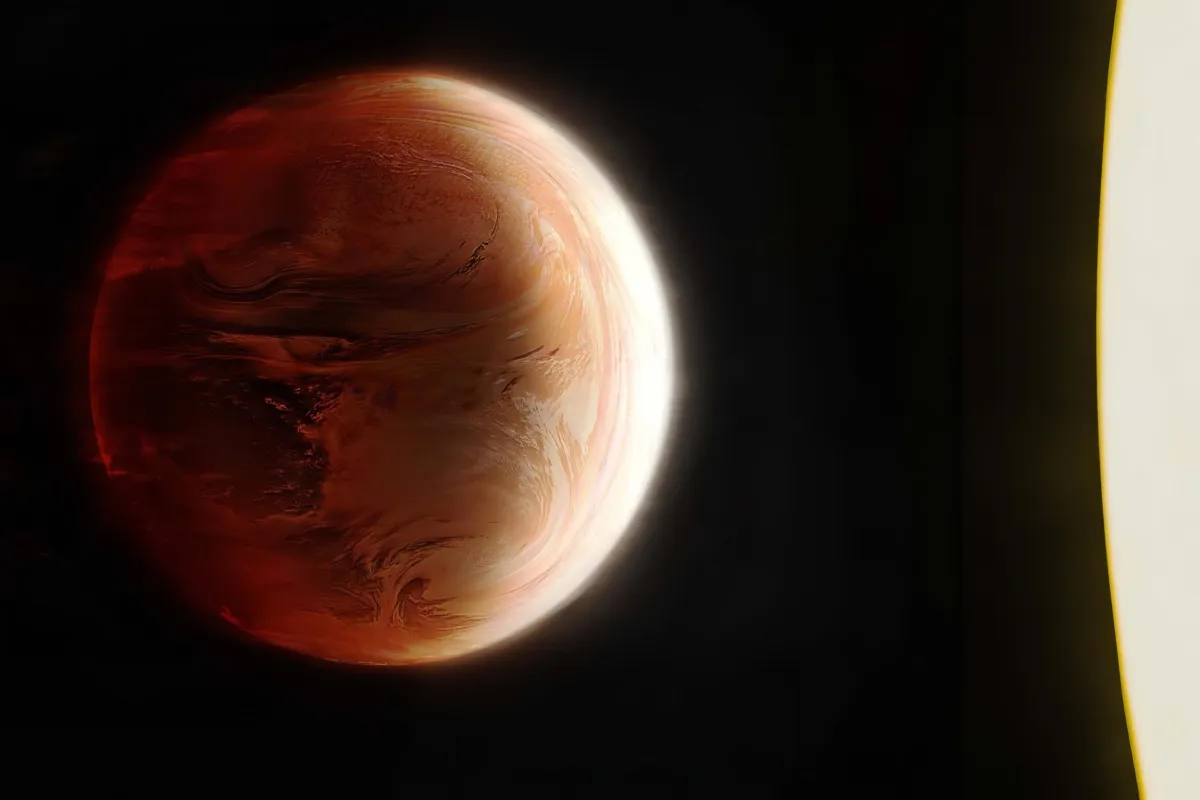
And they might have found something. The data points to a potential companion object lurking in that disk, a gas giant that could be anywhere from 1.7 to 7.6 times the mass of Jupiter, with a scorching temperature of about 1,200 Kelvin (that’s 1,700°F, for those keeping score).
Is It a Planet? Maybe. Probably. We Hope So.
Now, astronomers are a cautious bunch, and they're not quite ready to slap a "Certified Planet" sticker on this thing. It could be starlight playing tricks, reflecting off dust, or even an optical illusion caused by the disk's own unevenness. Which, if you think about it, is both impressive and slightly frustrating.
If it is a planet, it's taking its sweet time, completing one wide, circular orbit around WRAY 15-1880 every 127 years. That's a long commute. But if confirmed, this would make WRAY 15-1880 one of the earliest known planetary systems, joining an exclusive club of stars where we've seen both the disk and the potential planets forming at the same time. The cosmic equivalent of catching a chef making dinner from scratch in an open kitchen.