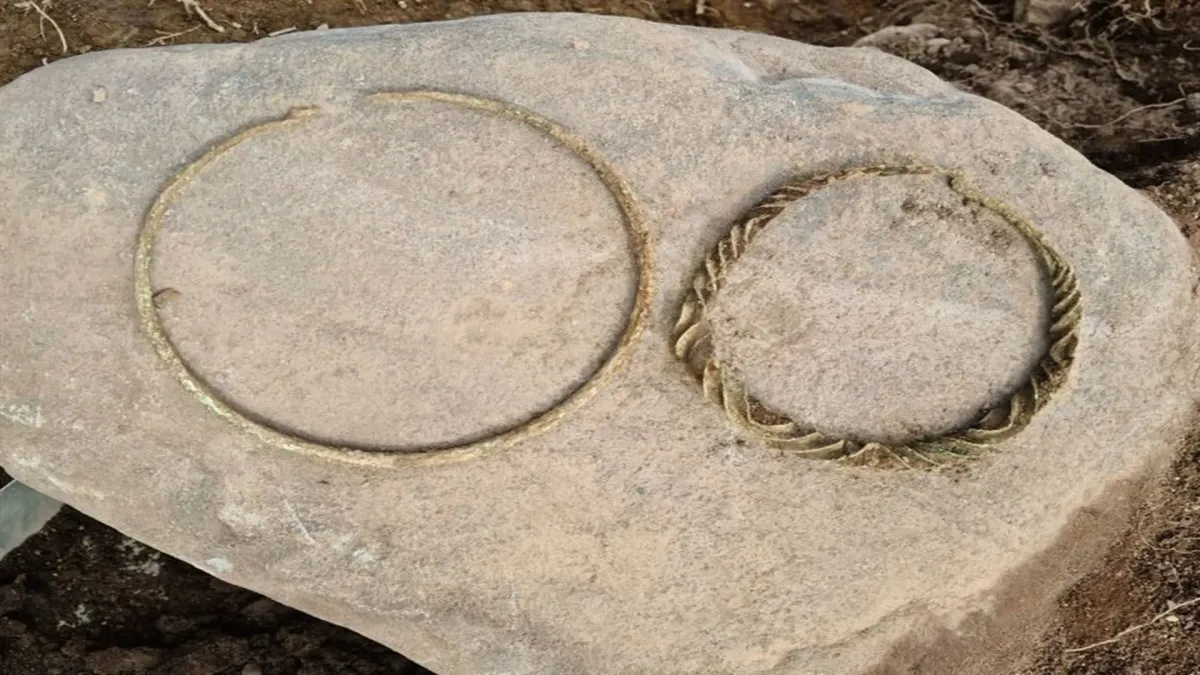
Just when you thought a routine housing development dig would be, well, routine, archaeologists in Sweden unearthed something that makes your average backyard BBQ look positively dull. We're talking rare, 2,500-year-old braided bronze neck rings — the kind of bling that makes you wonder if ancient Swedes were secretly fashion influencers.
The discovery happened in Marby, east of Norrköping, on what was assumed to be an unremarkable wooded hillside. Turns out, this hillside was actually an ancient hot spot, packed with graves, rock carvings, and even settlement remains from the Late Bronze Age.

The Bling and the Burials
Among the various scattered bones, urns, and pits, archaeologists spotted something shiny: pieces of bronze peeking out of the dirt. These weren't just any bronze bits; they were "wendel rings," braided neck rings. Finding these alone is rare for the Late Bronze Age, but their specific context here makes them "highly unusual, perhaps unique," according to project manager Alf Ericsson. Let that satisfyingly understated Swedish observation sink in.
We're a new kind of news feed.
Regular news is designed to drain you. We're a non-profit built to restore you. Every story we publish is scored for impact, progress, and hope.
Start Your News DetoxWhat makes these rings so special? Usually, such items are found with other treasures or in large collections. But at Marby, they were nestled together in a stone setting with a central block, likely a ritual offering within a grave monument containing cremated human remains. Because apparently, even 2,500 years ago, you needed a good send-off.
This site isn't just about fancy jewelry. It's a window into a society in flux, teetering on the edge of the Iron Age. The Swedish History Museum notes that this particular grave showcases changing burial customs. Beyond the rings, they found house remains and two "burnt mounds" — which sound like a bad cooking experiment but were actually quite complex.

One burnt mound, typically used for trash, was repurposed as a grave monument, which is a bit like turning your recycling bin into a shrine. The other had fire-cracked stone and pottery, tied to a house that went up in flames millennia ago. The Marby site, conveniently located near the sea, offers a rare glimpse into a time when grand burial traditions were fading, and bronze was transitioning from everyday use to more ritualistic offerings, often left in hoards for the gods. Because sometimes, you just needed to give back to the universe, one bronze ring at a time.