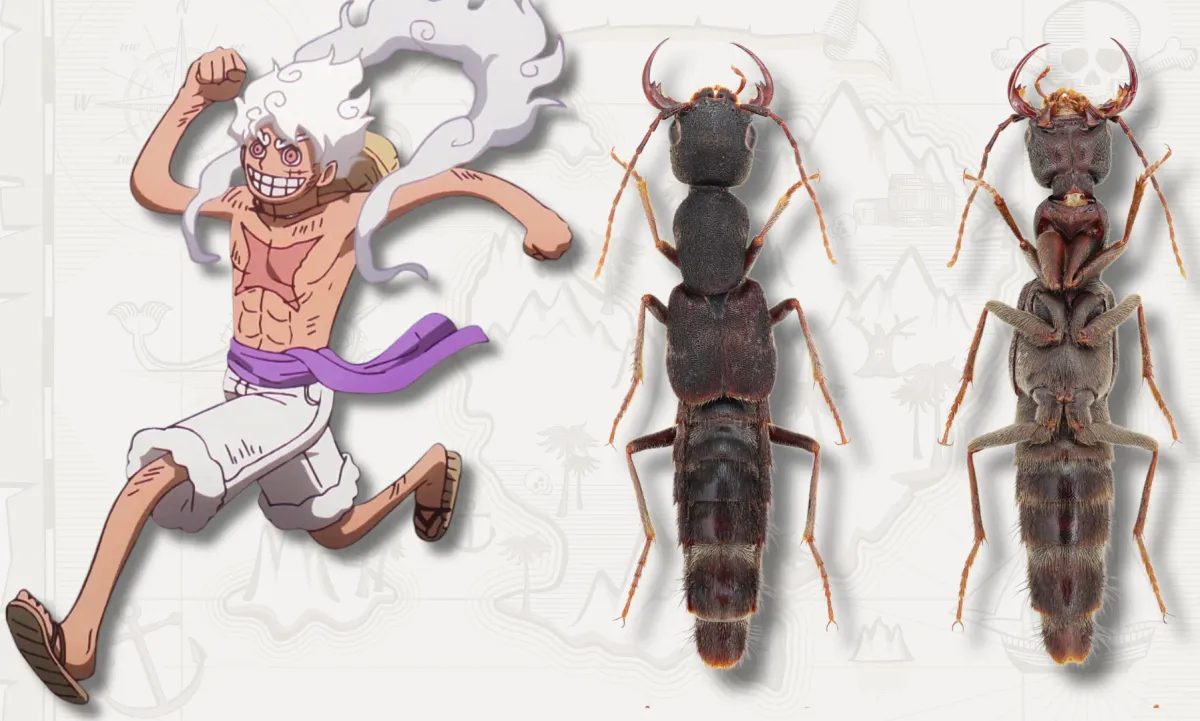
A newly found group of beetles has been named after Monkey D. Luffy. He is the main character of the popular manga and anime series One Piece.
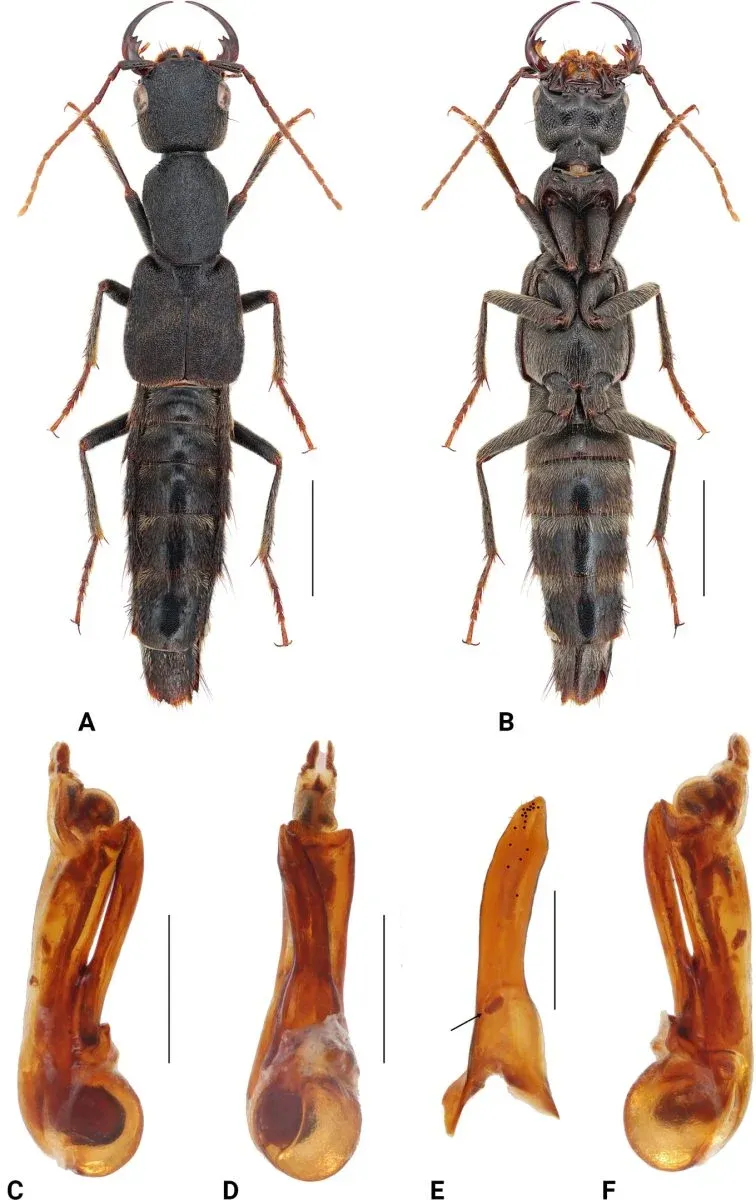
Scientists chose the name Luffy because these rove beetles have very long, thin mandibles, antennae, and mouthparts. This gives them a stretched look, much like Luffy's ability to stretch his body.
The researchers published their findings in the journal ZooKeys.
Two Species with Anime Ties
The genus Luffy includes two species: Luffy schillhammeri and Luffy nika. Both beetles are found in Southeast Asian forests.
We're a new kind of news feed.
Regular news is designed to drain you. We're a non-profit built to restore you. Every story we publish is scored for impact, progress, and hope.
Start Your News DetoxLuffy schillhammeri was found in China's Yunnan Province. Its name honors Dr. Harald Schillhammer, an expert on rove beetles.
The second species, Luffy nika, was found in Laos. Its name comes from Luffy's "Gear 5" transformation, also known as Nika. This beetle has white hair on its wing cases and body, which looks like the white, smoke-like form of Luffy's Nika transformation.
Scientific Importance of the Discovery
Naming these beetles after an anime character might attract fans, but the discovery also helps answer important questions about beetle evolution.
Fang-Shuo Hu and Alexey Solodovnikov from the Natural History Museum of Denmark studied the Ocypus group of rove beetles. They also looked at Acupronotes, Apostenolinus, and Staphylinus, whose places in the beetle family tree were unclear.
Taxonomists study anatomical features to understand how species are related. The researchers examined many beetle specimens. They focused on small differences in their jaws, mouthparts, and other body parts.
Luffy's Place in Beetle Evolution
This research helped define the "Eucibdelus lineage" of beetles. Luffy has a mix of traits. It has dorsal ridge teeth on its left mandible, a feature of the Eucibdelus lineage. However, its labrum is not fully hardened, which is different. It also has other unique features.
These mixed traits suggest that Luffy is closely related to a major evolutionary split. The researchers believe Luffy is the sister group to the entire Eucibdelus lineage. This means they likely came from a common ancestor but then evolved separately.
The researchers noted that this genus shows a unique combination of traits. These traits are in between the Eucibdelus lineage and other members of the Ocypus group.
This discovery does more than just add new names to the list of known species. It fills a gap in the classification of these beetles. It also gives scientists a clearer picture of how the subtribe Staphylinina evolved.
Using pop culture names can also help people learn about less-known organisms. The connection to One Piece makes taxonomy more accessible. Taxonomy is vital for documenting biodiversity and identifying species before they disappear.
Deep Dive & References
Luffy gen. nov., a new genus of Staphylinina (Coleoptera, Staphylinidae, Staphylininae), remarkable for understanding the Eucibdelus lineage - ZooKeys, 2026