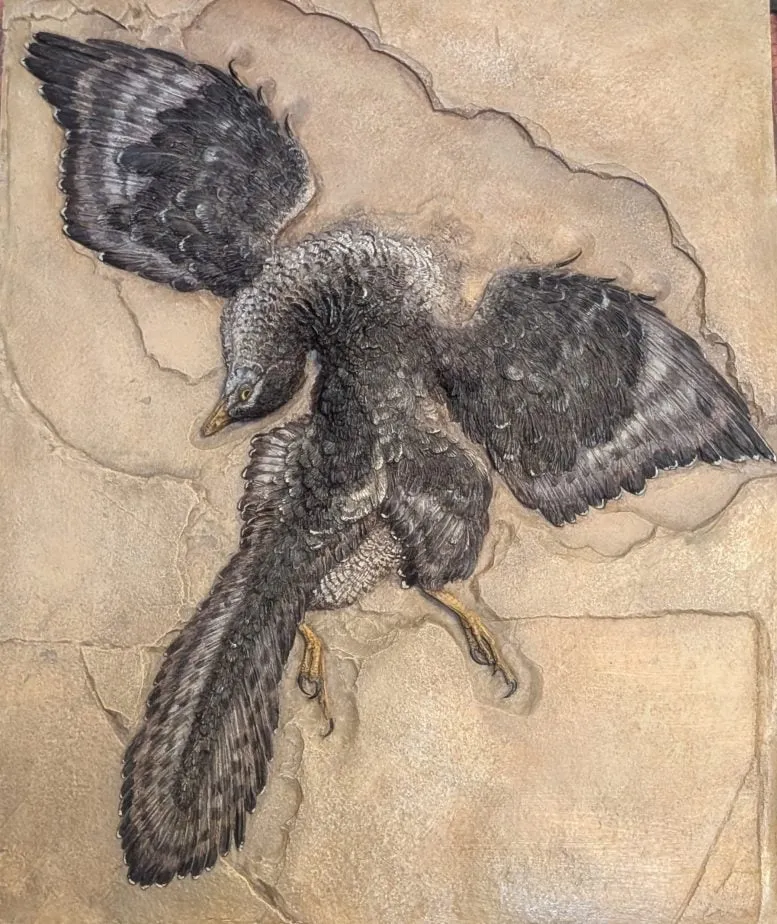
Archaeopteryx was a feathered, bird-like dinosaur that lived about 150 million years ago. It had features of both dinosaurs and modern birds.
was a feathered, bird-like dinosaur that lived about 150 million years ago and combined traits of both dinosaurs and modern birds. Credit: University of Southampton
Archaeopteryx likely used two or three powerful leaps to get enough speed for sustained flight. Its wings could not lift high, and it lacked a keeled breastbone, which modern birds use for strong launches. This meant it faced a challenge in getting off the ground.
We're a new kind of news feed.
Regular news is designed to drain you. We're a non-profit built to restore you. Every story we publish is scored for impact, progress, and hope.
Start Your News DetoxNew research from the University of Southampton suggests its strong hind legs were key. These legs likely propelled it into the air with several jumps.
Solving an Ancient Flight Puzzle
For over a century, scientists have wondered how Archaeopteryx became airborne. This animal is an important link between non-avian dinosaurs and birds. However, it couldn't launch itself with a single jump like many modern birds.
Its shoulder movement was limited, and it didn't have a breastbone. These factors restricted how fast its wings could help it reach flight speed. This left the exact mechanics of its takeoff a mystery.
Dr. Neil Gostling, a paleobiologist at the University of Southampton, explained that Archaeopteryx was the "first real bird." It had feathers and wings but also dinosaur features like a long bony tail, claws on its fingers, and teeth. He noted it wasn't as developed as today's birds.
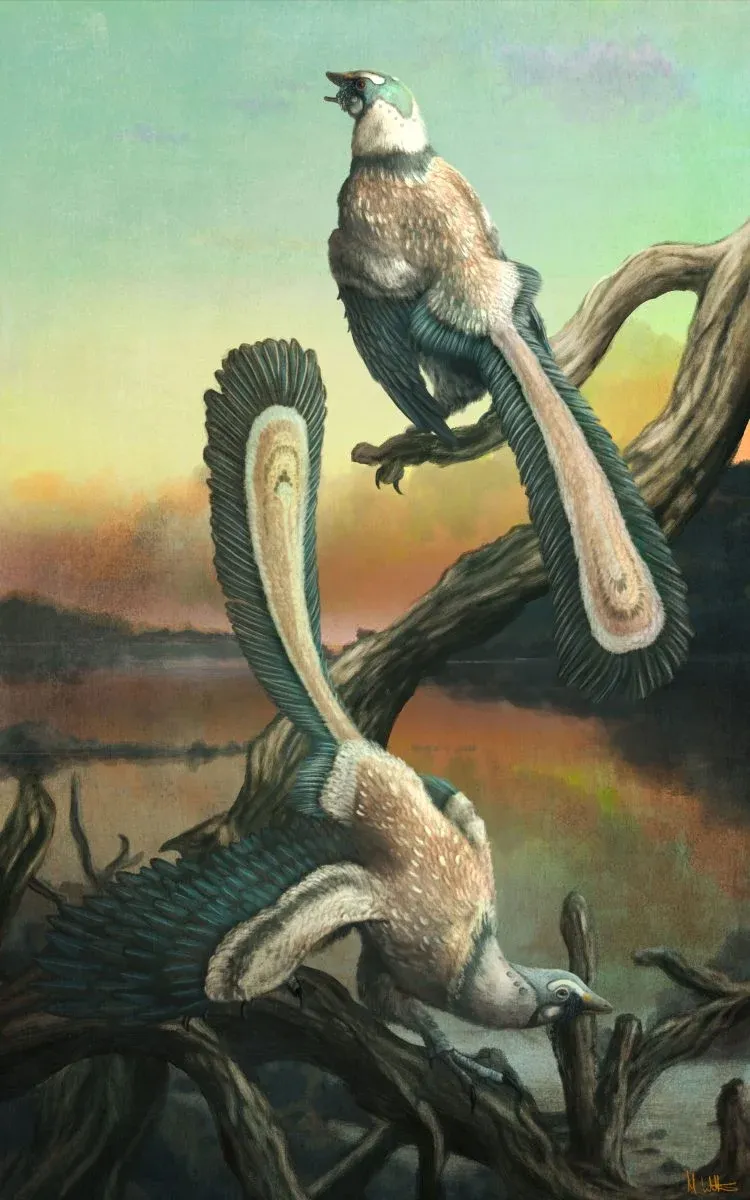
Markus Heller, a Professor of Biomechanics at Southampton, added that Archaeopteryx couldn't rely on its wings for takeoff. Its legs had to generate the initial force, and then the wings would take over.
Powerful Legs Were Key
Scientists have suggested different ways early birds might have flown, such as flapping while running uphill or gliding from a high place. Since these are hard to test directly, researchers used computer modeling and observations of living birds. They studied gulls, magpies, crows, and finches.
They then applied these observations to Archaeopteryx's anatomy. They analyzed forces at the hip, knee, and ankle, along with muscle capacity. This helped them estimate how quickly the animal could launch.
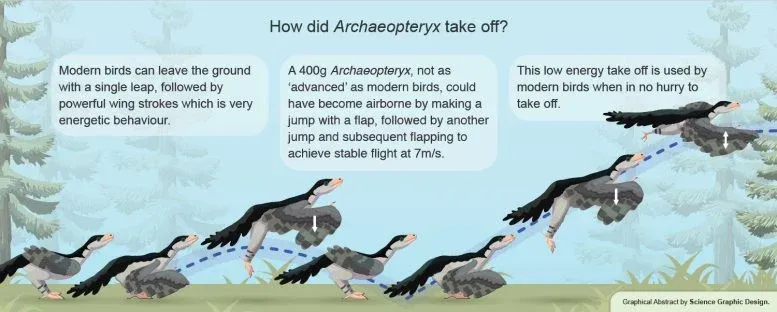 An illustration of how Archaeopteryx could have taken off. Credit: Science Graphic Design
The team, including Dr. Pauline Provini from the Muséum National d’Histoire Naturelle in Paris, found that Archaeopteryx could reach the minimum speed for sustained flight with just two or three jumps. This method would have used less energy than the single powerful leap modern birds often use.
Dr. Erik Meilak, who led the study, said a 400-gram Archaeopteryx could reach a flight speed of seven meters per second with three leaps. It could also do it with two leaps and a downward flap between them.
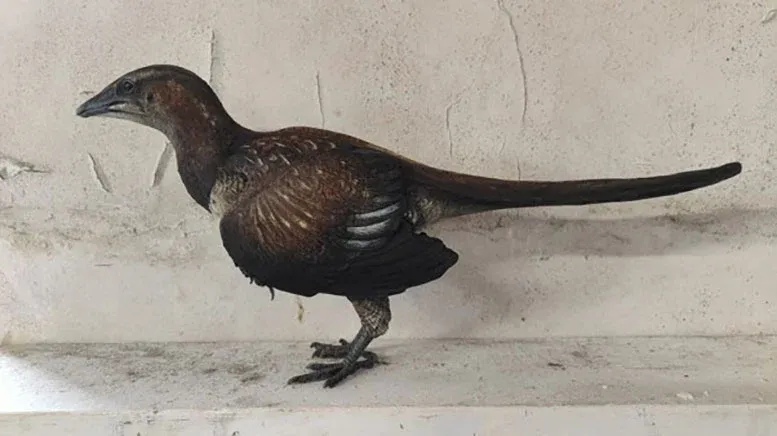
Modern Birds Still Use Multiple Hops
Dr. Gostling noted that all birds use their legs to push off when taking flight. Up to 90% of the initial force comes from the legs before the wings take over.
He explained that Archaeopteryx would have taken off with a series of leaps followed by flapping. Modern birds can take off with one leap, but many, like crows, magpies, and seagulls, still use multiple hops. They might use one leap if startled but two or three if they are trying to save energy, much like their ancestors.
Deep Dive & References
Hop, hop and away: On the take-off of Archaeopteryx using a multiple leaping mechanism - Developmental Biology, 2026