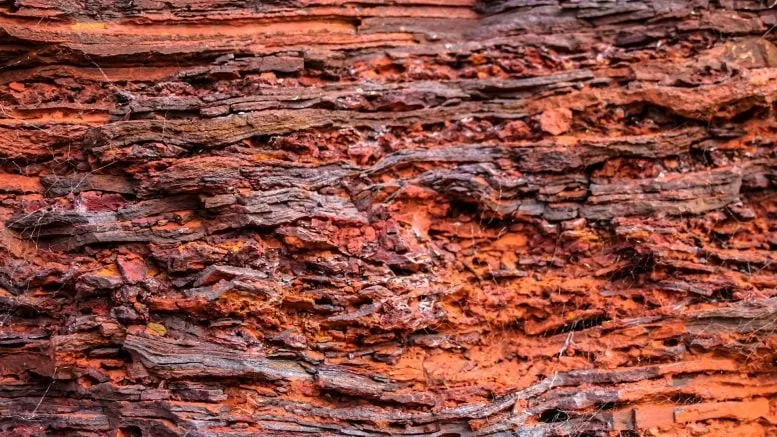
Deep beneath the sunbaked red soil of Western Australia, where iron ore usually reigns supreme, scientists think they've found something far more electrifying: a massive, untapped source of natural hydrogen. And the secret ingredient? Magnetite, the very same mineral that makes those iron deposits so valuable.
Turns out, this unassuming mineral isn't just good for steel. When magnetite gets cozy with superheated water deep underground, it can naturally produce hydrogen gas. Researchers at Edith Cowan University (ECU) didn't just stop there; they figured out how to give this process a serious boost, suggesting that injecting a special solution into these subterranean rock formations could unleash even more of the good stuff.
Associate Professor Alireza Keshavarz isn't shy about the implications. He believes Australia could be sitting on enough hydrogen to power itself for generations, potentially turning the country into a global clean energy superpower. Which, if you think about it, is both impressive and slightly terrifying for anyone who just bought stock in fossil fuels.
We're a new kind of news feed.
Regular news is designed to drain you. We're a non-profit built to restore you. Every story we publish is scored for impact, progress, and hope.
Start Your News DetoxThe Underground Recipe for Hydrogen
To prove their theory wasn't just a lab fantasy, the ECU team put magnetite samples through the wringer. They submerged them in water, cranked the heat to a scorching 200°C, and applied high pressure for 60 days. These weren't just any conditions; they were precisely what you'd find miles beneath Earth's surface.
The results didn't just confirm that natural hydrogen forms this way; they also mapped out the perfect conditions for it to keep flowing. Lead author Kaveh Moghanirahimi pointed out that Western Australia happens to have some of the planet's largest banded iron formations, making it a prime candidate for this subterranean energy revolution.
Professor Stefan Iglauer from ECU's School of Engineering explained the two critical ingredients for this hydrogen feast: plenty of magnetite, and enough cracks and pathways in the rock to let hot water reach those fresh mineral surfaces. It's less about a giant underground lake of hydrogen and more about a persistent, geological slow-cooker.
So, while the world scrambles for clean energy, Australia might just need to dig a little deeper into its own backyard. No word yet on whether the hydrogen smells like iron ore, but we're willing to bet it's a small price to pay.