A massive impact billions of years ago might have brought rocks from deep inside the Moon to its surface. This happened near the lunar south pole. Scientists believe future Artemis astronauts could study this rare material. This could help them learn more about how the Moon formed and changed over time.
New findings shed light on the event that created the Moon's largest and oldest impact basin. This discovery could guide Artemis astronauts looking for clues about the Moon's early history. Two studies explain how the huge collision happened. They suggest that valuable rocks from deep within the Moon might be closer to the surface than once thought.
The Moon's Largest Impact Basin Holds Ancient Clues
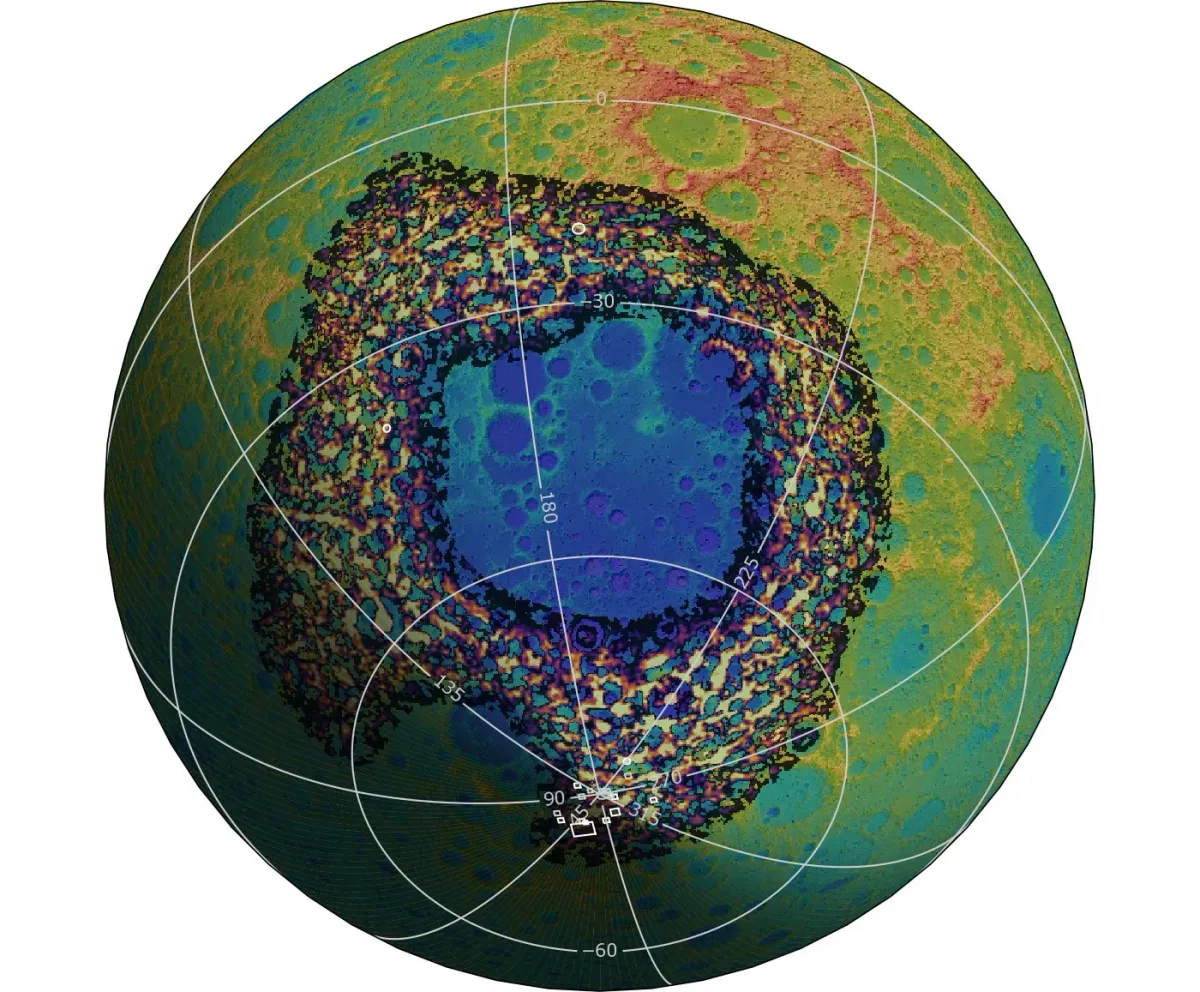
Scientists from the Center for Lunar Origin and Evolution (CLOE) led this research. CLOE is part of NASA's Solar System Exploration Research Virtual Institute. Their work focuses on the South Pole-Aitken (SPA) basin. This is a huge crater on the Moon's far side, and it's one of its oldest features.
We're a new kind of news feed.
Regular news is designed to drain you. We're a non-profit built to restore you. Every story we publish is scored for impact, progress, and hope.
Start Your News DetoxThe SPA basin formed very early in the Moon's history. Because of this, scientists see it as a unique record of the young Solar System. The area is also near sites being considered for NASA's Artemis missions. This makes it an important place for future exploration.
Dr. William Bottke, CLOE director, said the basin offers a rare chance to study the Moon's early history. He noted that the collision was so powerful it might have dug up material from deep inside the Moon, including parts of its mantle.
Simulations Reveal How the Giant Impact Happened
To understand how the basin formed, researchers used advanced computer models. These models recreated the ancient collision. The simulations show that the object came from the Moon's north and moved south. It hit the surface at a shallow angle. This path explains the long, tapered shape of the South Pole-Aitken basin.
Dr. Shigeru Wakita of Purdue University, lead author of the SPA impact study, said their simulation creates the correct shape of the basin. It also provides information about the object that caused it and the impact direction.
The models also suggest the impactor was not just a solid rock. It was likely a differentiated body with an iron core and rocky material around it. This is similar to a small protoplanet or a differentiated asteroid.
When it hit the Moon, the object created a deep, uneven hole. It also generated intense heat that melted rock in the basin's center. The impact shot huge amounts of crust and mantle material into space. Much of this then fell back onto the basin floor.
Gravity Data Points to Hidden Lunar Mantle
A second study looked at how this ejected material is spread out around and under the basin. Researchers combined detailed gravity measurements with models that included both crust and mantle material.
Their analysis suggests the SPA basin has a lot of mantle-derived rock inside it. This rock is also mixed throughout the surrounding material that was thrown out by the impact. Later impacts inside the basin seem to have uncovered some of these buried deposits. This brought mantle material closer to the surface. Future robotic missions or Artemis astronauts could potentially collect samples there.
Dr. Gabriel Gowman of the University of Arizona, lead author of the gravity study, said the exact location of mantle material has been a big mystery. He noted that their models show the SPA impact threw out enough deep material to create a large deposit that should still be there today. Importantly, some of this material might be in areas considered for the Artemis landings.
Artemis Could Explore Material From Deep Inside the Moon
Earlier ideas suggested that the deepest material dug up by the impact stayed mostly in areas far from potential landing sites near the lunar south pole. The new simulations and gravity analysis show a different picture.
The findings suggest that deposits with material from the Moon's mantle might stretch across parts of the south polar region. This includes places that could be visited during future Artemis missions. If this is true, astronauts might be able to collect samples that offer a unique look inside the Moon. They wouldn't even need to drill deep into the surface.
Bottke said the combination of impact and gravity modeling provides a powerful guide. He explained that it shows not only how SPA formed, but also where to find rocks that can answer big questions about the Moon's origin and evolution.
Deep Dive & References
A southward differentiated impactor forms the tapered shape of the South Pole–Aitken impact basin on the Moon - Science Advances, 2026
Gravity Mapping of Lunar Mantle Material in South Pole-Aitken Basin Ejecta - Journal of Geophysical Research: Planets, 2026