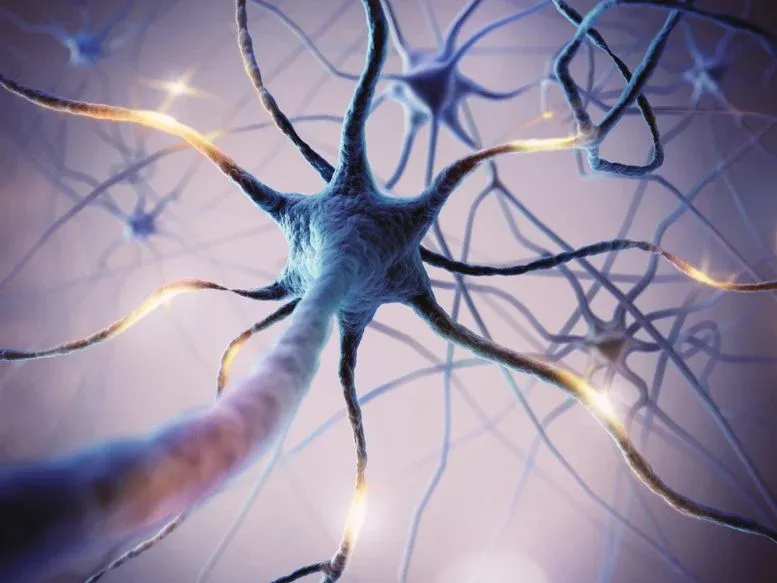
For decades, scientists have pictured individual brain cells as highly specialized little workers, each with a single, dedicated job. Think of them as tiny, highly skilled accountants, only ever balancing ledgers. Turns out, that image was a bit… rigid.
A massive new study, peering into over 14,000 individual neurons across 43 different areas of the mouse brain, just dropped a bombshell: most neurons are far more flexible than we ever imagined. Instead of just doing one thing, they're juggling multiple kinds of information simultaneously. It’s less accountant, more multi-tasking CEO who also moonlights as a DJ.
These aren’t just reacting to one stimulus. They’re responding to a complex, ever-changing cocktail of what the mouse sees, how it moves, and even the decisions it’s cooking up. A single neuron might be helping the brain recognize a visual cue, track a paw movement, and nudge a choice, all at the same time. Which, if you think about it, is both impressive and slightly terrifying.
We're a new kind of news feed.
Regular news is designed to drain you. We're a non-profit built to restore you. Every story we publish is scored for impact, progress, and hope.
Start Your News DetoxYour Brain: Less Machine, More Jazz Band
The findings, published in Nature, have been making waves. Early versions of the paper were downloaded over 11,000 times before official publication, proving that the question of whether neurons are specialists or generalists has been a simmering debate in neuroscience.
The answer, it seems, is a bit of both, but with a strong lean towards 'generalist.' Neurons in primary sensory areas, like those that handle basic vision, tend to be more specialized. They're the brain's equivalent of a bass player, sticking to their core rhythm. But as you move into brain regions that handle more complex tasks, these cells become much harder to categorize. They’re the saxophonist who can also shred on guitar and lay down a beatbox track.
As lead researcher Stefano Fusi from Columbia's Zuckerman Institute put it, the brain isn't a machine with gears, each with a single purpose. Instead, most neurons show a "huge variety of responses," helping the brain solve many different problems without needing a separate group of cells for every single experience. It's like your brain is constantly improvising, not following a strict sheet of music.
The “High-Dimensional” Brain Code
This study finally settled a long-standing debate thanks to a massive, standardized dataset from the International Brain Laboratory. Researchers had mice performing the exact same decision-making task, allowing for consistent comparisons across many brain regions. The results were clear: the further a neuron was from the initial sensory input, the more diverse its responses became. The brain, it turns out, prefers diversity over a rigid, specialized system.
But here’s the kicker: this diversity isn’t random. Researchers could often tell which brain region a neuron came from just by looking at its responses. Cells in the same region shared general characteristics, even if individual neurons were doing their own thing. Each neuron is versatile in its own way. Think of it this way: if an animal sees objects that vary in color and shape, some neurons might focus on color, others on shape, movement, or even the choice the animal is making. But together, as a group, their activity can tell the difference between a red circle, a black square, or a purple hexagon. Neuroscientists call these complex patterns "high-dimensional" representations.
Instead of storing each feature separately, groups of neurons encode many overlapping variables at once. This creates a flexible neural code that can distinguish similar situations and support different behaviors. It's why you can still recognize your friend even if they get a new haircut or wear a different shirt — your brain isn't reliant on one specific, specialized neuron to identify them.
Understanding this flexible "population code" could be huge for understanding brain disorders. It suggests that some neurological and psychiatric conditions might not be about a single type of cell failing, but rather when these complex, versatile patterns across large groups of neurons lose their organization or flexibility. Your brain, it seems, thrives on its internal jazz band being in sync. And there's still a lot we don't know about how it conducts itself.