The bacteria living in your gut might hold clues about how fast your body is aging. Researchers at the University of Hawaiʻi at Mānoa found that certain gut bacteria patterns were linked to faster or slower biological aging. This adds to the idea that gut health is connected to how long and how well we live.
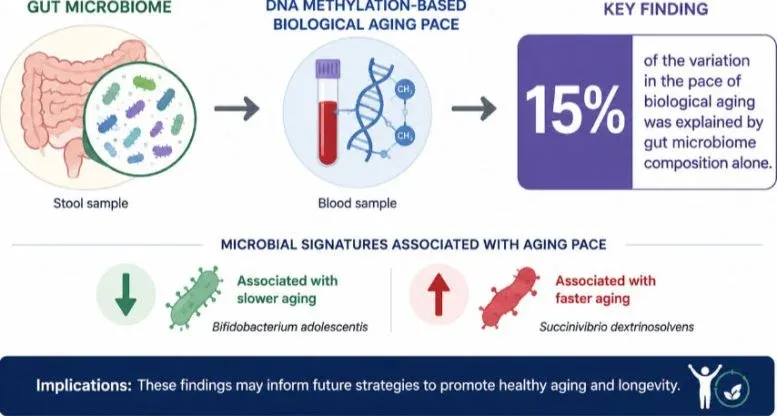
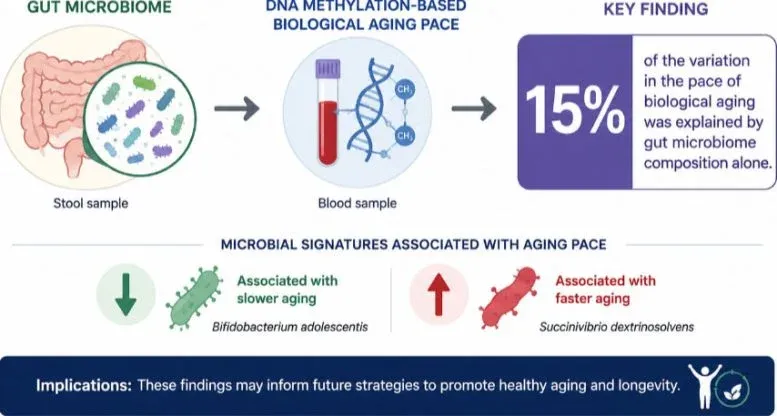
The study, published in Scientific Reports, showed that differences in gut bacteria explained about 15% of the variations in how quickly people's bodies aged. This suggests that the gut microbiome contains important information about the aging processes happening inside us.
Alika K. Maunakea, a senior author from the UH Mānoa John A. Burns School of Medicine, explained that the study helps us understand the link between gut microbes and biological aging. He noted that microbial patterns in the gut were strongly connected to molecular signs of aging, even when accounting for a person's actual age. These findings open new ways to explore how changeable biological systems affect our long-term health and lifespan.
We're a new kind of news feed.
Regular news is designed to drain you. We're a non-profit built to restore you. Every story we publish is scored for impact, progress, and hope.
Start Your News DetoxHow Blood and Stool Samples Revealed Aging Patterns
Researchers looked at stool and blood samples from 123 adults of various ages. They compared the bacteria in each person's gut with blood tests that estimate the body's aging rate. While chronological age is simply how many years you've lived, biological aging measures how quickly your body is changing physically.
The makeup of gut microbes was specifically linked to DunedinPACE, a new way to measure the speed of biological aging. Some bacterial species showed very strong connections to aging patterns. Bifidobacterium adolescentis was clearly associated with slower aging, while Succinivibrio dextrinosolvens was strongly linked to faster aging.
Gut Microbes and Resilience
Lead author Braden P. Kunihiro said these results show why the gut microbiome is gaining more attention in personalized health research.
Kunihiro explained that the gut microbiome changes a lot based on lifestyle, diet, environment, and daily exposures. He noted that their findings suggest the microbiome might show important aspects of our body's ability to recover and age well. This could eventually help create new strategies for wellness and healthy aging.
The study also included Native Hawaiian and Pacific Islander participants. This helps represent groups often left out of aging and microbiome studies. Co-author Ruben Juarez said the findings could help explain how social conditions and environmental factors have lasting effects on our biology.
Juarez added that the microbiome is where behavior, environment, and human biology meet. He believes studies like this help reveal how life experiences and social factors influence long-term health.
What's Next for Research
The researchers warned that this study shows a connection, but it doesn't prove that gut bacteria directly control how fast we age. More studies are needed to see if changing the microbiome can actually affect the body's aging speed.
Maunakea called this an important first step in understanding the gut microbiome's role in healthy aging. He said future research will help clarify how these processes work and if these microbial signs can eventually lead to precise ways to promote long-term health and wellness.
Deep Dive & References: Gut microbiome signatures associate with DNA methylation-based biological aging - Scientific Reports, 2026