By teaching an AI to use optical tweezers, researchers have sped up how we analyze life's smallest parts. This new AI platform, called SmartTrap, can capture particles, take measurements, and load new samples all by itself. This means no human help is needed.
Just like self-driving cars, lab tools are now being made to run experiments on their own. They can design, carry out, and repeat tests 24 hours a day. Researchers at the University of Gothenburg and Chalmers University of Technology created this AI system. Their work was published in Nature Methods.
How Optical Tweezers Work
Optical tweezers use tiny laser beams to grab and move objects. These objects are incredibly small, about a thousand times thinner than a human hair. They can be individual DNA molecules, living cells, or microscopic particles. In 2018, Arthur Ashkin won the Nobel Prize in physics for creating optical tweezers.
We're a new kind of news feed.
Regular news is designed to drain you. We're a non-profit built to restore you. Every story we publish is scored for impact, progress, and hope.
Start Your News DetoxGiovanni Volpe, a research leader at the University of Gothenburg, explained their importance. He said optical tweezers have shown how molecular motors power our cells. They also revealed how DNA is copied and repaired. These tools have even shown how diseases like malaria and sickle cell anemia affect red blood cells.
The AI Solution
Before SmartTrap, these powerful tools needed a trained researcher to watch every step. This made experiments slow and meant long working days. It also meant results could vary slightly between different researchers.
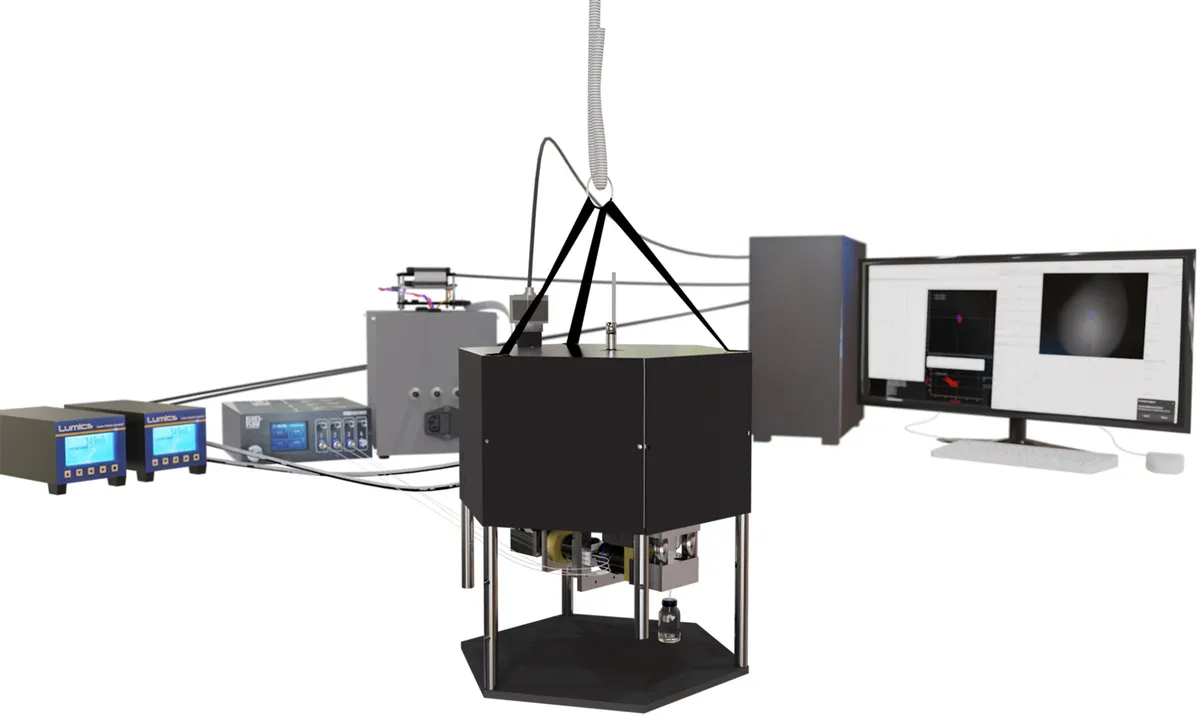
The new AI platform solves these problems. It uses image analysis, real-time deep learning, special electronics, and precise fluid control. This closed system allows the AI to work completely on its own. SmartTrap captures particles, places them with extreme accuracy, takes measurements, and loads new samples for the next test.
SmartTrap's Performance
The AI platform went through tough tests. It sorted and identified hundreds of particles every hour. It also performed single-molecule DNA stretching, which is a very difficult biophysics analysis. The AI completed 10 to 15 experiments per hour.
It also studied how stiff red blood cells are. The AI mapped tiny electrical forces between pairs of particles in different salt solutions.
Volpe noted that these experiments take much longer for a human operator. He said it could take 10 to 100 times longer, assuming the person doesn't get bored or need breaks. He added that the AI performed as well as, or even better than, a skilled human operator in every test.
The SmartTrap AI uses open-source software. It is designed to be a shared platform for the industry. Volpe believes that as smart microscopy gets better, AI platforms like SmartTrap will change laboratories. He compared this change to how automation transformed manufacturing.
Deep Dive & References
SmartTrap: Automated Precision Experiments with Optical Tweezers - Nature Methods, 2026