You know the drill: open the fridge, eye the leftovers, and then—the dreaded sniff test. Is it still good? Is it going to send you to the emergency room? The human nose, bless its cotton socks, is not always the most reliable judge.
Enter the electronic nose, or "e-nose," from UC Berkeley. This isn't just a fancy gadget; it's a tiny, gas-sniffing superhero that can detect spoiled food and dangerous allergens with a precision your own schnoz can only dream of. Millions of people get sick from foodborne nasties every year, and this little marvel aims to put a stop to that.
Carla Bassil, a Ph.D. student and lead author of the study in Science Advances, envisions this tech living in your "smart" fridge. Imagine your refrigerator helpfully informing you that your chicken is on its last cluck, or your broccoli is about to stage a dramatic exit. Because apparently, that's where we're headed, and frankly, it sounds pretty convenient.
We're a new kind of news feed.
Regular news is designed to drain you. We're a non-profit built to restore you. Every story we publish is scored for impact, progress, and hope.
Start Your News DetoxTiny Sensors, Big Sniffing Power
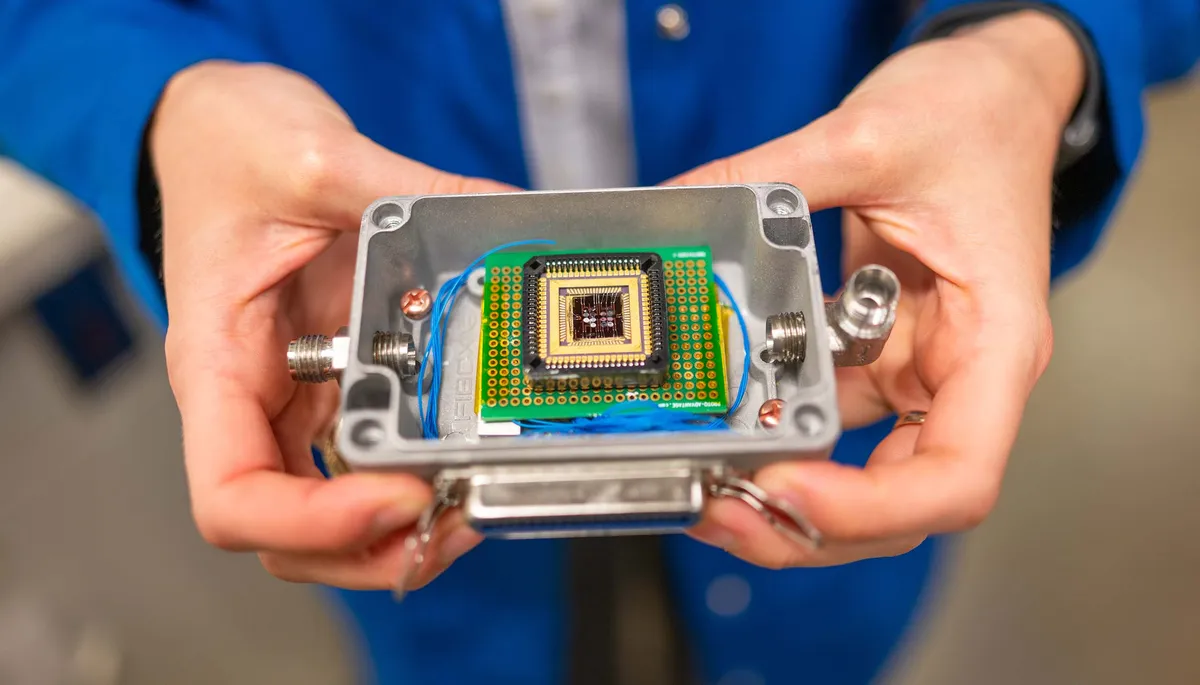
The e-nose packs 16 miniature gas sensors, each a tiny digital taste bud reacting to different gas combinations. These chemical reactions are then zapped into electrical signals, which a machine learning algorithm translates into actionable intel. Bassil trained the nose on seven different foods, including strawberries, blueberries, and a rogue's gallery of nuts (walnut, hazelnut, cashew, peanut). It also learned the distinct aroma profiles of fresh and decidedly un-fresh raw chicken, milk, and eggs.
How sensitive is it? It could sniff out a mere 0.05 grams of walnut—that's roughly one-hundredth of a shelled nut. Which, if you're someone with a severe nut allergy, is both impressive and a significant step toward safer eating.
Electronic noses have been a sci-fi dream since the 1980s, but cramming multiple sensors onto a single chip proved tricky. Bassil's breakthrough involved using ultrathin carbon nanotubes as the conducting material. These tiny tubes, just a few atoms thick, have a massive surface area, making them hyper-sensitive at room temperature. This "cool" operating temperature also means more materials can be used, simplifying manufacturing.
And yes, there's a portable version that talks to an iPhone app. So soon, you might have a personal food safety inspector living in your pocket. Just in case you ever doubted that we're living in the future.