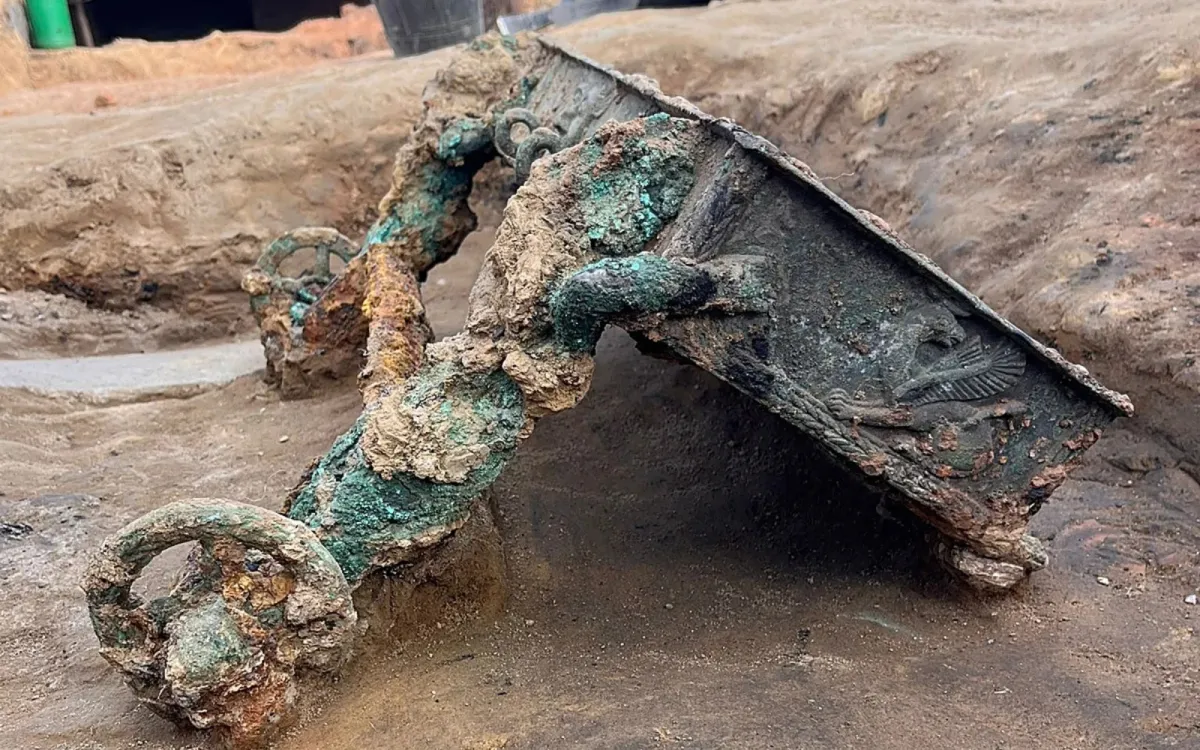
Archaeologists in Spain just pulled something truly wild out of the ground: a bronze chariot covered in mythological figures, the first one ever found on the Iberian Peninsula. Because apparently, the earth still has a few ancient surprises up its sleeve.
Discovered at the Casas del Turuñuelo site, this isn't your average ancient ride. Co-director Esther Rodríguez called out its "unique decorations and complex imagery" at a press conference, which is archaeologist-speak for "we're pretty sure this thing was a big deal."
A Chariot Fit for Gods (or Very Important People)
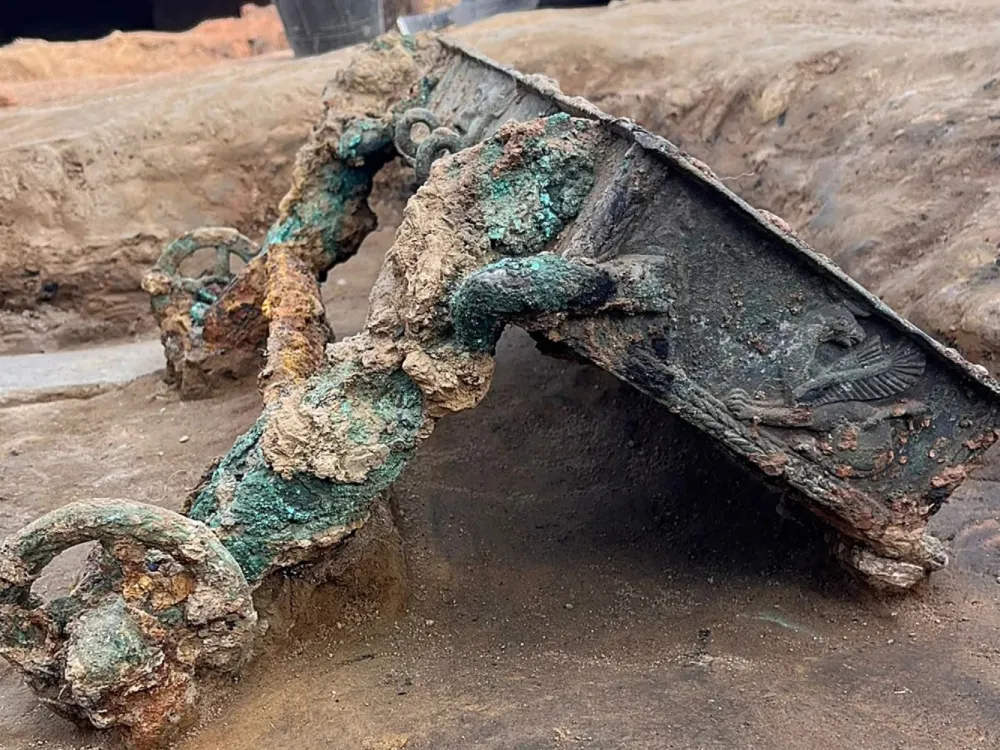
What they found was half of a ceremonial wagon, complete with two wheels and the main body. It’s a sophisticated piece, crafted from numerous bronze components meticulously held together with iron. And the decorations? Oh, they went all out.
We're a new kind of news feed.
Regular news is designed to drain you. We're a non-profit built to restore you. Every story we publish is scored for impact, progress, and hope.
Start Your News DetoxImagine: Acheloo, the ancient Greek water spirit, lending some aquatic gravitas. Two griffins, because what’s a mythical chariot without a couple of eagle-headed, lion-bodied guardians? And then, two male figures—Atlanteans—who appear to be literally holding up the chariot’s main box. Talk about heavy lifting.
This isn't just a fancy artifact; it's a window into the Tartesian culture, a civilization that was flourishing in the 5th century BCE. The Casas del Turuñuelo site has been under excavation since 2014 and is considered a major hub for these folks.
Previous digs at the site have already revealed some fascinating, if slightly intense, details. We're talking evidence of large animal sacrifices and the first-ever human relief sculptures from Tartesos. These weren't just any sculptures; they depict women sporting gold earrings and a warrior rocking a helmet. Clearly, the Tartesians had style.
Researchers are still piecing together the puzzle, but they suspect this might have been a temple or a significant ceremonial spot. And here’s the kicker: only about a third of the site has been excavated. So, there’s plenty more ancient bling and historical drama waiting to be uncovered near the Búrdalo River. Which, if you think about it, is both impressive and slightly terrifying.