For over a century, art historians and archaeologists have been staring at France's stunning Ice Age cave paintings, shrugging, and saying, "No idea how old these are." They knew they were ancient, sure, but pinning down exact dates? Impossible. Or so they thought.
Turns out, the answer wasn't some wild new technology or a secret code. It was charcoal. And a team of scientists who finally bothered to check if anyone had actually looked for it. Because apparently, no one had.
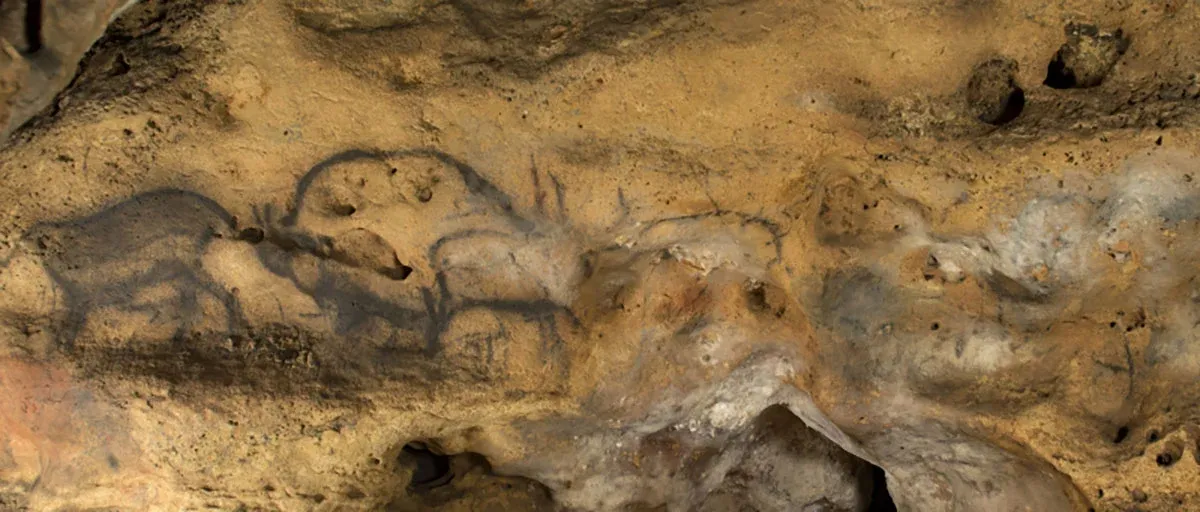
For decades, the prevailing wisdom was that these Paleolithic masterpieces, like those at Font-de-Gaume cave (a UNESCO World Heritage site, naturally), were painted exclusively with iron and manganese oxides. Beautiful pigments, but utterly useless for radiocarbon dating, as they contain no carbon. This meant the age of a bison or a mysterious mask was, at best, an educated guess.
We're a new kind of news feed.
Regular news is designed to drain you. We're a non-profit built to restore you. Every story we publish is scored for impact, progress, and hope.
Start Your News DetoxThe Case of the Missing Carbon (That Wasn't Missing)
A team led by a CNRS researcher decided to challenge this long-held assumption. They grabbed some fancy, non-invasive tools – Raman microspectrometry and hyperspectral imaging, if you're into specifics – and pointed them at two black drawings: a bison and a mask. They weren't looking for hidden messages; they were looking for carbon.
And what do you know? They found it. Consistent traces of charcoal woven throughout the black pigments. Not a smudge from a tourist's dirty finger, but integral to the original artwork. The scientific equivalent of finding out your 'pure' gold statue actually had a silver core the whole time.
With special permission, the team then collected minuscule samples – we're talking specks – for carbon-14 dating. Even with these tiny amounts, the analysis confirmed the paintings were indeed from the Upper Paleolithic period. And the new dates? Slightly more recent than previously assumed.
The bison, for example, now clocks in at around 13,461 to 13,162 years old. The mask, a more complex piece, was apparently a multi-generational project, with different sections painted between 8,993 and 8,590 years ago, then again between 15,981 and 15,121 years ago, and yet again between 15,297 and 14,246 years ago. Which, if you think about it, is both impressive and slightly terrifying for anyone who's ever tried to finish a single art project.
This breakthrough means researchers can now get a much clearer, more accurate timeline for prehistoric art across the region. All because someone finally asked, "But are we sure there's no carbon?" Let that sink in. The next time a mystery baffles you, maybe just check the obvious places first.