Ever wonder where that bit of iron in your blood came from? Or the oxygen you’re breathing right now? Turns out, you’re a walking, talking cosmic receipt, with every atom tracing back to some truly dramatic moments in the universe.
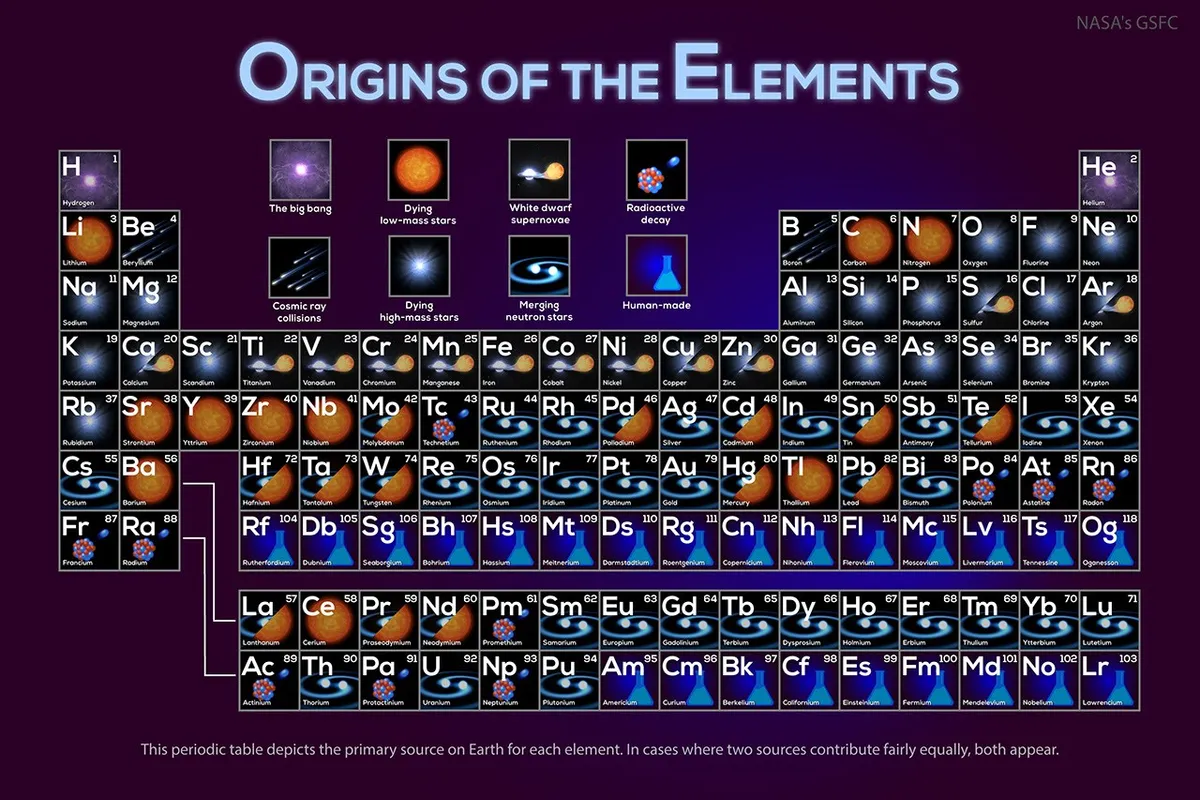
Let’s start with the basics: hydrogen. The stuff that makes up most of you, and every water molecule keeping you hydrated, is a direct descendant of the Big Bang. Yes, the universe's explosive debut. It's the OG element, and still the most common one out there. Pretty humbling, really.
Now, for the slightly heavier elements – your carbon and oxygen, the very building blocks of life itself – you can thank stars. Specifically, the fiery hearts of stars, where nuclear fusion acts like a cosmic forge, cooking up these essential ingredients. Makes that morning coffee feel a bit more... stardust-y, doesn't it?
We're a new kind of news feed.
Regular news is designed to drain you. We're a non-profit built to restore you. Every story we publish is scored for impact, progress, and hope.
Start Your News DetoxThen there’s the iron in your veins. That wasn't just brewed in a star; it took a star exploding to create it. We're talking supernovas, ancient stellar fireworks that scattered their guts across the cosmos, eventually forming things like, well, you.
And for the truly flashy stuff, like the gold in your jewelry? That likely came from something even more epic: two neutron stars slamming into each other. Imagine two incredibly dense stellar corpses, each smaller than a city but heavier than the sun, colliding in a cataclysmic smash-up. These events are so powerful they can be glimpsed as short gamma-ray bursts or even gravitational waves rippling through spacetime. So, that necklace isn't just pretty; it's a memento of a cosmic fender bender.
Even tiny amounts of elements vital for life, like phosphorus and copper, have their own dramatic backstories. Scientists are still piecing together the exact origins of some of these, using observations and calculations to trace their lineage across the universe.
Basically, you’re not just alive; you’re a meticulously assembled collection of cosmic events, from the universe's first breath to the violent death of stars. Which, if you think about it, is a pretty excellent conversation starter at your next dinner party.