Astronomers might have found the first moon outside our solar system. This object is about the size of Jupiter and orbits a brown dwarf star. This discovery could change how we define planets and moons.
A Moon-Like Object in a "Super Weird" System
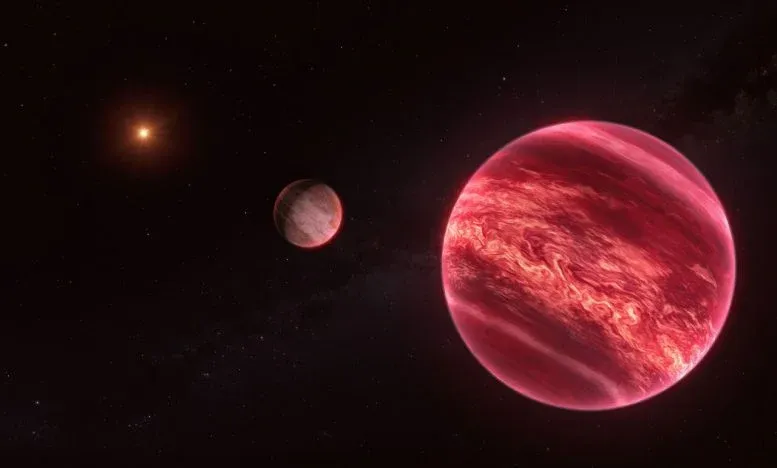
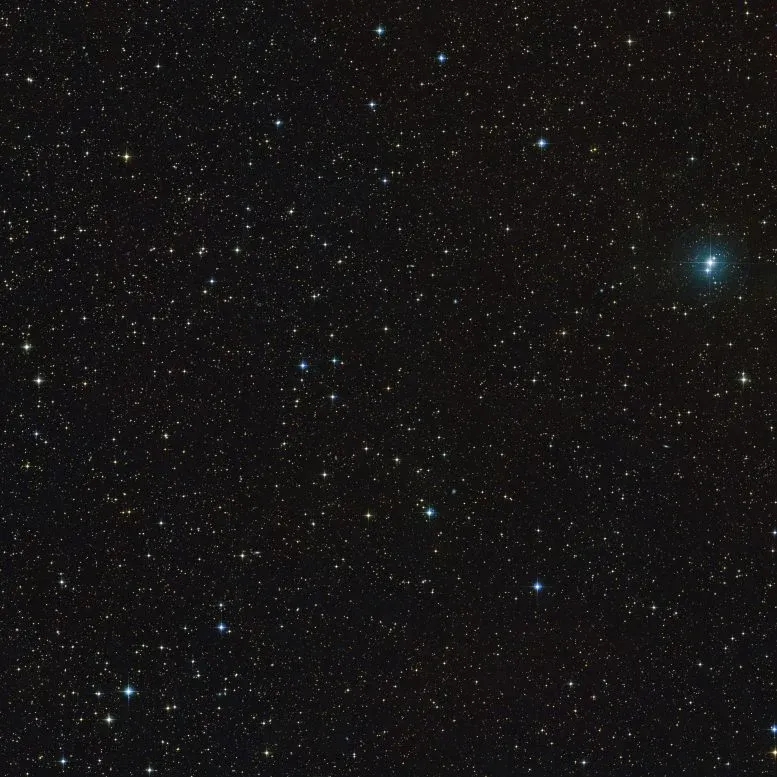
This newly found object is in a system called CD-35 2722. It's unusual because the object doesn't orbit a planet, but a brown dwarf. This brown dwarf then orbits a larger star.
Kevin Hoy, an ESO student and lead author of the study, described the system as "super weird." The main star, CD-35 2722, is about half the size of our Sun. The brown dwarf is too big to be a planet but too small to be a star. The new object orbits this brown dwarf.
We're a new kind of news feed.
Regular news is designed to drain you. We're a non-profit built to restore you. Every story we publish is scored for impact, progress, and hope.
Start Your News DetoxThe object is at least as massive as Jupiter. The brown dwarf it orbits is more than 30 times Jupiter's mass. Researchers call it an "exosatellite" or "exomoon."
Hoy noted that it's hard to use terms like "planet" and "moon" for this system. The object is massive enough to be a planet, but it orbits a brown dwarf, not a star. This makes it seem like a moon, even though it's much larger than any moon in our solar system.
Alice Zurlo, a co-author, explained that the object is a giant gas body orbiting a very massive companion. This companion is several times the mass of Jupiter. She added that our solar system has clear definitions for planets and moons, but this new system blurs those lines.
How They Found It
Astronomers used the European Southern Observatory’s Very Large Telescope (ESO’s VLT) and its CRIRES+ instrument. They used a method called radial velocity. This technique looks for tiny shifts in an object's movement. These shifts are caused by the gravity of an unseen companion.
In this case, they saw slight wobbles in the brown dwarf. Researchers believe these wobbles were caused by the object orbiting it. This is the same method used to find the first exoplanet around a star like our Sun.
This discovery is a big step. Astronomers have been searching for moons outside our solar system for years. While over 6,000 exoplanets have been found, only a few possible exomoons have been suggested, and none were confirmed until now.
What This Means for the Future
Finding satellites in other star systems helps us understand how they form and evolve. This could be very different from how moons form around planets in our own solar system.
Future telescopes, like ESO’s Extremely Large Telescope (ELT), will help astronomers find even smaller exomoons. These discoveries might make scientists rethink how they classify objects in planetary systems that are very different from ours.
Deep Dive & References: Planetary-mass exosatellite detected around the substellar companion of a star - Nature, 2026