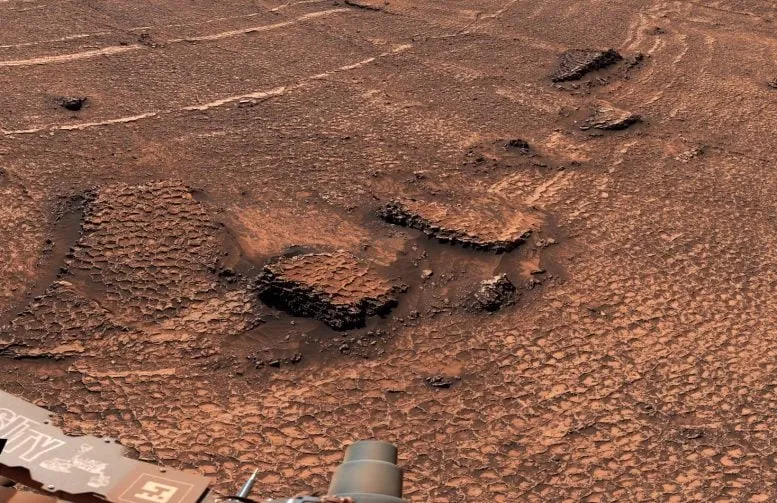
NASA's Curiosity rover has found a huge area of honeycomb-shaped cracks on Mars. These features are in a valley called "Valle Grande." Each one is about 1.5 to 3 inches (4 to 8 centimeters) wide.
Curiosity has seen smaller groups of these shapes before. But scientists have never seen them cover such a large area.
A Sea of Polygons
The rover took pictures of this landscape on June 19 and 20. This was during its 4,930th and 4,931st Martian days. The patterns spread out in every direction, as far as the rover can see.
We're a new kind of news feed.
Regular news is designed to drain you. We're a non-profit built to restore you. Every story we publish is scored for impact, progress, and hope.
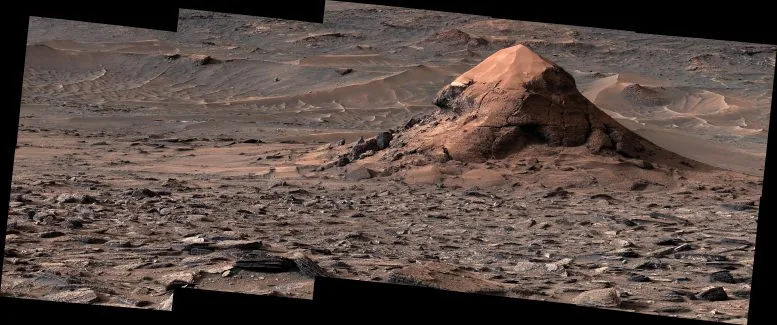
Start Your News DetoxThe cracks also go around a nearby hill called "Miraflores." This hill is 20 feet (6 meters) tall and has a thick layer of sand on top.
Ashwin Vasavada, a project scientist from NASA's Jet Propulsion Laboratory, said the "sea of polygons took our breath away." He added that they are studying the shapes and chemistry for clues about how they formed.
How the Martian Honeycomb Formed
Some polygons Curiosity studied before were made by drying mud. But other things can also create these honeycomb patterns.
Changes between warm and cold conditions can crack the ground into geometric shapes. Pressure might also have pushed water out of the sediment after it was buried.
Scientists are now looking at new data to figure out which process, or combination of processes, created this large polygon field.
Curiosity's Discoveries
These new cracks are among many unexpected things Curiosity has found. The rover landed on Mars 14 years ago, on August 5, 2012.
During its mission, Curiosity has found sulfur crystals, shiny meteorites, and other unusual rock features. More importantly, it has found strong evidence that ancient Mars once had water, chemicals, and nutrients needed for tiny life forms.
Clues From Mars' Watery Past
Billions of years ago, lakes and streams covered parts of Mount Sharp. Curiosity has been climbing this 3-mile-tall (5-kilometer-tall) mountain since 2014.
The rover has found chemical traces from this wetter time. These include carbon-based molecules that might be early forms of RNA and DNA. These are two types of molecules that carry genetic information.
Researchers don't know if these organic molecules came from living things or from geological processes. Both are possible. Still, this finding shows that ancient Mars had the right chemistry for life.