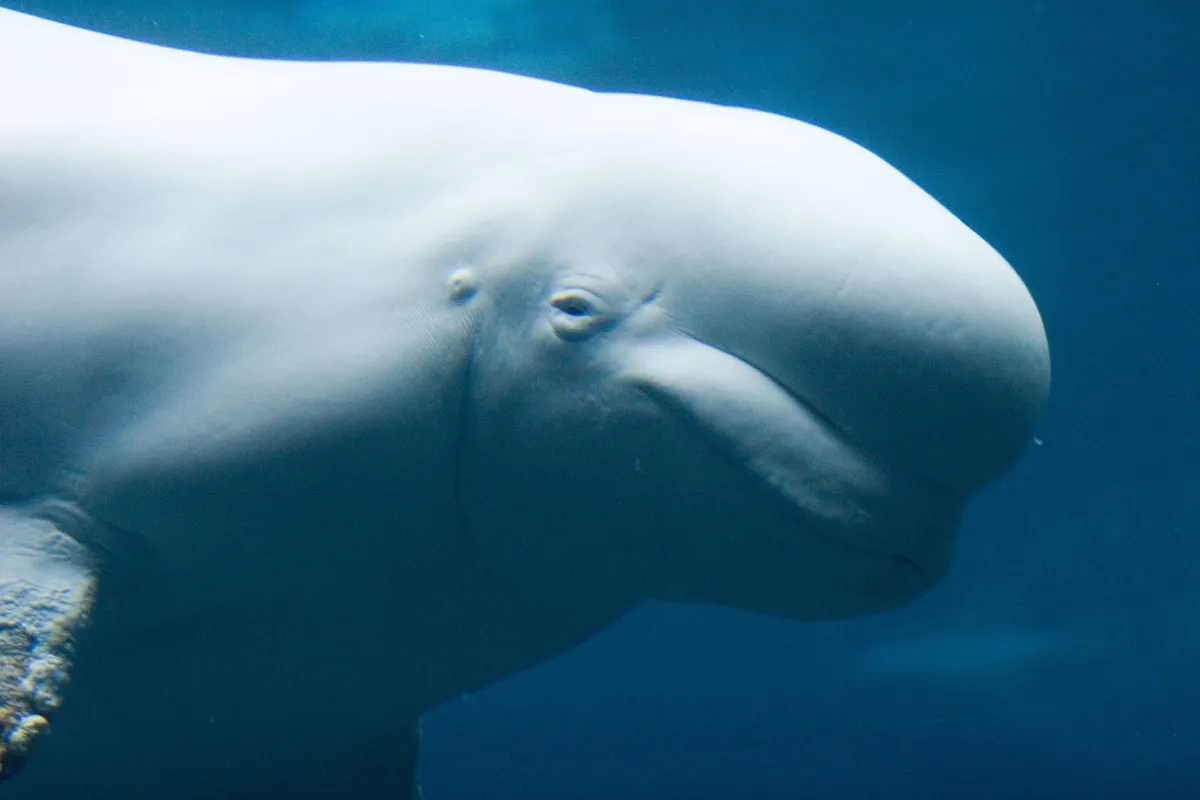
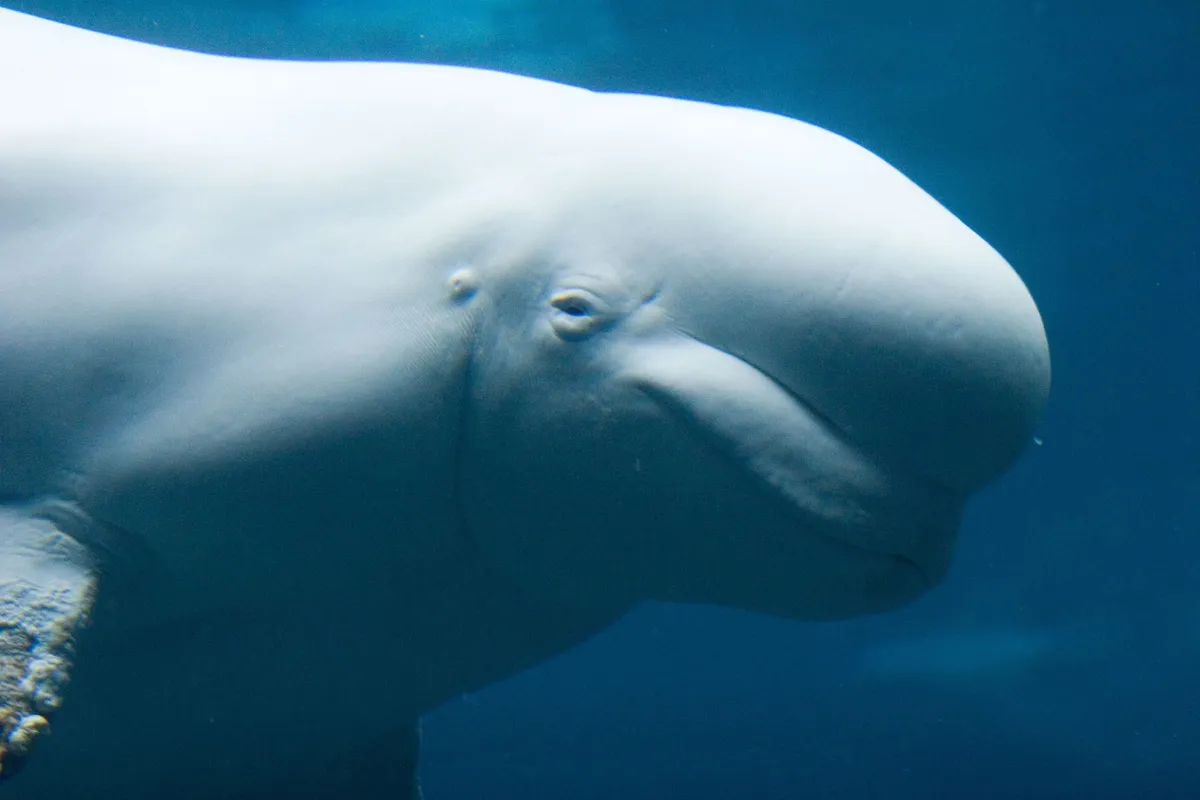
Turns out, beluga whales are just like us. They’ll stop, stare, and apparently, do a little pec shimmy when they catch their reflection. New research confirms these social, chatty marine mammals can recognize themselves in a mirror, officially adding them to a very short, very cool list of self-aware animals.
This exclusive club includes the usual suspects: chimpanzees, bottlenose dolphins, and Asian elephants. But it also features a few curveballs, like some magpies and, most recently, the tiny cleaner wrasse reef fish. Yes, even a fish looked in the mirror and thought, “Hey, that’s me!” And now, belugas Natasha and Maris are here to tell you, “Same.”
The Tape That Almost Gathered Dust
The story of this discovery is almost as wild as a whale doing a barrel roll for its reflection. Back in 2001, marine mammal scientist Diana Reiss, who’d already proven mirror self-recognition in dolphins and elephants, set up a similar test for four belugas at the New York Aquarium. A massive mirror was submerged in their pool for two-hour sessions, with clear plexiglass serving as a control. The team filmed everything.
We're a new kind of news feed.
Regular news is designed to drain you. We're a non-profit built to restore you. Every story we publish is scored for impact, progress, and hope.
Start Your News DetoxAnd then… the footage sat. For nearly two decades. Reiss admits they “kind of let it go.” Because, you know, science moves fast, and sometimes 20-year-old tapes just hang out in a drawer.
Fast forward to 2020. Enter Alexander Mildener, a marine science grad student who, as a child, was “completely transfixed” by those very belugas at the New York Aquarium. With the pandemic shutting down field research, he needed a thesis project. Reiss remembered the old tapes. Mildener spent lockdown watching videos of “the very whales that inspired me to be in this field in the first place.” Talk about a full-circle moment, right?

Pec Shimmies and Light Bulbs
Animals who pass the mirror test typically follow a pattern. First, they treat the reflection like another animal. Then comes the “contingency testing”—repeated movements to see if the image responds. Reiss likens it to catching yourself on a security monitor: you might nod your head or wave a hand to confirm, “Is that me?” For animals, that’s often “where the light bulb goes on.”
Natasha and Maris were textbook. In their first session, they jaw-clapped at their reflections—a beluga intimidation tactic. Then, the testing began: Natasha nodded, Maris waggled her head. By the second session, they were full-on using the mirror to watch themselves barrel-roll and inspect the insides of their mouths. Maris even reared up and did a “pec shimmy” (yes, really) at the glass, blowing and biting bubbles. These behaviors? Didn't happen without the mirror. Mildener called it “really beautiful to watch.”
Natasha even passed the “mark test,” where a temporary mark is placed on an animal's body that it can only see via reflection. Maris didn’t, which is common; not every individual in a self-aware species always passes.

Why This Matters (Beyond the Pec Shimmy)
Every time a new species joins this list, it challenges our long-held assumptions about animal intelligence. Reiss points out, “We have this list of the things that only humans do, and over time we’ve been checking them off.” The cleaner wrasse discovery was particularly mind-bending, suggesting a massive, complex brain might not be the absolute requirement we once thought. What does seem consistent is that species who pass are often highly social and can recognize others of their kind.
Beyond the scientific intrigue, this research has a tangible impact. Just as humpback whale studies in the 1970s helped rally public support for conservation, Reiss believes this work can foster empathy. “Finding these shared capabilities and shared levels of consciousness and self-awareness in other species seem to engender more empathy for them,” she says.
So, next time you catch your reflection, give a nod to Natasha and Maris. They get it. And they might even do a little shimmy.