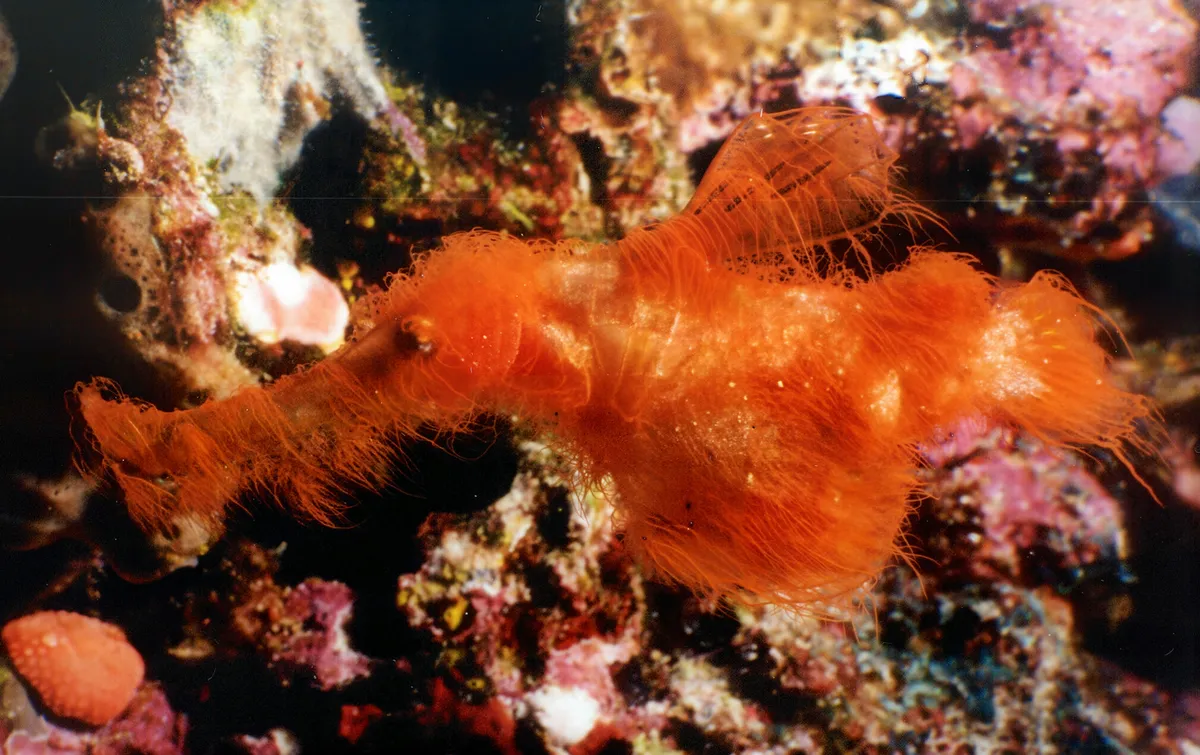
For over two decades, a mysterious, shaggy orange creature has been making fleeting appearances in the Indo-Pacific. Divers would spot it, scratch their heads, and then it would vanish back into the reef. Now, after 20 years of hide-and-seek, scientists have finally given this master of disguise a proper introduction, and a name that will make you smile: Solenostomus snuffleupagus.
Yes, you read that right. This brand-new species of ghost pipefish, which is both delightfully "hairy" and a vibrant orange or red, has been officially dubbed after Mr. Snuffleupagus from Sesame Street. Because, apparently, if you're going to name a fish that looks like a shaggy, trunk-nosed puppet, you might as well go all in.

Ghost pipefish are the quirky cousins of seahorses, but with a twist: the females are the ones who carry the eggs in a pouch. They're also champions of camouflage, blending seamlessly into coral, seagrass, and algae, making them incredibly difficult to spot. Before this discovery, only six species were known, making this seventh addition a pretty big deal.
We're a new kind of news feed.
Regular news is designed to drain you. We're a non-profit built to restore you. Every story we publish is scored for impact, progress, and hope.
Start Your News DetoxThe hunt began in 2001 when marine biologist David Harasti first glimpsed the potential new species near Papua New Guinea. Fast forward to 2005, and divers on the Great Barrier Reef started posting blurry photos of the same orange-red enigma on Facebook and citizen science platforms. It was a true community effort, with everyday divers playing a crucial role in tracking down this elusive creature.
Finally, marine biologists Graham Short and David Harasti formally described the species, bringing an end to its two-decade-long anonymity. So, next time you're near a coral reef, keep an eye out for a shaggy, orange flash. You might just be looking at the ocean's most charmingly named new resident.