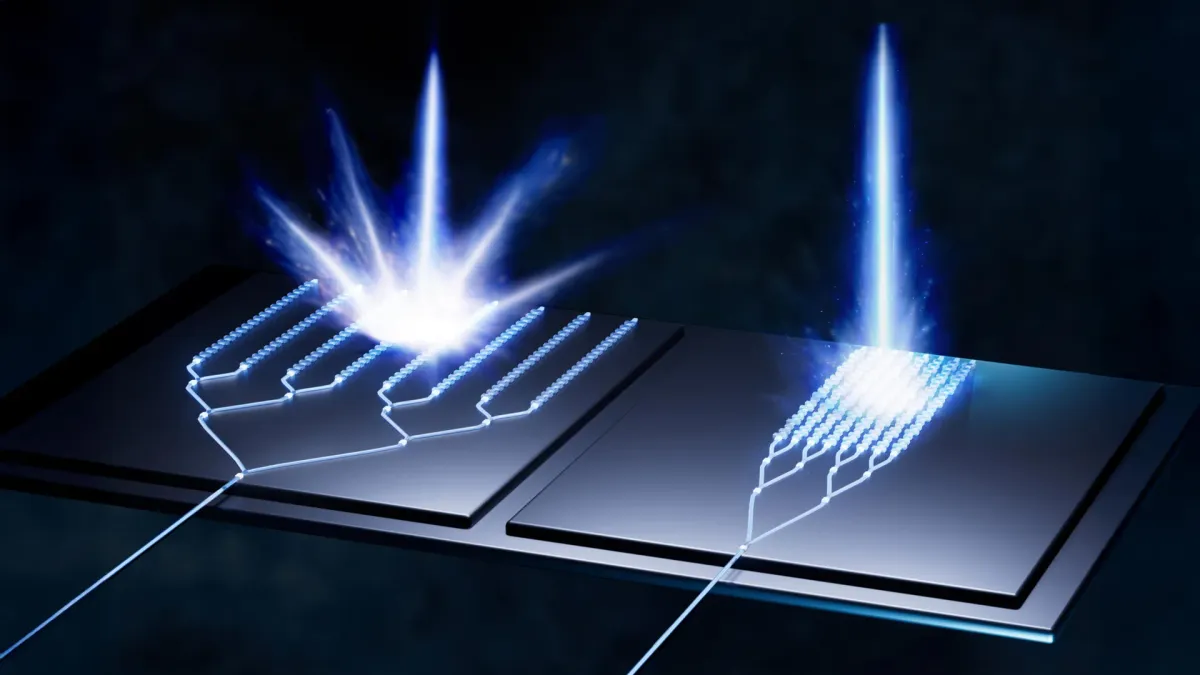
Imagine a light switch so fast, it could turn on and off faster than a single vibration of an atom. Caltech researchers just built a chip that does exactly that, redirecting light with another beam of light in a mind-bending 74 femtoseconds. For context, a femtosecond is one quadrillionth of a second. Let that satisfying number sink in.
This isn't just a parlor trick for photonics nerds. This breakthrough could kickstart an entirely new generation of tech that uses light instead of electricity to move and process information. Think: internet speeds that make fiber optics look like dial-up, computers that practically read your thoughts, and sensors so sensitive they could detect a butterfly's sneeze from a mile away.
The Unbearable Lightness of Being…Steered
Steering light with light is usually about as easy as herding cats in a laser pointer factory. Light, by nature, is a bit of a loner; it doesn't like to interact much with matter. But the Caltech team, led by Harry Atwater and Claudio Hail (now at UC Berkeley), figured out how to make it play along. Their secret weapon? Optical meta-surfaces.
We're a new kind of news feed.
Regular news is designed to drain you. We're a non-profit built to restore you. Every story we publish is scored for impact, progress, and hope.
Start Your News DetoxThese aren't just fancy-sounding materials. They're incredibly thin sheets, engineered at the nanoscale, designed to dramatically boost how much light interacts with them. It's like giving light a super-sticky surface to grab onto, making it much easier to push and pull. Their findings, which will likely give many other scientists an inferiority complex, were published in Nature Nanotechnology.
Traditional light-steering devices, like those in your projector or a fiber optic network, rely on changing a material's electronic behavior. Electrons get excited, move to higher energy states, then slowly mosey back down. That 'moseying' creates a delay, limiting speeds to nanoseconds or picoseconds. Which, in the world of light, is basically geological time.
But the Caltech team bypassed this electron-induced sluggishness. They hit a material with an intense, patterned 'pump' light beam. This instantly changed the material's optical properties. Then, a second, weaker 'probe' beam passed through. The pattern from the pump beam dictated exactly where the probe beam went. It's light telling light where to go, without all the electronic middlemen.
This entire dazzling display is thanks to the optical Kerr effect. Essentially, an intense light beam causes a minuscule, temporary shift in a material's refractive index – how much light bends and slows down as it passes through. This shift happens because the pump beam slightly jiggles electrons within their orbits, but not enough to send them off to new, longer-lasting energy states. No lingering electron drama means the change happens and ends almost as fast as the light pulse itself.
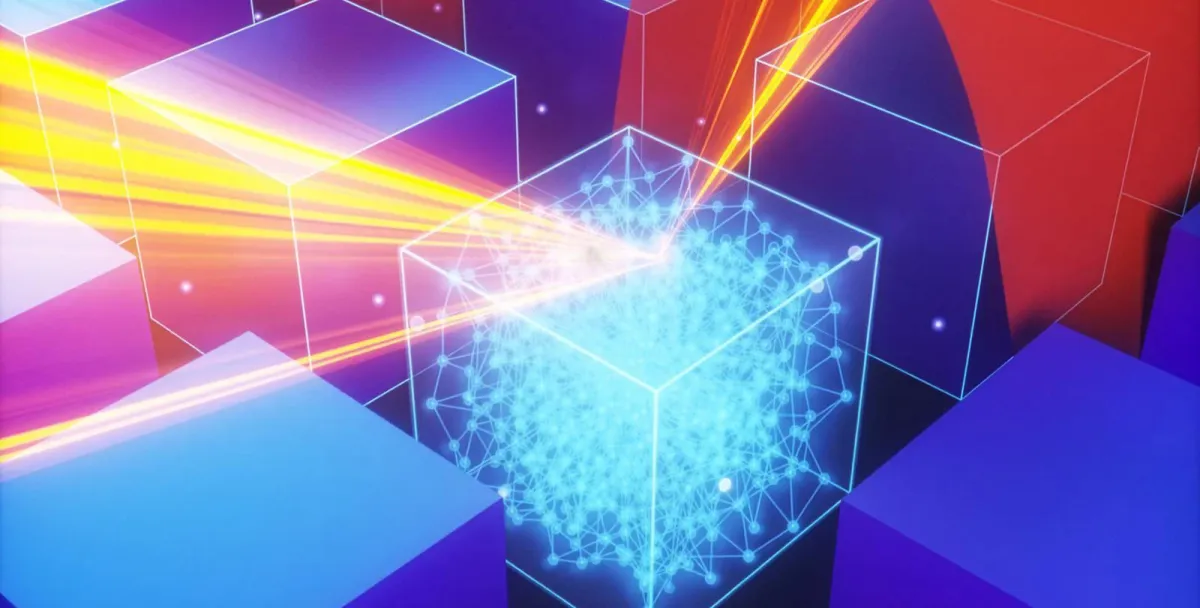
Of course, the Kerr effect is usually too weak to be practical. So, the researchers created a thin layer of amorphous silicon, studded with tiny pillars smaller than the wavelength of light. These pillars were designed to trap the light, making it circulate briefly instead of just passing through. This brief circulation amplified the Kerr effect, making that tiny refractive index change strong enough to redirect the probe beam by up to 13 degrees. All in 74 femtoseconds.
Right now, the speed limit isn't the device itself, but the lasers they're using to operate it. Shorter laser pulses could make it even faster. And if that's not enough to make your brain tingle, further development could push this system into the realm of 'time crystals' and 'synthetic time-varying optical materials.' Because apparently, that's where we are now.