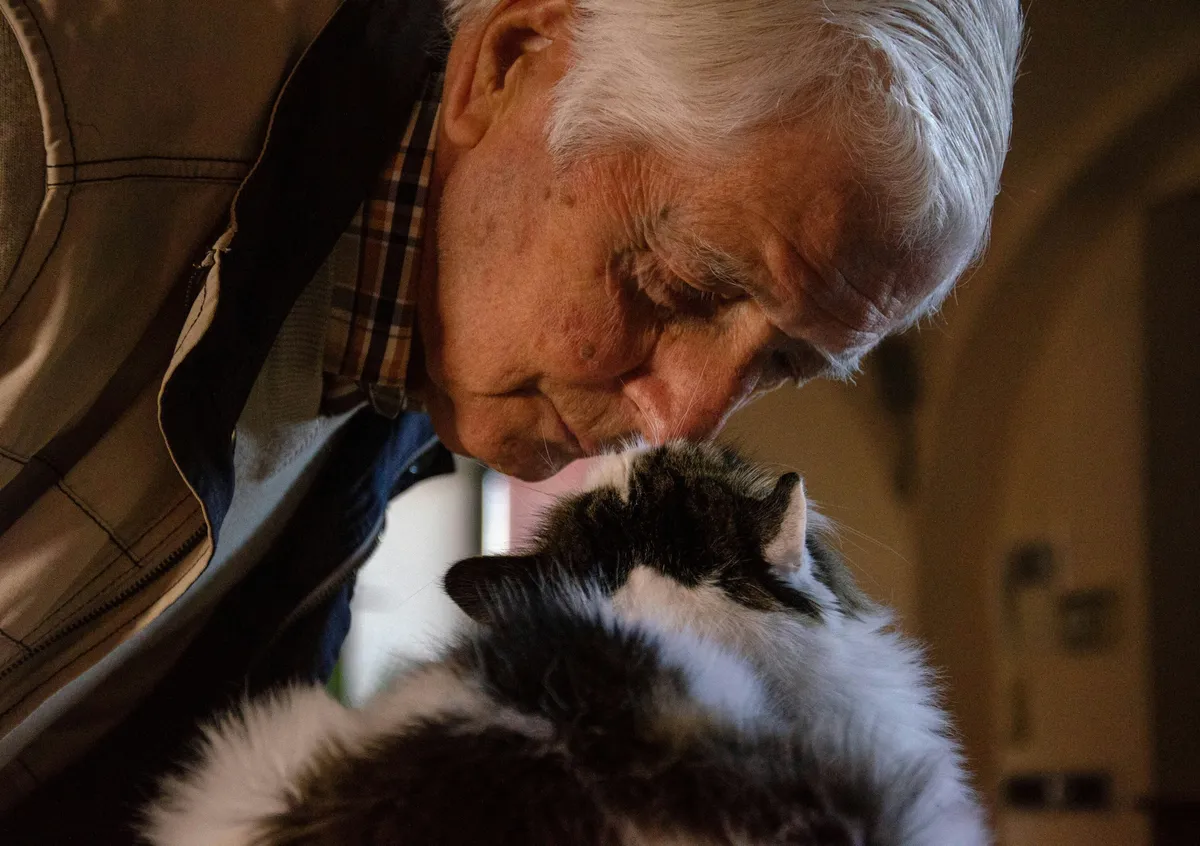
Ever looked at your elderly cat napping in a sunbeam and wondered what’s going on in that fluffy head? Turns out, quite a lot that mirrors your own eventual future. New research suggests that our feline friends' brains age remarkably similarly to human brains, offering a surprisingly purr-fect model for understanding the mysteries of human aging.
Published in Biology Open, the study from the University of Bath, Auburn University, and École Nationale Vétérinaire de Toulouse, highlights that pet cats aren't just for internet memes; they might hold some serious secrets to healthy aging and age-related diseases. Because, let's be honest, who wouldn't want to know how to keep their brain sharp for longer?
Unlike lab animals where diseases are often artificially induced, domestic cats live long enough in natural environments to develop genuine age-related brain changes. And with their shorter lifespans, scientists can observe these changes much faster than waiting around for, say, a human to hit their 80s.
We're a new kind of news feed.
Regular news is designed to drain you. We're a non-profit built to restore you. Every story we publish is scored for impact, progress, and hope.
Start Your News DetoxThe Brain-Aging Blueprint
The researchers didn't just eyeball it. They crunched 3,754 data points, pulling from humans, cats, and other mammals, covering everything from brain scans and blood tests to disease patterns. Their goal: map how aging unfolds across species.
What they found was genuinely striking. MRI scans revealed that older cats and humans share similar structural changes in their brains. We're talking overall brain shrinkage and enlarged ventricles (those fluid-filled spaces inside your skull). These aren't just aesthetic changes; they're linked to common aging conditions, including the kind of neurodegenerative shifts that can make later life a bit… foggier.
As Brier Rigby Dames, a research associate at the University of Bath, dryly observed, "This really adds to the idea that companion animals can offer important insights into aging." Because apparently, your cat isn't just judging your life choices; it's also a living, breathing, scientific case study.
Not All Years Are Created Equal
Forget the old "one cat year equals seven human years" rule. The scientists built a sophisticated biological model that tracks measurable age-related changes, showing that aging isn't a steady march. It speeds up and slows down at different life stages for both species.
But here's the kicker: the patterns of aging in later life are incredibly similar. A cat in its mid-teens, for example, is experiencing brain changes akin to a human in their 80s. Which, if you think about it, makes those senior cat naps seem less lazy and more… contemplative.
This newfound understanding could spark some serious collaboration between veterinary and human medicine. Think of it: discoveries that help your cat live a longer, healthier life might just do the same for you. It could accelerate our understanding of conditions like dementia, offering hope for both species.
Dr. Ryan Gibson, a veterinary neurologist at Auburn University, noted that more cat owners are opting for advanced brain scans for their pets. This isn't just about diagnosis; it's creating a treasure trove of data from animals living in real-world environments. "This access helps with 'translational research,'" he explained, connecting scientific findings to healthcare and improving our understanding of aging for everyone – two-legged and four-legged alike.
Rigby Dames even suggested creating large veterinary health databases, much like the human UK Biobank, to leverage this real-world data. Because if there's one thing better than endless cat videos, it's endless cat data that could unlock the secrets to healthy aging. Now, go give your cat a treat. For science.