For years, engineers have been pumping carbon dioxide into concrete. The idea was simple enough: trap some emissions, and as a bonus, the concrete gets stronger, faster. They just didn't quite know how it worked. It was like a magic trick where everyone loved the rabbit, but no one saw the hat.
Now, MIT scientists have finally pulled back the curtain, watching the whole chemical ballet unfold in real time. And what they saw could change how we build everything.
The Concrete Whisperer
Using fancy laser-based imaging (because apparently that's where we are now), the MIT team peered into fresh cement paste as CO2 hit it. They discovered a temporary chemical pathway, a sort of fleeting blueprint, that completely changes how the material hardens. Instead of a messy scramble, the CO2 helps create a much more evenly distributed binding structure. Think of it as the difference between a meticulously organized pantry and a pile of groceries on the floor. That organization boosts its early strength.
We're a new kind of news feed.
Regular news is designed to drain you. We're a non-profit built to restore you. Every story we publish is scored for impact, progress, and hope.
Start Your News DetoxThis isn't just a lab curiosity. These low-carbon concrete technologies are already in use across the U.S. Now, with a deeper understanding, engineers can fine-tune them. It's also a double win: cement, a notoriously carbon-heavy industry, could become a significant carbon storage solution while still delivering top-tier performance.
The Disappearing Act
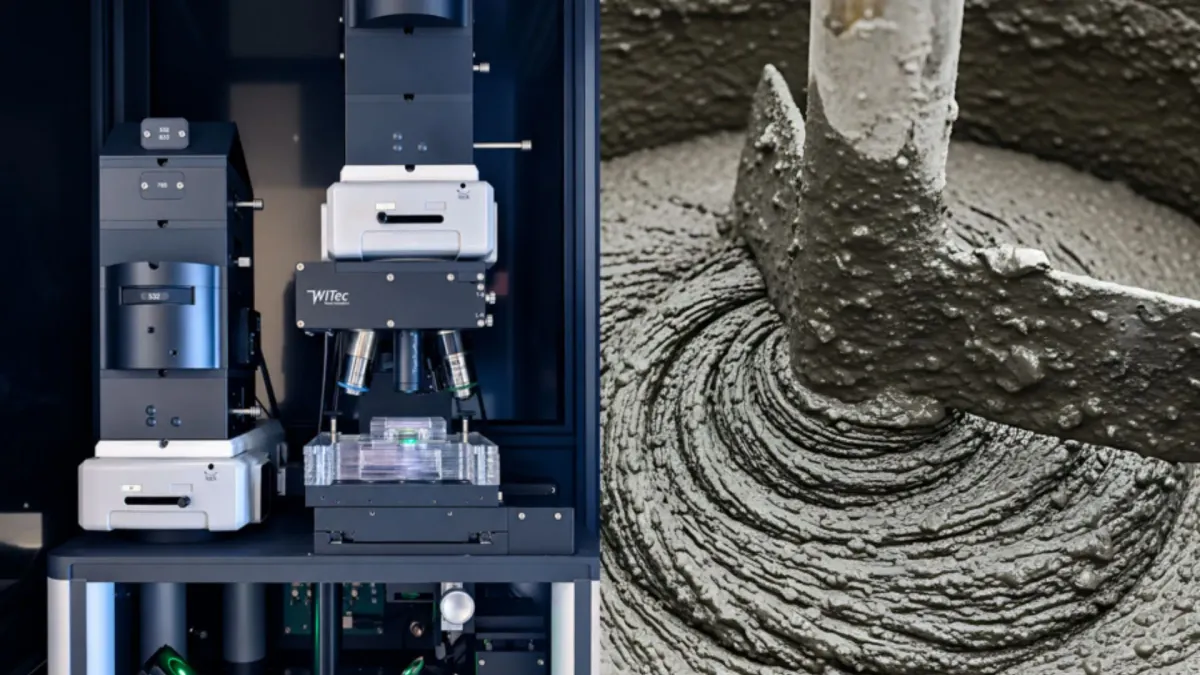
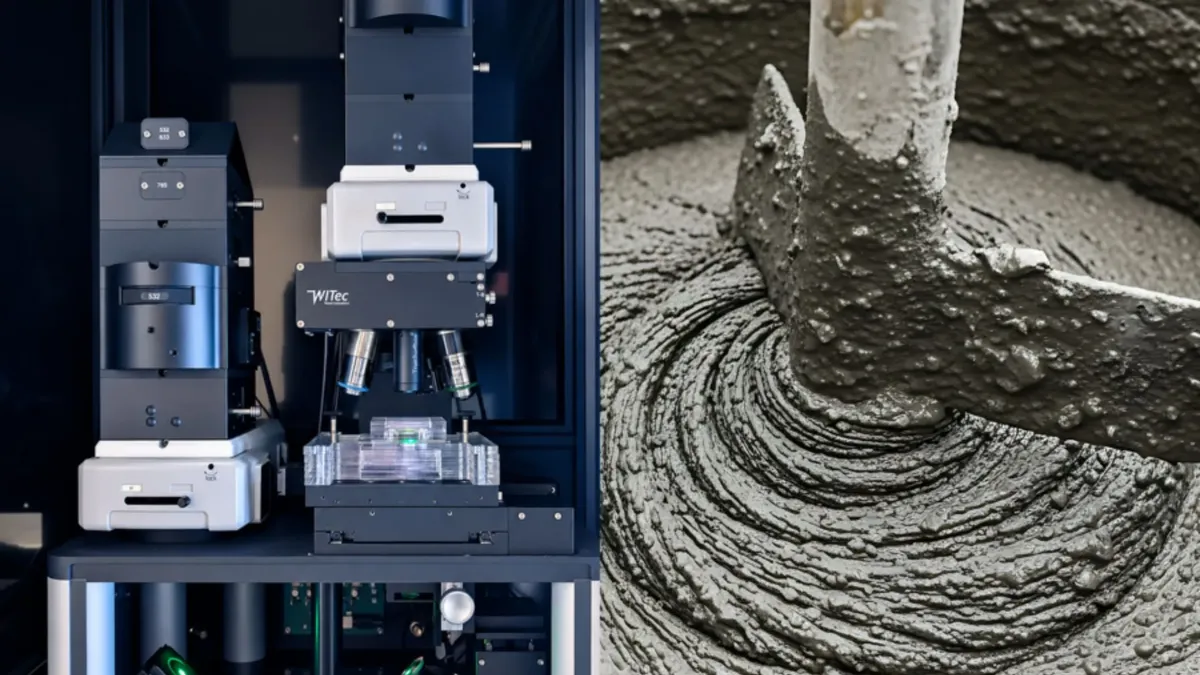
The researchers used something called Raman confocal microscopy, essentially a super-powered magnifying glass that identifies materials by how they react to laser light. They watched cement samples for a full 24 hours, catching every fleeting reaction. Previous studies were mostly theoretical because the reactions were simply too fast for older tools to track.
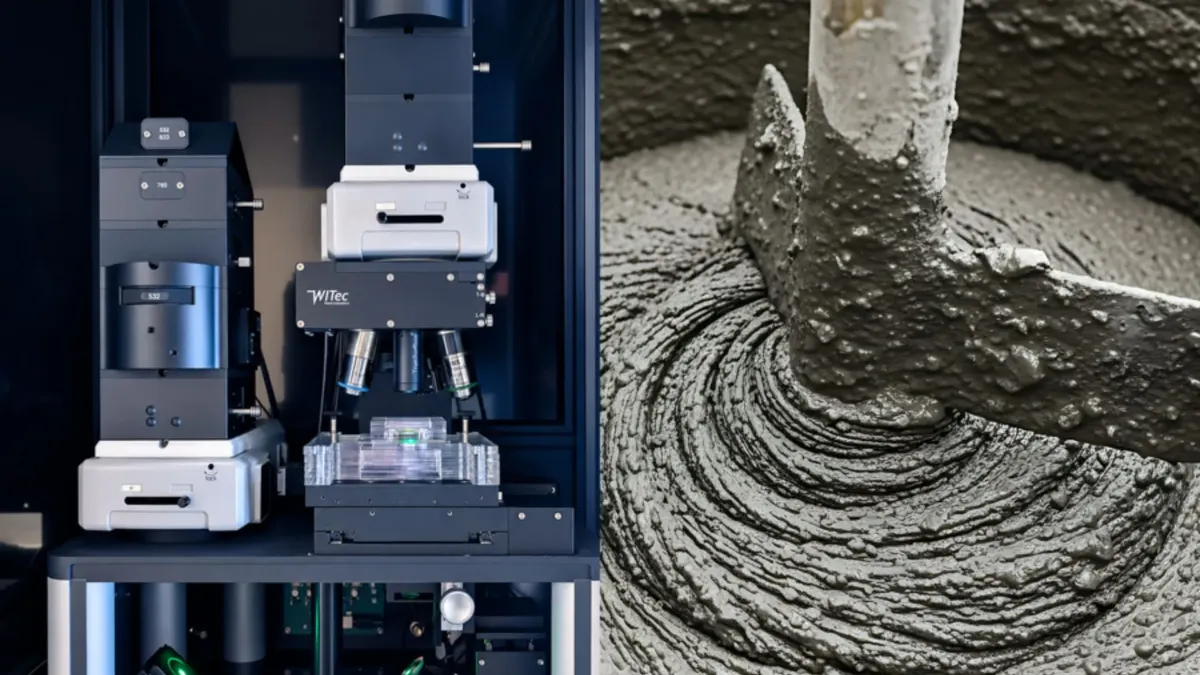
Here’s the wild part: the CO2 first captures calcium that's released as cement dissolves. This temporary binding slows down the usual hardening process and changes the internal environment of the paste. As the calcium gets tied up, dissolved silicates spread out, forming an interconnected silica gel network. This gel, however, is a bit of a show-off; it only lasts for a short time.
Once the injected CO2 fully mineralizes (a few hours later), standard hydration kicks back in. Calcium hydroxide forms, immediately reacting with that silica network to create calcium silicate hydrate (C-S-H) – the stuff that gives cement its strength. But here’s the kicker: unlike regular cement, this new C-S-H develops throughout the material, rather than clumping around individual particles. One grad student, Marcin Hajduczek, initially thought the gel's sudden disappearance was a fluke. Turns out, it was the consistent, crucial feature in every CO2-injected sample. A disappearing template for a stronger future.
Stronger, Smarter, Sustainable
This altered pathway creates a far more uniform internal structure. In tests, cement paste with CO2 (equal to just one percent of the cement's weight) was a full 13 percent stronger after 24 hours compared to its CO2-free counterparts. Let that satisfying number sink in.
These findings also challenge some long-held assumptions. For instance, the calcium carbonate particles, once thought to be key drivers of strength, turned out to be more like passive observers. As Associate Professor Admir Masic put it, "We had been injecting CO2 into cement for years without fully understanding its internal effects. Now, with a clear understanding of the mechanism, we can begin to control it."
There's a caveat, of course: too much CO2 can lock away too much calcium, halting the helpful reactions. But with this newfound knowledge, engineers now have a precise guide to design stronger, lower-carbon cement products. Because apparently, the secret ingredient was hiding in plain sight, waiting for a laser to find it."